
Antique Tallboy Storage Cabinet
An antique tallboy storage cabinet brings vertical presence and deep stacking capacity to a bedroom, combining towering proportions with classic cabinet-maker joinery.
Antique Tallboy Storage Cabinet
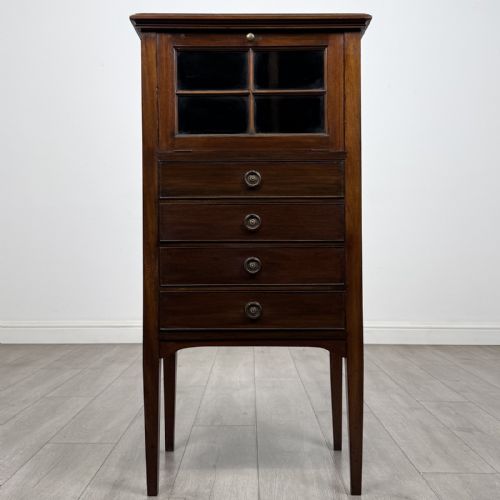
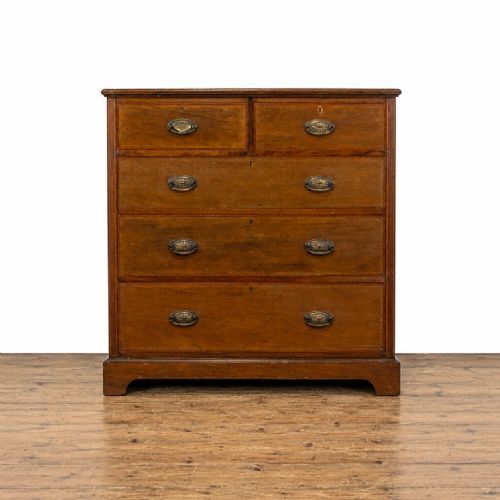
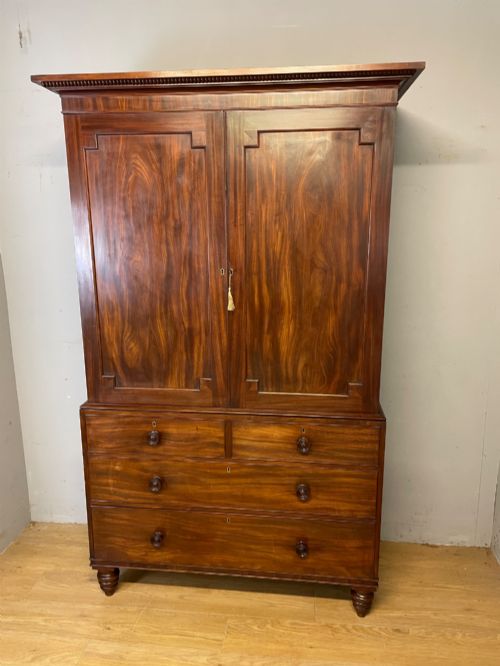
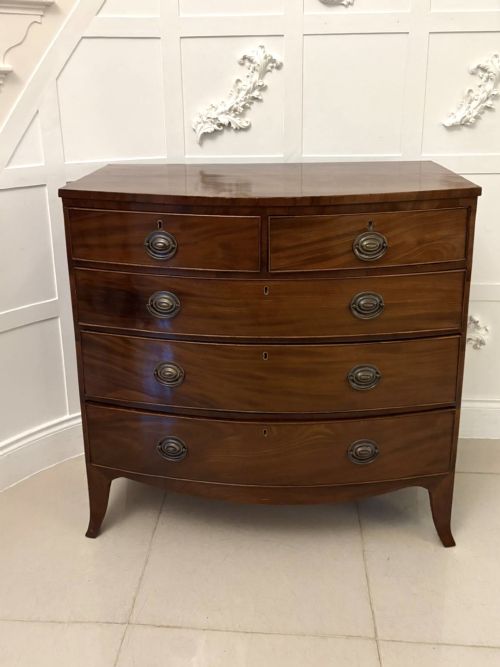
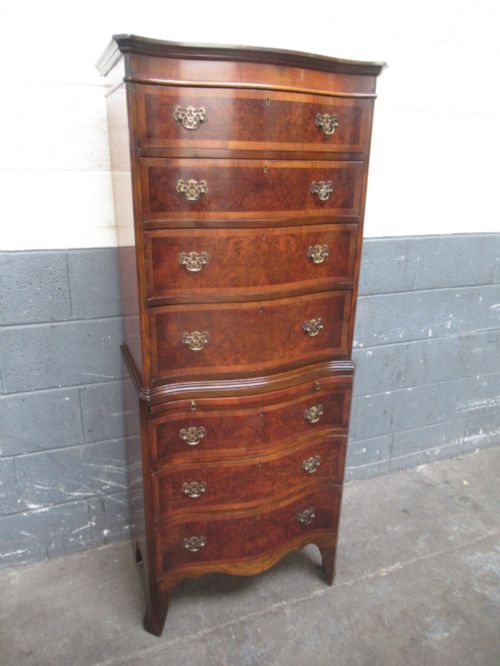
An antique tallboy storage cabinet primarily takes the form of stacked drawer units, chest-on-chest configurations, and upright linen presses designed to maximise vertical storage without occupying excessive floor space. These pieces span several centuries of British and continental design, ranging from 18th Century George III examples to Edwardian and Art Deco iterations.
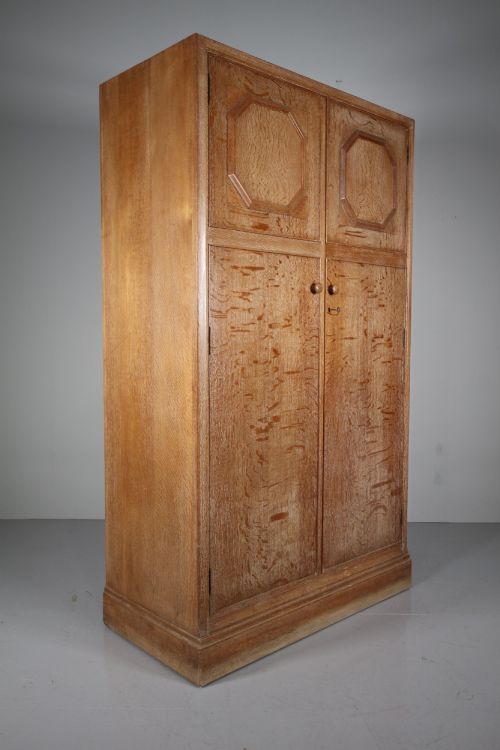
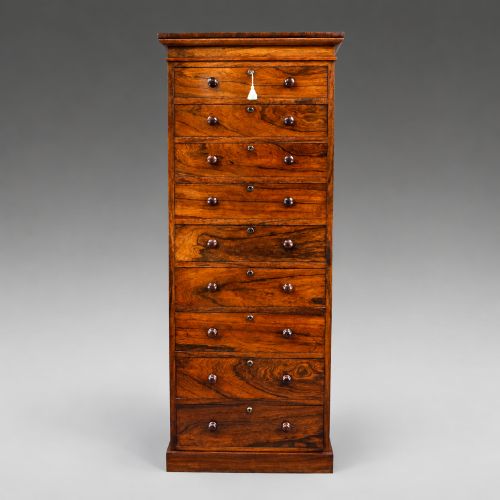
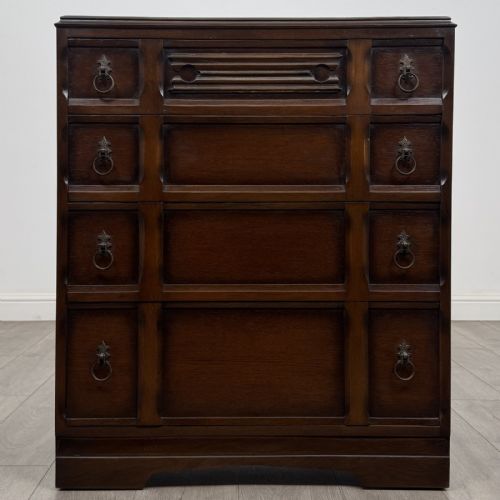
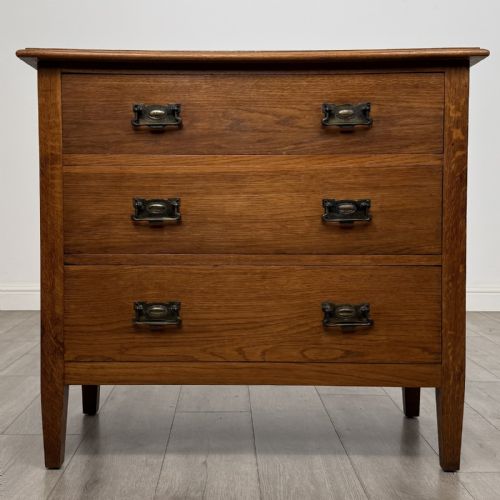
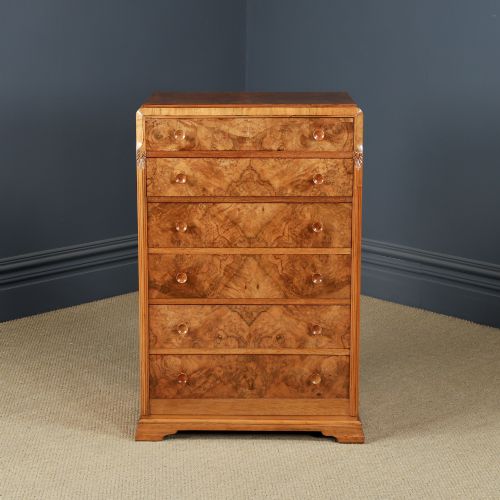
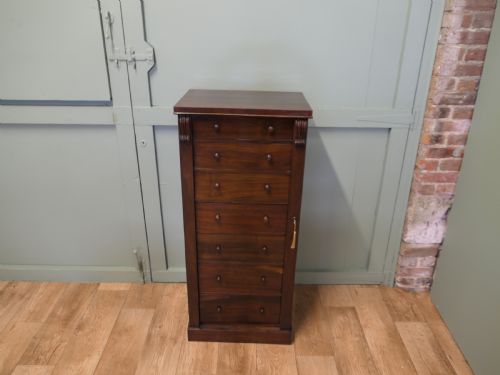
The versions most frequently met on this page include Georgian mahogany chest-on-chest constructions, Edwardian oak tallboys, and 1930s walnut or limed oak upright chests. Alongside these, buyers encounter specialist formats such as Wellington chests and narrow bedside cabinets that share the characteristic towering silhouette.
Makers across the Georgian, Victorian, and Edwardian eras utilised these tall formats to provide maximum utility in domestic interiors. The surviving examples demonstrate a steady evolution from formal 18th Century proportions down to simpler early 20th Century bedroom storage.
Defining characteristics of construction and finish
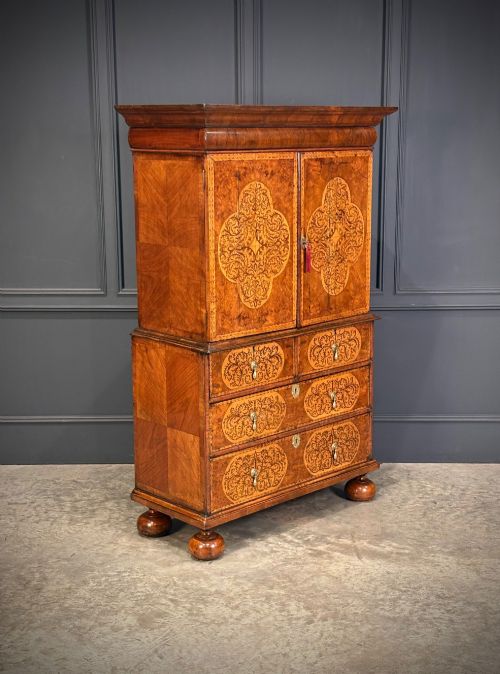
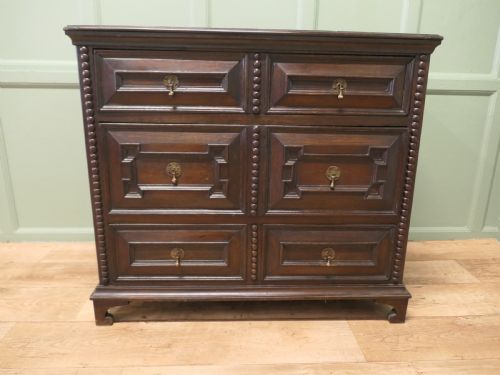
Quality in these tall cabinets rests upon timber selection and the crispness of cabinet-making details such as strung inlay, crossbanding, and carved bracket feet. Finer examples display carefully matched grain patterns across multiple drawer fronts and solid brass hardware original to the piece.
Structural integrity dictates the upper tier of value, particularly in tall stacked furniture where drawer runners and carcass alignment must endure decades of heavy loading. Pieces retaining their original polished finish and sound internal framing command greater attention than those with compromised drawer bottoms or replaced cornices.
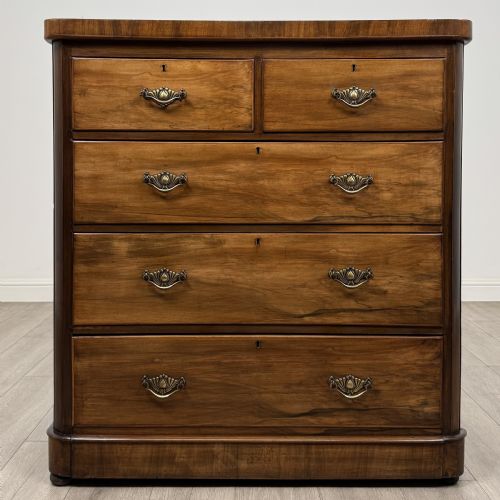
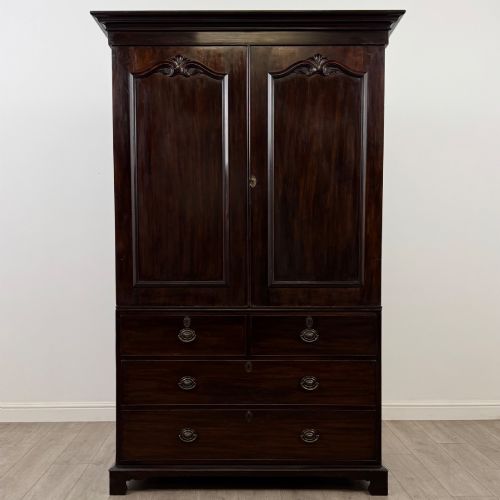
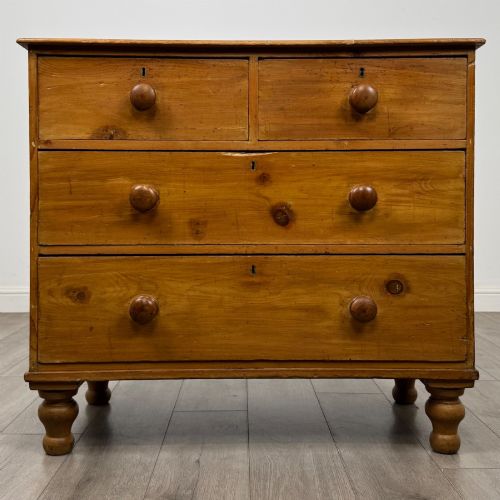
Current listings demonstrate cabinet forms spanning Georgian, Victorian, Edwardian, and Art Deco periods, executed in mahogany, oak, walnut, and pine.
The Antique Tallboy Storage Cabinet Glossary
- Tallboy
- A tall chest of drawers, often consisting of one chest stacked upon another or built as a single tall upright cabinet. This form originated in the late 17th century and provides substantial storage within a compact floor footprint.
- Chest on chest
- A specific tallboy format where a smaller upper chest sits directly upon a larger lower chest of drawers. This construction created monumental vertical storage while allowing the two sections to be separated for easier transport.
- Linen press
- A tall storage cabinet featuring upper doors enclosing sliding trays or shelves above a bank of lower drawers. Originally utilised for storing folded linen and textiles flat.
- Wellington chest
- A tall, narrow Victorian chest of drawers secured by a hinged vertical locking flap on one side. This clever mechanism secured all drawers simultaneously with a single padlock.
- Marquetry
- Decorative veneer work formed by fitting together small pieces of tinted wood, ivory, or shell to create elaborate floral or geometric patterns. Frequently seen on 18th century walnut and mahogany cabinets.
Antique Tallboy Storage Cabinet: Frequently Asked Questions
How were antique tallboy cabinets used originally?
These cabinets served primarily as principal bedroom storage for folded garments, linens, and personal accessories before fitted wardrobes became standard in British homes.
The upper sections often housed sliding shelves for textiles, while the deeper lower drawers held bulkier clothing items and household linens.
Where should I place a tallboy in a modern room?
Their tall, narrow footprint makes these cabinets ideal for corners, alcoves, or wall spaces where floor area is limited but vertical clearance is available.
Ensure the piece is safely anchored to the wall if positioned on uneven historic flooring, particularly given the top-heavy nature of stacked chest designs.
How do I identify a Georgian tallboy?
Georgian examples typically feature dense mahogany timbers, hand-cut dovetails, brass swan-neck or pierced plate handles, and bracket or ogee feet.
Look for pegged joints, secondary softwood linings, and classic architectural cornices rather than the simpler crown mouldings found on later Edwardian reproductions.