




Country House Oak Armchairs
Country house oak armchairs bring honest vernacular character into a room, offering sturdy seating shaped by generations of domestic use.
Country House Oak Armchairs
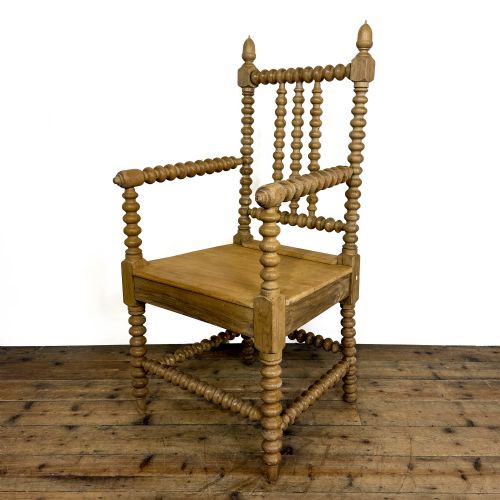
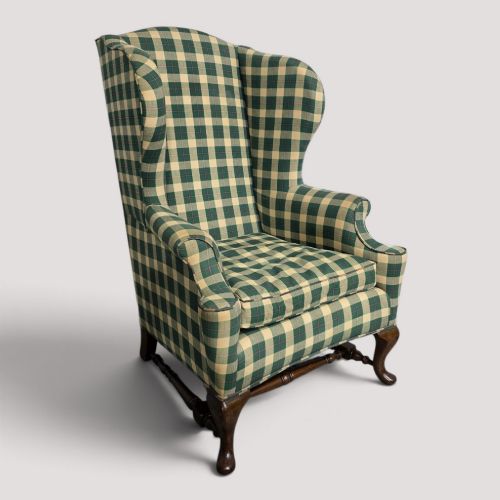
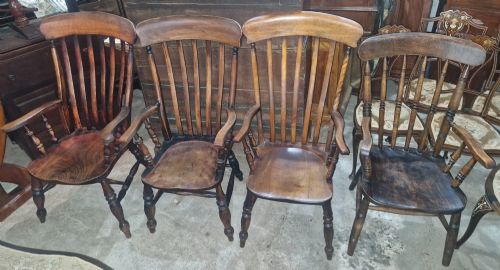
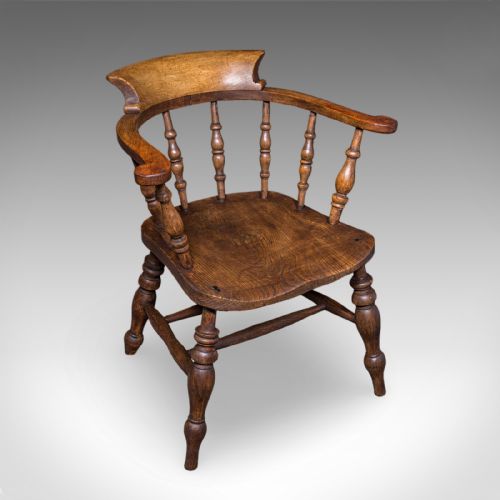
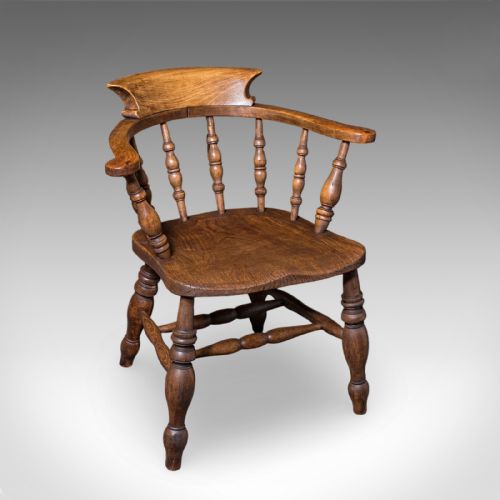
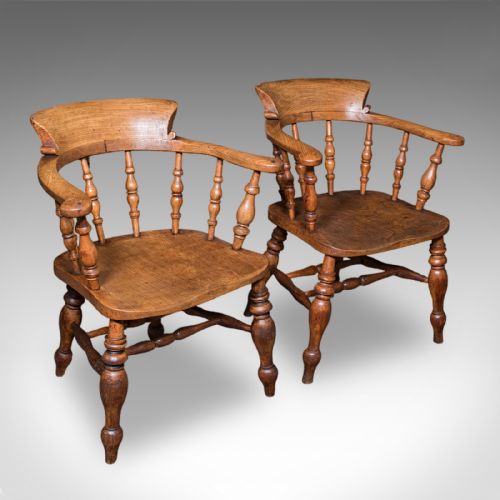
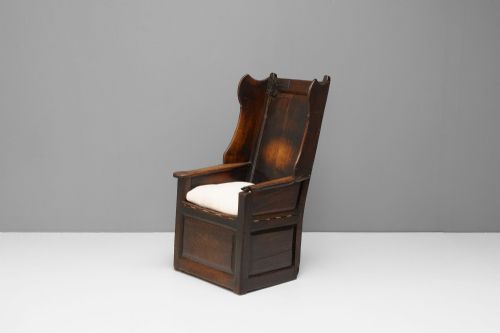
Country house oak armchairs encompass robust seating rooted in English vernacular traditions, spanning farmhouse Windsors, smoker's bows, and panelled elbow seats. You will frequently encounter Victorian and Edwardian interpretations alongside earlier Georgian examples.
These chairs serve primarily as functional seating with deep wooden seats and supportive arms, designed for daily domestic utility rather than formal drawing-room display. The selection leans heavily toward sturdy elbow chairs and spindleback forms.
Materials and construction
Makers utilised solid native timbers, pairing oak frames with elm seats, ash spindles, and beech stretchers to ensure structural resilience under heavy daily use. This mixture of woods reflects the practical resourcefulness of regional vernacular cabinet makers.
Joinery relied on traditional pegging, wedged tenons, and steam-bent components to shape high spindle backs and continuous curved arm rails. Surfaces developed their character through centuries of wax application and natural handling rather than heavy polishing.
Country House Oak Armchairs Retail Price Guide 2026
Typical asking prices for country house oak armchairs among the pieces listed under this phrase on Sellingantiques today, from the lower quarter to the upper quarter. They describe what is for sale here now, not the wider market.
The selection spans multiple eras, incorporating George III examples alongside Victorian and Edwardian interpretations built from oak, elm, and ash.
Judging quality and proportion
Quality rests in the integrity of the timber selection and the retention of honest surface patination accumulated through generations of use. Chairs that preserve their original turned members and unthinned seats stand apart from heavily restored alternatives.
Proportion and comfort distinguish superior vernacular seating, where arm rails curve naturally and spindles maintain their original thickness. Subtle details in the carving of a crest rail or the pitch of a comb-back elevate a functional seat into a piece of enduring craftsmanship.
The Country House Oak Armchairs Glossary
- Smoker's Bow
- A low-backed Windsor elbow chair with a continuous turned arm rail, popular in domestic and tavern settings during the nineteenth century. These chairs provide a compact and supportive seat.
- Spindleback
- A chair construction utilising numerous slender turned uprights within the backrest to distribute weight evenly. This technique offers robust support without excessive weight.
- Vernacular
- Everyday objects shaped by local traditions, materials, and practical needs rather than formal architectural styles. These pieces tell the story of regional craftsmanship.
- Patina
- The surface sheen and depth developed on timber over decades of handling, cleaning, and exposure to light. It serves as a visual record of an object's age and history.
- Comb-back
- A Windsor chair design where the top rail resembles the teeth of a comb, receiving the upper ends of the back spindles. This provides a distinctive profile characteristic of country seating.
Country House Oak Armchairs: Frequently Asked Questions
How do I care for antique oak armchairs?
Feed the timber occasionally with a traditional beeswax polish to nourish the dry wood and maintain its natural lustre. Avoid placing the chair near direct heat sources or strong sunlight, which can cause the grain to split.
Regular dusting with a soft, dry cloth prevents grime accumulation in the carved details and turned joints. Treat the surface gently to preserve the historic patina built up over generations.
Are these chairs comfortable for daily use?
Most country house oak armchairs offer a surprisingly supportive sit due to their deep wooden saddle seats and ergonomic curved arm rails. Adding a simple loose cushion can enhance comfort for prolonged seating.
The sturdy construction makes them practical for everyday lounging in a study or reading nook. Their solid proportions accommodate daily domestic life just as they did centuries ago.
How can I tell a Victorian chair from an 18th-century one?
Earlier 18th-century pieces often display hand-carved elements, distinct regional timber choices, and peg construction that differs from later mass-produced turning. Examining the underside reveals tool marks and wear patterns consistent with period hand-tools.
Victorian and Edwardian interpretations frequently utilise more standardised machine-turned components and heavier gauge timbers. Comparing the joinery methods and the depth of the surface wear helps clarify the timeline.
Where should I place a country house armchair?
These robust chairs anchor corners of a living room, serve as a desk seat, or stand beside a fireplace where their sculptural wooden forms can be appreciated. Their versatile scale suits both traditional country interiors and modern spaces.
Allowing sufficient space around the chair highlights its turned spindles and sweeping arm rails. They work well as standalone statement pieces or paired with simpler dining seating.