
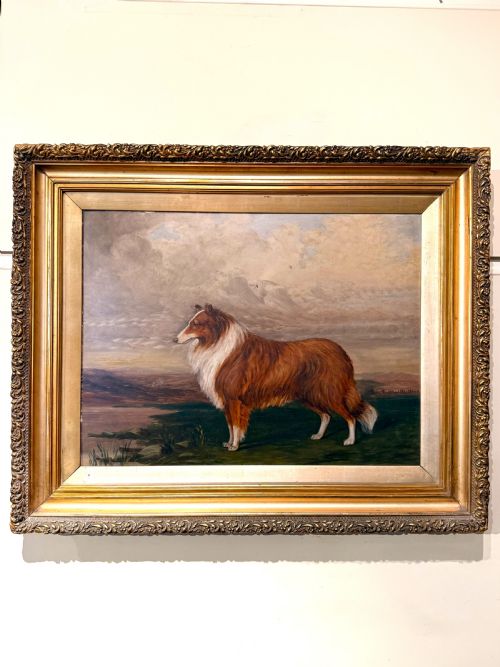
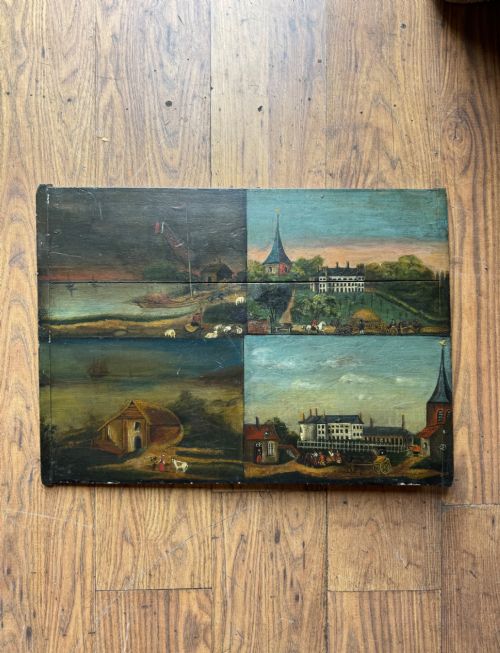
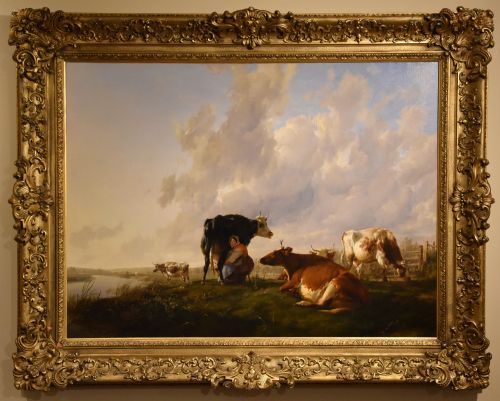

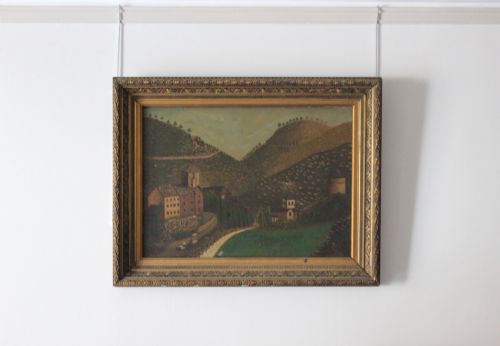



Country House Landscape Painting
Country house landscape painting captures the stately architecture, deer parks, and pastoral scenes associated with historic British estates.
Country House Landscape Painting
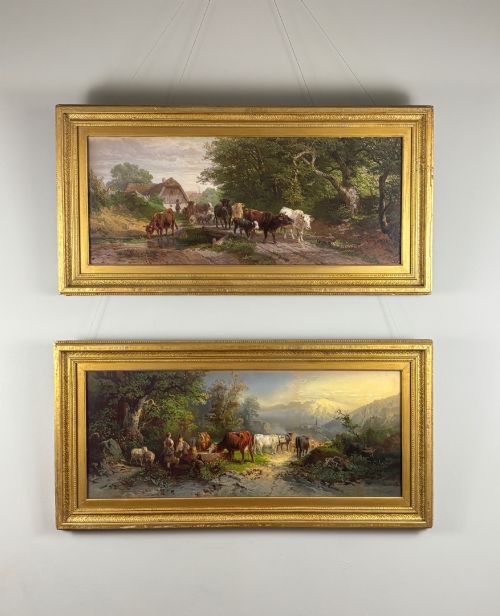
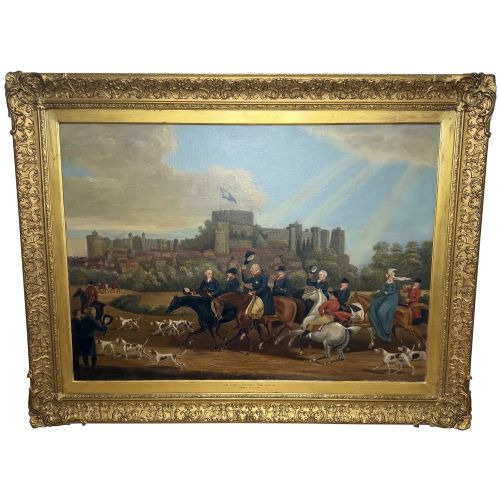
A country house landscape painting depicts the architecture, gardens, and surrounding parkland of historic estates, often populated by livestock, horses, or figures. When searching for a country house landscape painting, buyers encounter works ranging from 18th-century topographical views to Victorian and Edwardian canvases.
The selection includes pastoral scenes, hunting subjects, and architectural studies framed in period materials. These works reflect the domestic and sporting life of the landed estate across successive centuries.
How They Were Made
Artists painted primarily in oil on canvas or board, utilising oil paint built up in glazes to achieve depth in foliage and skies. Watercolour and pastel on paper also appear across the selection for lighter, more immediate topographical studies.
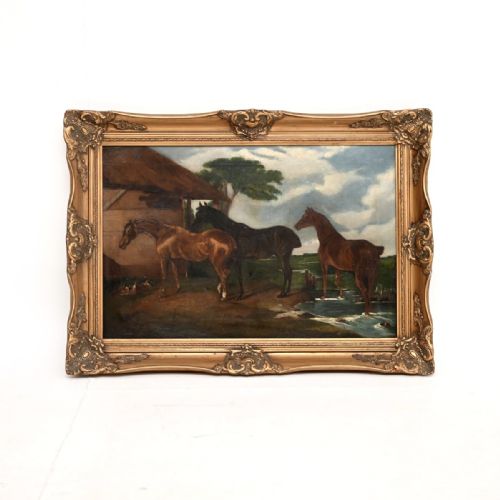
Framing relies on traditional joinery in wood, often finished with gesso, gold leaf, and giltwood to create ornate surrounds that complement the scale of the canvas.
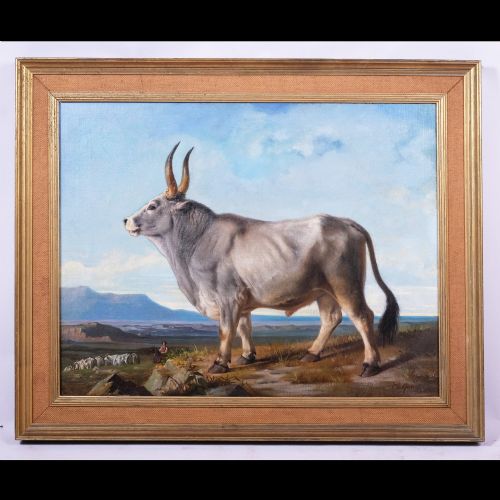
Several canvases record local livestock taking up the view, proving that historical cattle held just as much star power as the architecture.
What Varies in Quality
Quality depends on the surety of the brushwork and the precision of perspective, particularly in the rendering of architectural elements and animal anatomy. Master works demonstrate subtle control over light and atmosphere, whereas naive or provincial examples prioritize directness and charm over academic proportion.
The preservation of the original canvas and the integrity of the surface ground separate unrestored pieces from those with extensive overpainting. Original giltwood frames with period gesso detailing also elevate the standing of the work.
Thomas Sidney Cooper·John Frederick Herring Jnr·Henry John Yeend King·Philip Henry Rideout·Charles Jones
The Country House Landscape Painting Glossary
- Topographical painting
- A work that accurately records a specific location, building, or estate layout rather than an idealized composition. These pieces serve as historical records of British architecture and garden design.
- Giltwood
- Timber carved and coated with gold leaf or metallic powder, commonly used for traditional picture frames. This finish provides a reflective border that isolates the painting from the wall.
- Gesso
- A plaster-like mixture applied to wooden frames as a base for gilding and ornamentation. It allows craftsmen to model crisp decorative mouldings before applying gold leaf.
- Pastel
- A medium consisting of powdered pigment and a binder rolled into sticks, used dry on paper. It yields a velvety surface texture requiring protective glass glazing.
Country House Landscape Painting: Frequently Asked Questions
How do I date a country house painting?
Dating relies on stylistic evidence, costume details of any figures depicted, and the construction methods of the stretcher and frame. Canvas types and stretcher wedges also provide chronological clues for 18th and 19th-century works.
Signatures, inscriptions on the reverse, and archival records further narrow the period of execution. Comparing the handling of light and pigment to documented works by known schools completes the assessment.
Where were these paintings displayed originally?
These works hung in the principal reception rooms, libraries, and long galleries of landed estates. They served to document family property, prized livestock, and the surrounding parkland.
Smaller watercolours and studies often decorated private family quarters and guest chambers. Their subjects reinforced the identity and agricultural interests of the estate owners.
How should I hang an oil painting?
Hang paintings on secure picture hooks fixed directly into wall studs or masonry rather than relying on modern adhesive fixtures. Ensure the wall space avoids direct, harsh sunlight and excessive humidity.
Maintain a stable room temperature to prevent the canvas from slackening or the wooden stretcher from warping. Proper positioning protects both the paint surface and the giltwood frame.
What is the difference between oil and watercolour?
Oil paint uses a drying oil binder, allowing for rich impasto, subtle blending, and application on woven canvas. Watercolours utilise water-soluble binders on paper, producing transparent washes and lighter atmospheric effects.
Oils generally require a heavy protective frame without glass, while watercolours need glazing to protect the paper surface from atmospheric moisture and dust.