

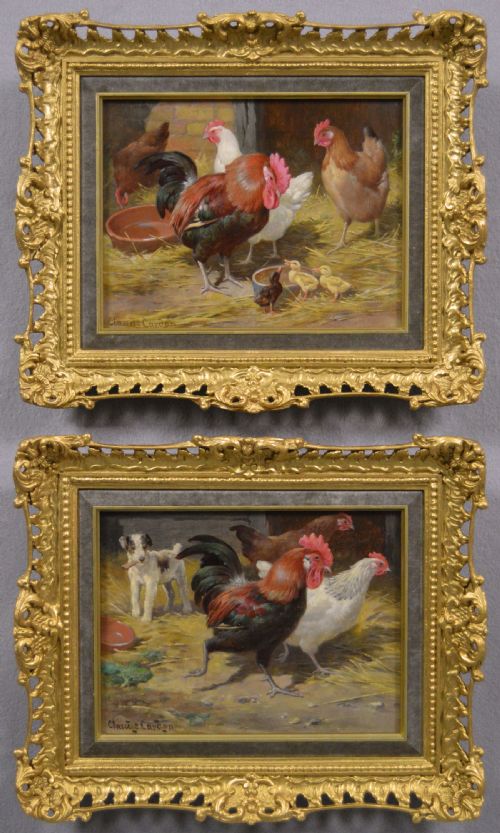


Country House Dog Painting
Country house dog painting captures the distinct character of estate hounds, sporting terriers and spaniels rendered by nineteenth- and twentieth-century artists.
Country House Dog Painting
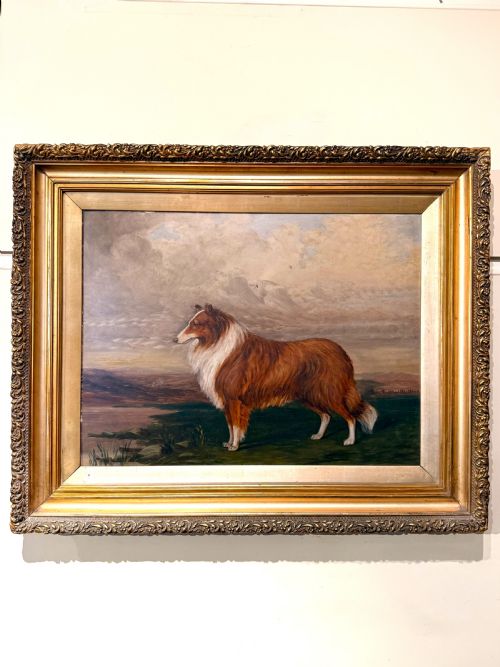
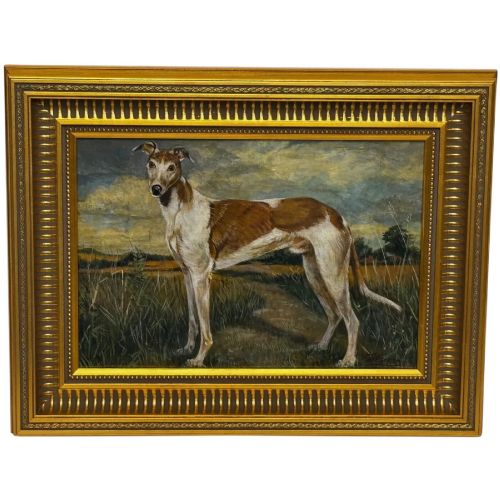
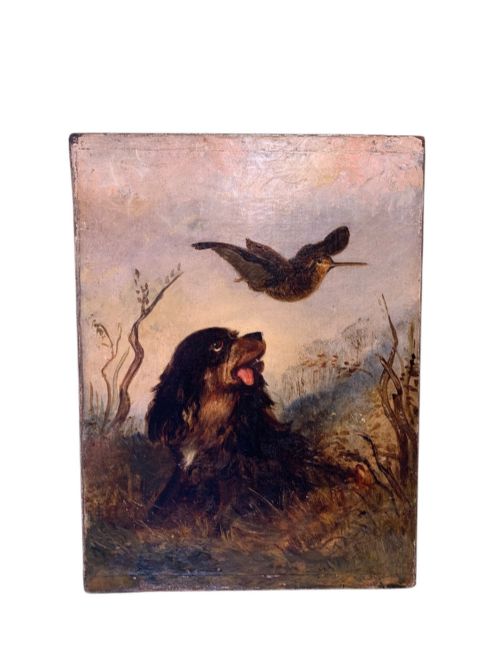
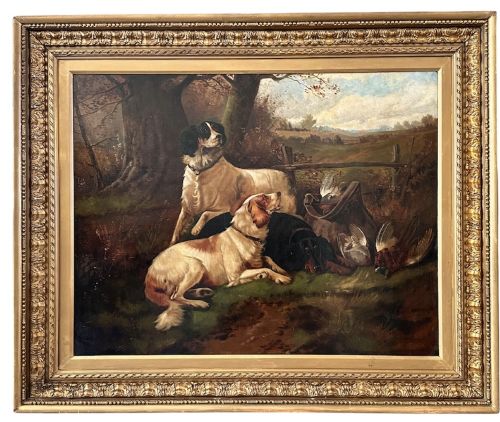
A country house dog painting portrays valued working hounds, sporting terriers and family pets associated with large estates, often set within rural landscapes or stable yards. These works record specific animals such as spaniels, greyhounds, lurchers and terriers through individual portraits or sporting scenes.
Most examples found here date from the nineteenth century into the mid-twentieth century, created during periods when canine portraiture flourished alongside British sporting art. Canvases and wooden boards display both signed compositions by named painters and naive or school works representing traditional rural life.
How they were made
Artists painted primarily in oil on canvas or prepared board, utilising rich oil pigments to build depth in animal coats and surrounding landscapes. Giltwood frames frequently house these paintings, complementing the traditional subjects.
Watercolour paintings and plaster or wood doorstops also appear, demonstrating the variety of methods used to render canine subjects across the Victorian and Edwardian eras.
Country House Dog Painting Retail Price Guide 2026
Typical asking prices for country house dog painting among the pieces listed under this phrase on Sellingantiques today, from the lower quarter to the upper quarter. They describe what is for sale here now, not the wider market.
Listings feature works spanning the Georgian, Victorian, Edwardian and mid-twentieth-century periods in oil, watercolour, canvas and board.
What varies in quality
Quality rests upon the artist's ability to capture accurate canine anatomy, intelligent expression and convincing texture in fur rather than relying on formulaic backgrounds. Finer paintings display careful observation of posture and breed characteristics, while simpler naive works emphasise charm over strict proportion.
The handling of light within the landscape and the preservation of the original canvas and stretcher influence the overall character of the piece. Period frames in original giltwood further distinguish superior examples from later replacements.
John Sargent Noble·C R Breytle·Claude Cardon·Samuel Raven·George E Sharpe·Colin Graeme Roe·John Alfred Wheeler·Valentine Thomas Garland·Alfred Duke·M.E. Hankinson·John Emms·Sydney Kendrick·GW Horlor·John Constable·Molly Maurice Latham·Charles Bilger Spalding·George Armfield·A. Betts
The Country House Dog Painting Glossary
- Oil on canvas
- Pigment suspended in drying oil applied to a stretched woven fabric support. This traditional medium allows for subtle blending and rich colour depth in animal portraits.
- Board
- A rigid wooden panel used as a painting support instead of woven fabric. Smaller nineteenth-century animal studies frequently utilise this durable surface.
- Giltwood
- Wood carved and covered with a thin layer of gold leaf or metallic gilt finish. These decorative frames surround many period sporting paintings.
- Sporting art
- Artwork depicting field sports, horses, hounds and rural pursuits. This genre gained immense popularity in Britain throughout the Victorian period.
Country House Dog Painting: Frequently Asked Questions
What breeds appear most often in these paintings?
Terriers, spaniels, setters and hounds dominate these works, reflecting the working and sporting priorities of nineteenth-century country houses.
Breeds such as greyhounds and lurchers also feature prominently in sporting and equestrian compositions.
How do I identify the period of a dog painting?
Dating relies on stretcher construction, canvas type, framing styles and the clothing or hairstyles of any human figures present in the background.
Artists' signatures and stylistic traits typical of Victorian or Edwardian sporting art provide further chronological markers.
Where were these paintings displayed originally?
Estate owners hung these portraits in libraries, halls, and reception rooms alongside sporting trophies and family mementos.
They served as tributes to prized hunting companions, valued farm dogs and family pets.
Are these paintings usually signed by the artist?
Many works bear signatures or attribution notes, while others remain the product of regional British naive schools or anonymous followers of prominent animal painters.
Both signed canvases and unsigned works capture the same traditional rural aesthetic.