
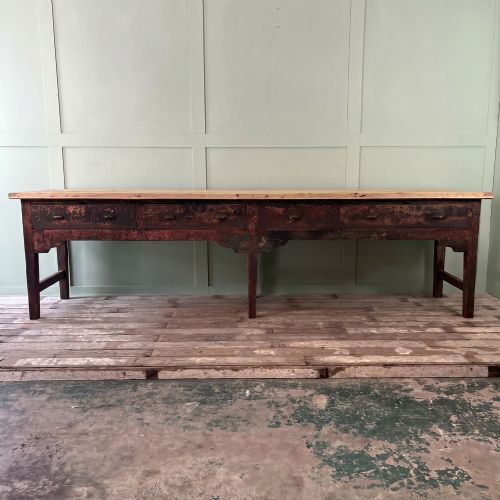
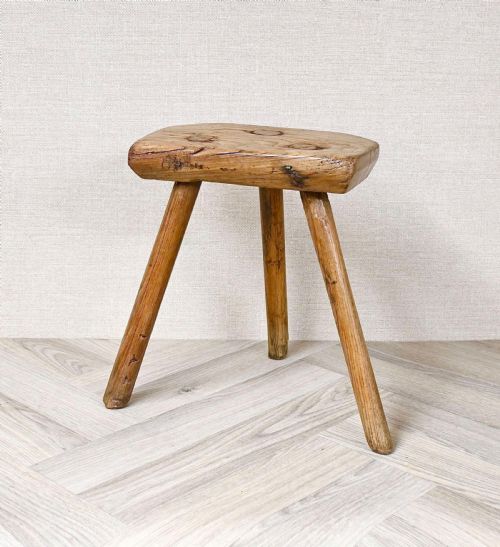
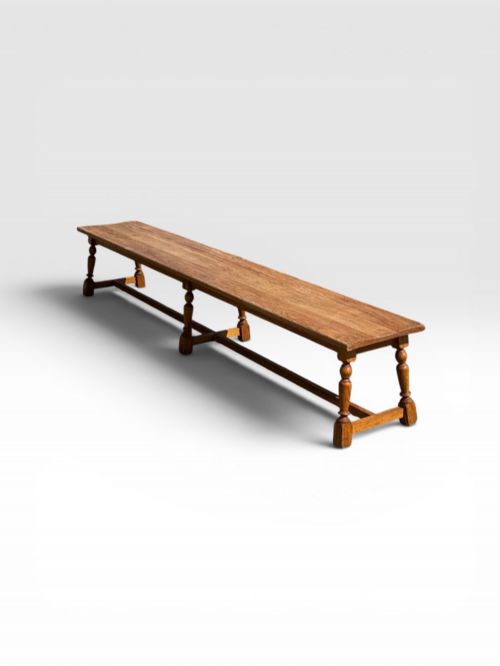
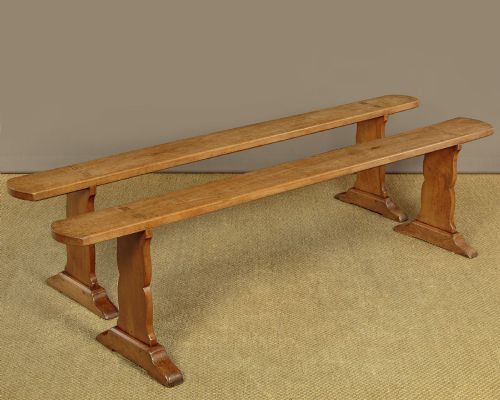


Country Farmhouse Wooden Bench
A country farmhouse wooden bench offers practical utility and rugged character, bringing functional history and enduring seating into domestic spaces.
Country Farmhouse Wooden Bench
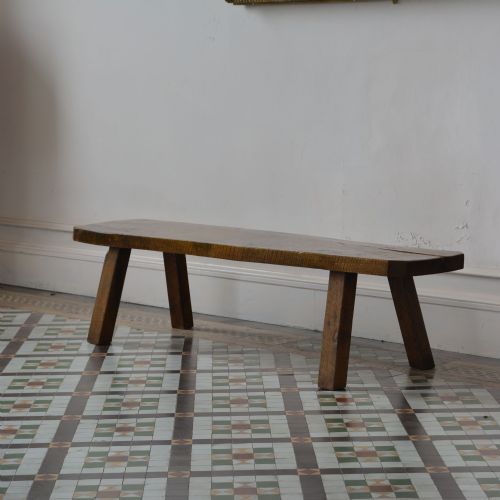
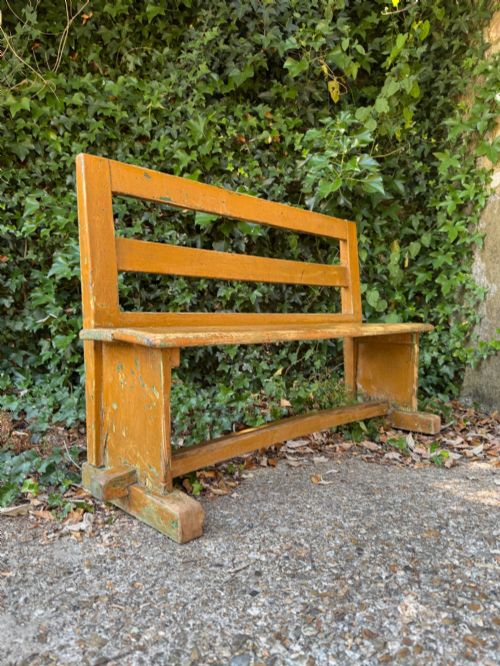
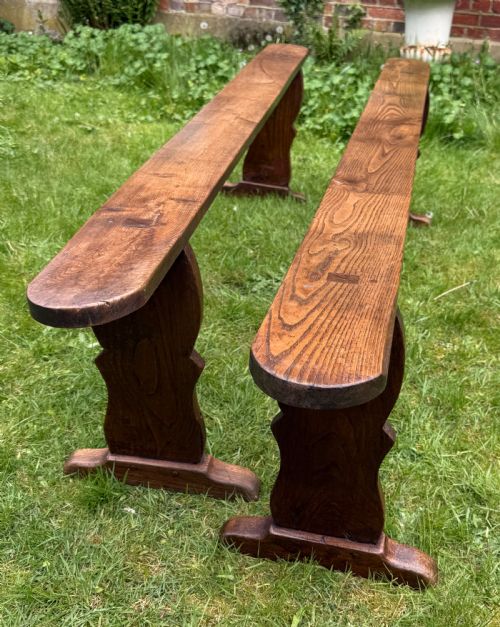
A country farmhouse wooden bench provides sturdy, long seating derived from agricultural and domestic settings across the nineteenth and early twentieth centuries. Pieces matching this search span diverse regional traditions, including English, French, Austrian, and Hungarian examples designed for daily hard work.
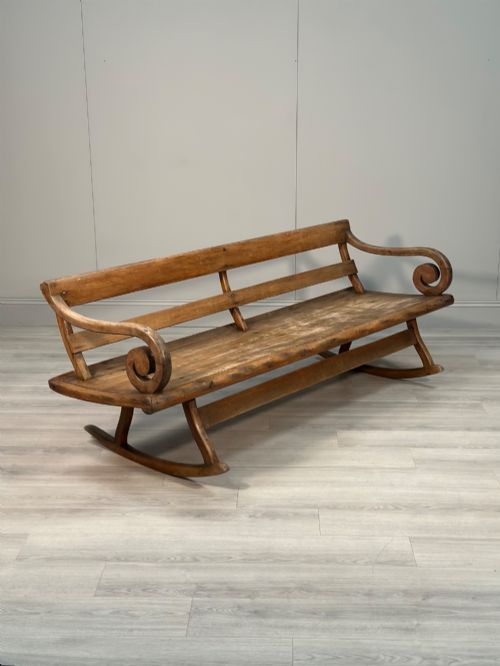
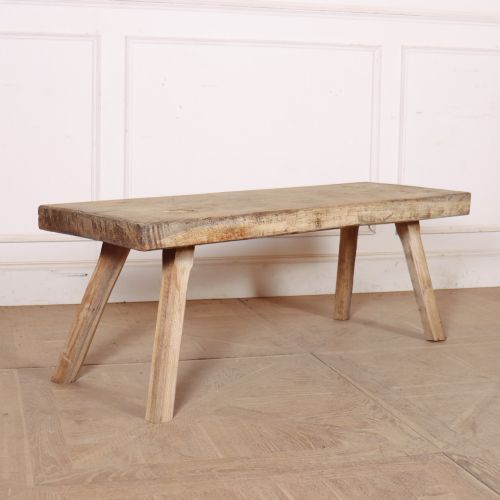
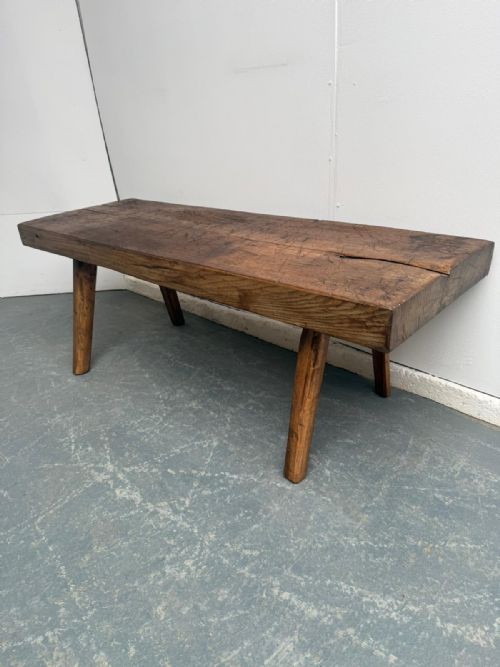
The selection centres heavily on robust pine and oak variants, alongside tactile elm, sycamore, and cherrywood forms. Buyers encounter long dining benches, narrow pig benches, high-back settles, and hall seats that originally served in farmhouses, taverns, and palaces.
Construction methods range from workshop-built seating to scratch-built primitive designs created for specific utility. These items suit modern hallways, kitchens, and dining rooms where functional history dictates the interior aesthetic.
What varies in quality
The integrity of the original timber and the degree of patination distinguish exceptional examples from standard utilitarian survivors. Natural wear accrued through decades of service enhances the character, provided the underlying structural framework remains unaltered.
Proportion and scale dictate the desirability of a piece, with unusually long dimensions or narrow widths commanding particular attention. The honesty of the construction, whether finely joined or primitively scratch-built, determines the tactile authenticity of the object.
Some nineteenth-century oak benches retain provenance connecting them directly to historic institutional dining halls in Bishopthorpe Palace, York.
The Country Farmhouse Wooden Bench Glossary
- Pig bench
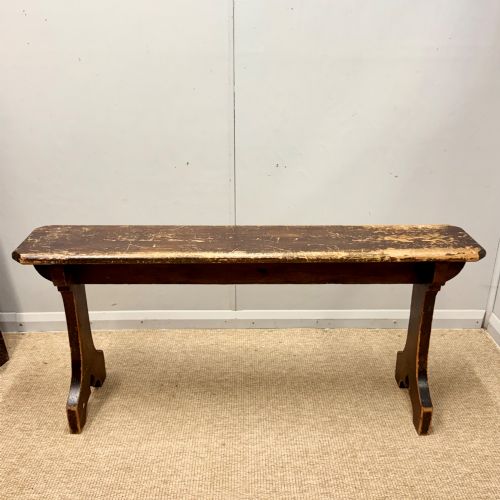
- A narrow, low wooden bench historically used in agricultural processing, prized today for its slim proportions as a coffee table or hallway seat.
- Settle
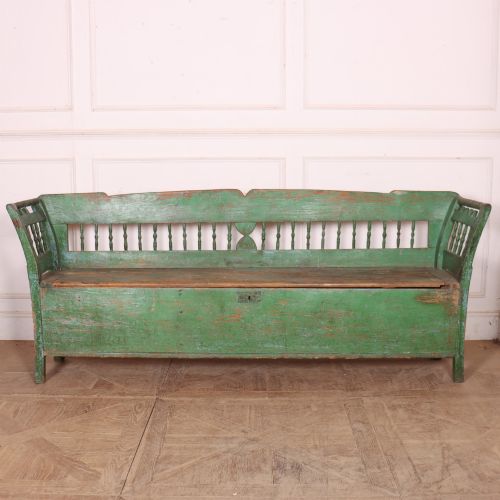
- A wooden bench featuring a high back, solid arms, and often a storage box beneath the seat to block draughts in farmhouse kitchens.
- Trestle
- A structural support consisting of a horizontal beam fixed to two splayed legs, commonly found beneath long tavern and refectory benches.
- Scrubbed finish
- A surface repeatedly washed and scoured with water and abrasive minerals, leaving the bare grain clean and pale.
- Patina
- The lustrous surface sheen developed over generations through handling, waxing, and atmospheric exposure.
Country Farmhouse Wooden Bench: Frequently Asked Questions
Where did farmhouse benches come from?
These benches originated in rural homesteads, farmhouses, taverns, and estate kitchens across Britain and continental Europe. They served practical domestic purposes where durable, communal seating was an absolute necessity.
Over generations, surviving examples migrated from working agricultural environments into domestic interiors, retaining the robust character forged during their initial period of service.
How do I style a long wooden bench?
A long wooden bench pairs naturally with refectory or trestle tables in kitchens and dining rooms to create an informal seating arrangement. They also function well placed against hallway walls for putting on shoes or displaying textiles.
Leaving the timber unadorned highlights the natural grain and historic surface wear, allowing the functional history of the piece to anchor the room.
What is the difference between a settle and a bench?
A standard bench provides an open seat supported by legs or trestles without vertical back protection. A settle incorporates a high wooden back and solid sides designed to shield occupants from cold draughts.
Many historic settles also feature enclosed storage compartments beneath the lifting seat lid, adding dual utility to the piece.
Can I use an antique bench outdoors?
Historic pine, oak, and elm timbers react poorly to sustained moisture, temperature extremes, and direct weather exposure. Placing these pieces outside accelerates wood rot, degrades historic finishes, and destabilises traditional joints.
Protecting the timber indoors preserves the dry surfaces and structural integrity developed over more than a century of domestic use.