
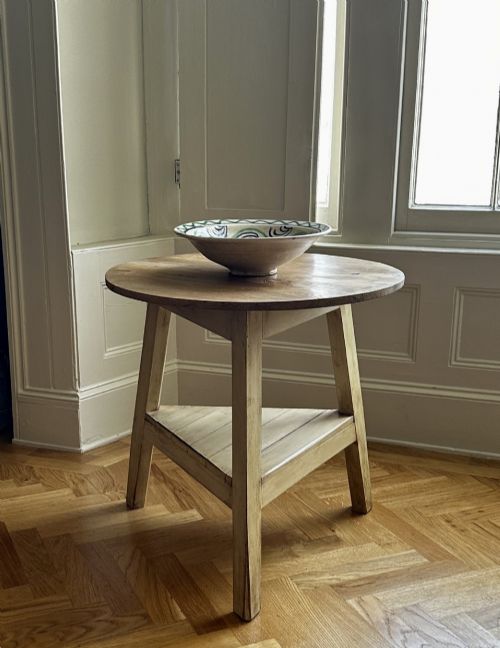


Country Elm Side Table
A country elm side table brings tactile warmth and honest grain to a room through centuries of utilitarian design.
Country Elm Side Table
A country elm side table is a domestic surface built for utility in provincial homes, combining sturdy timber tops with supporting frames of oak, fruitwood, or yew.
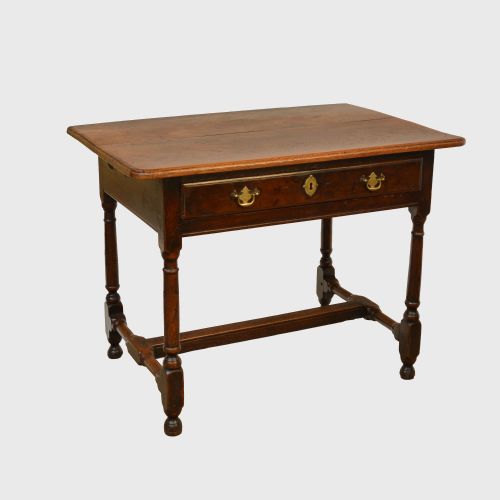
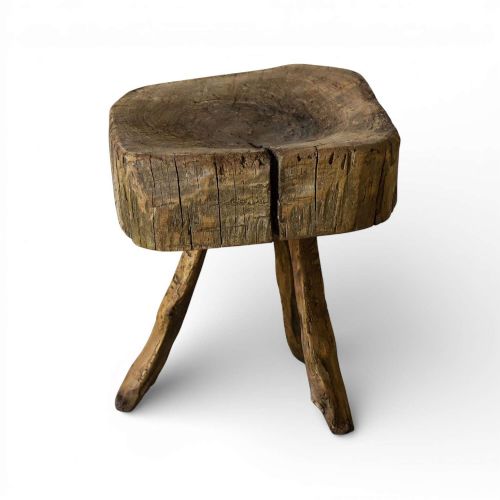
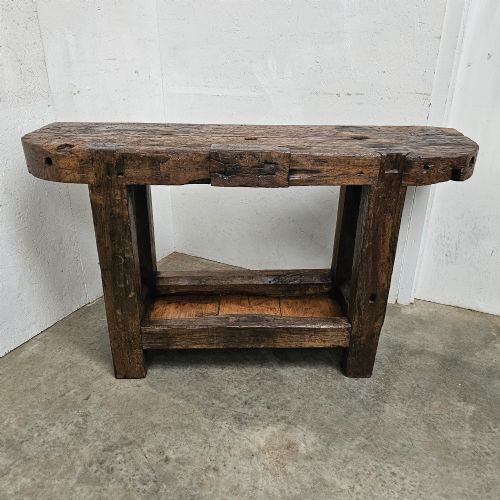
When searching for a country elm side table, buyers encounter forms ranging from Georgian tripod occasional tables and 18th-century drawer pieces to French provincial chopping blocks and cricket tables.
The material's characteristic interlocking grain made it resistant to splitting, which explains its widespread historical use in rural tables, stools, and workbenches.
Materials and construction
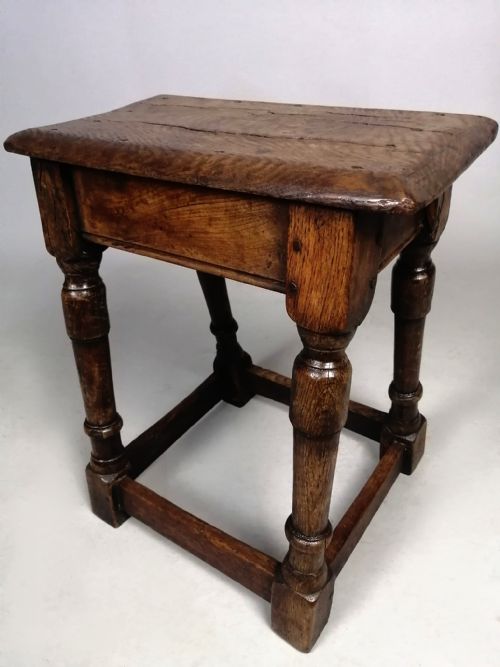
Cabinet makers utilised dense elm for table tops due to its resilience against heavy domestic labour, often pairing the timber with sturdy oak underframes or fruitwood legs.
Early pieces rely on traditional joinery methods such as pegged joints, pad feet, and tripod bases, while later examples incorporate drop leaves, drawers, and turned supports.
Listings span periods from 1700 through the Georgian era to the late 19th century, incorporating oak, brass, sycamore, yew, and fruitwood alongside elm.
What separates examples
Quality rests in the depth of natural patination built across generations of household use, alongside the structural integrity of the timber frame and legs.
Pieces retaining original surfaces, uncompromised live edges, or period brass fittings command greater appreciation among collectors than heavily restored counterparts.
The Country Elm Side Table Glossary
- Elm
- A dense, tough hardwood with a twisted, interlocking grain that resists splitting. This property made it the preferred choice for heavy-use rural tabletops and seating.
- Cricket table
- A small three-legged table originating in vernacular settings. The triangular leg arrangement provided stability on uneven flagstone floors.
- Pad foot
- A rounded, flattened foot common on cabriole or straight legs of the 18th century. It distributes weight gently without digging into rushes or wooden floorboards.
- Tripod table
- A piece supported by a central pillar above three splayed legs. This construction allowed compact placement in domestic interiors.
- Fruitwood
- A generic term for timbers harvested from fruit-bearing trees like pear or apple. Makers utilised these dense woods for contrasting structural elements and turned legs.
Country Elm Side Table: Frequently Asked Questions
What rooms suit a country elm side table?
These tables adapt easily to living rooms, hallways, and studies as occasional surfaces for lamps or books. Their understated proportions allow them to sit beside contemporary or antique upholstery.
Because elm resists heavy wear, the surfaces handle daily domestic use without losing their characteristic warmth.
How do I date an elm table?
Dating relies on observing construction methods, timber combinations, and leg profiles. 18th-century examples frequently pair elm tops with oak frames and hand-cut peg joints.
Later 19th-century pieces introduce machine-sawn components, simpler turnings, and occasional softwood additions.
Why is elm used with oak?
Makers combined elm for the top and oak for the frame to balance different structural strengths. Elm provided a tough, non-split surface for chopping and working, while oak offered rigid support for legs and stretchers.
This pairing is a hallmark of vernacular English and French provincial cabinet making.
How should I care for elm?
Maintain the timber by applying natural beeswax sparingly to nourish the grain and preserve the surface sheen. Avoid placing the table near direct heat sources or strong sunlight to prevent timber shrinkage.
Gentle dusting with a dry cloth keeps the historic patination intact over time.