
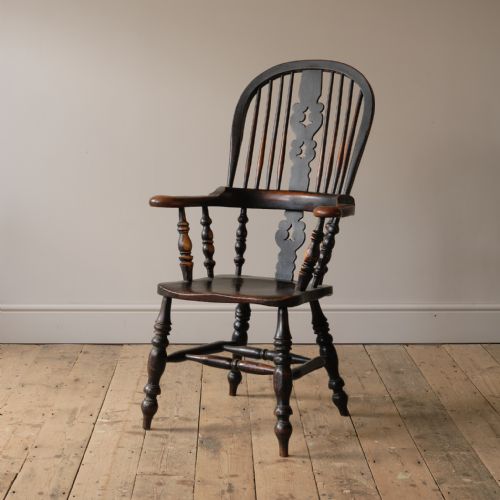
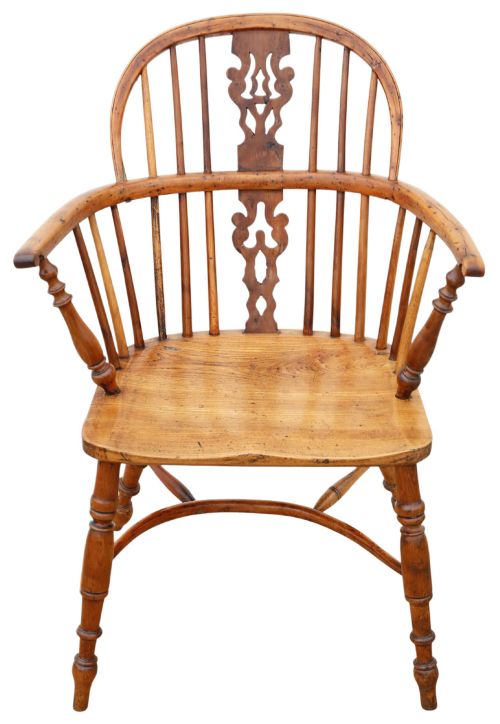
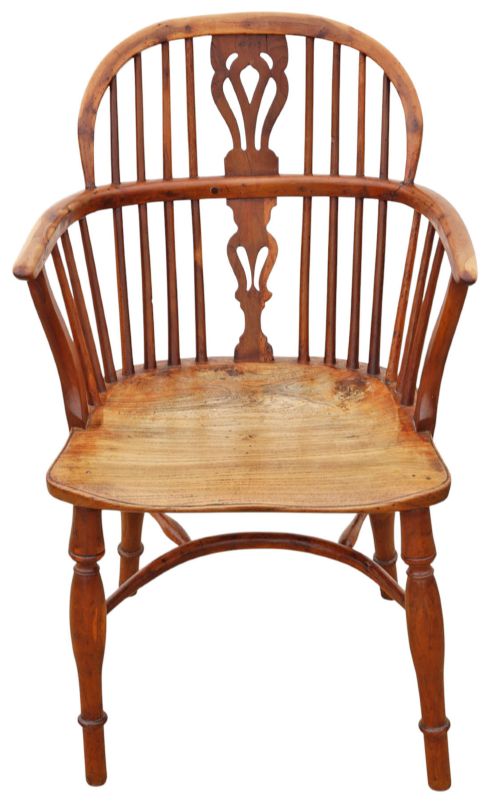
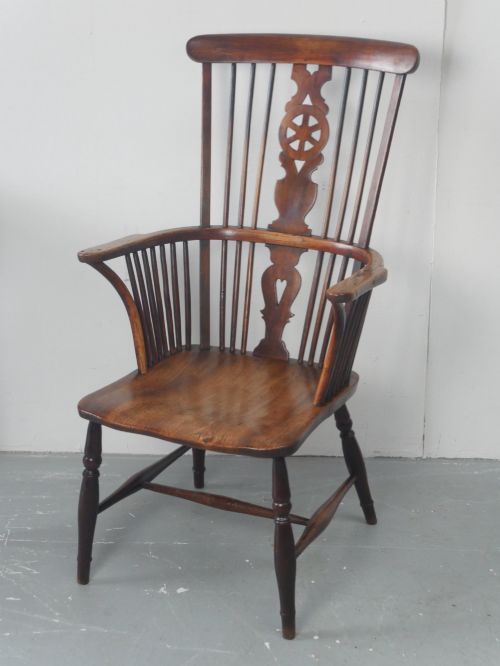

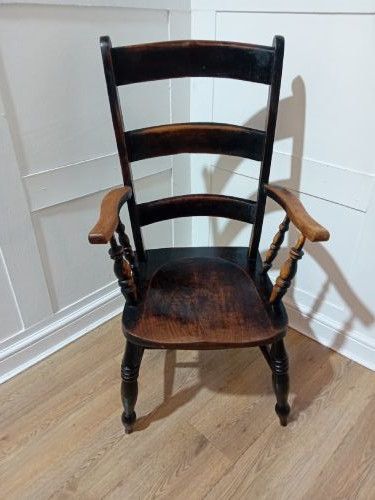
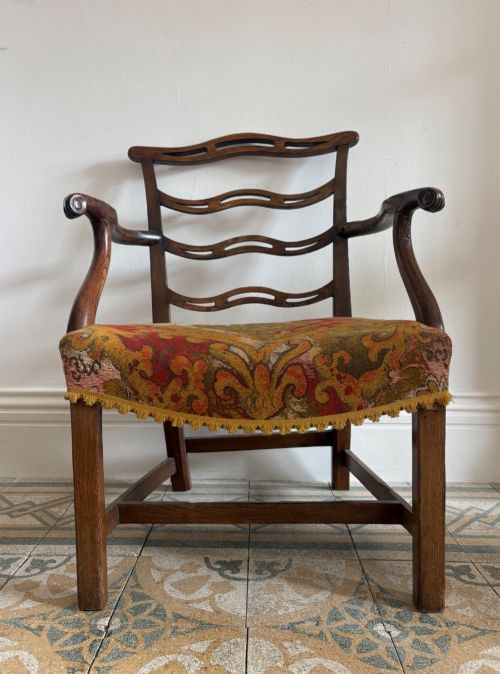
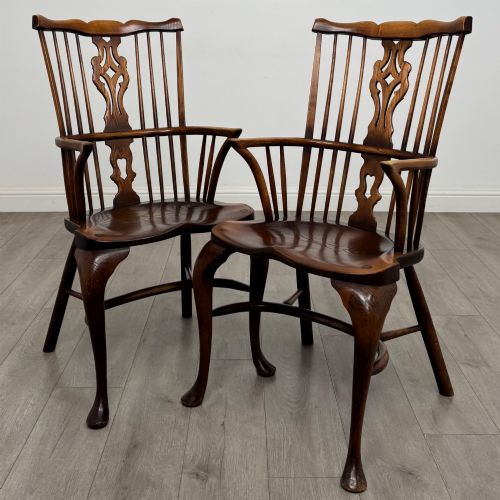
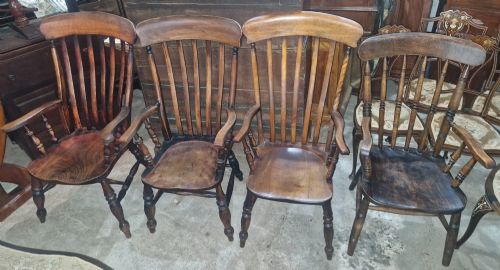
Country Elm Elbow Chair
A country elm elbow chair brings honest vernacular timber and sturdy joinery straight into a modern room.
Country Elm Elbow Chair
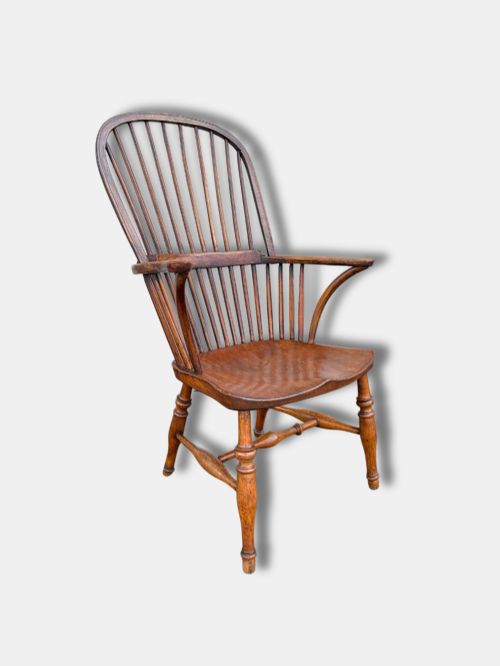
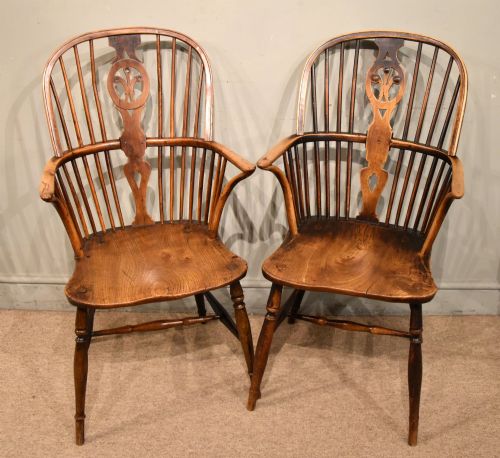
A country elm elbow chair represents the practical domestic seating produced by regional vernacular makers across the eighteenth and nineteenth centuries. Buyers searching for a country elm elbow chair typically encounter traditional Windsor forms alongside ladderbacks and rush-seated carvers originating from English, Welsh, and Scottish rural workshops.
These seats served everyday domestic functions in farmhouses, cottages, and provincial homes, utilising locally sourced hardwoods for structural resilience. The material combination of elm seats with ash or fruitwood spindles characterises the standard regional output seen across Georgian and Victorian periods.
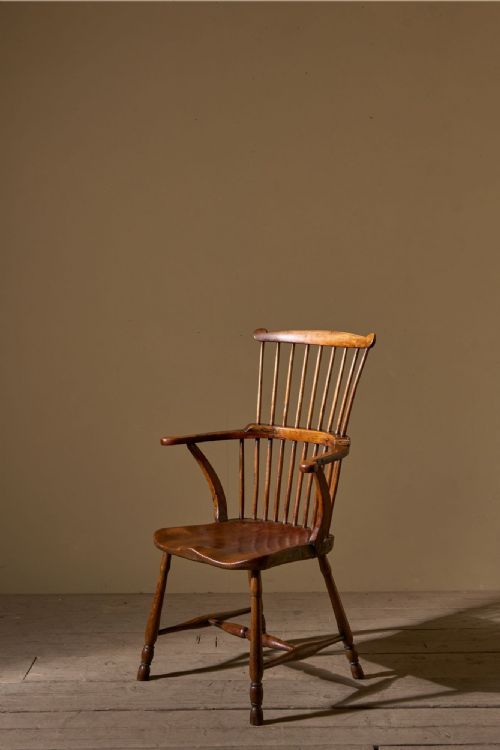
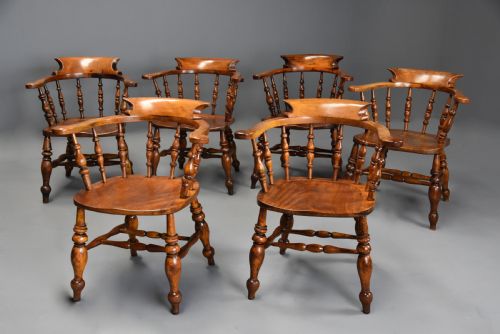
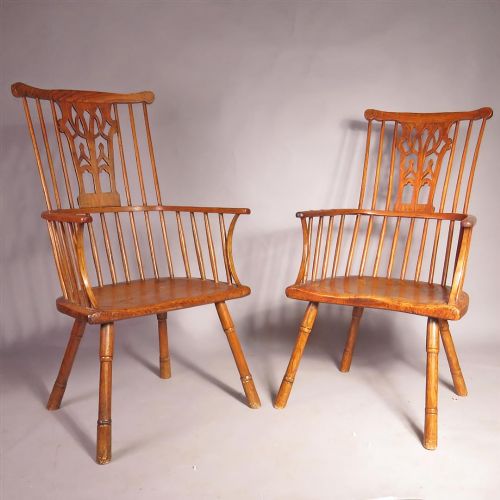
Survival depends on the tenacity of the timber, particularly elm, which resists splitting under heavy daily use. Collectors find variations ranging from low-backed smokers bows to high-backed comb-backs bearing distinct regional turning traits.
How they were made
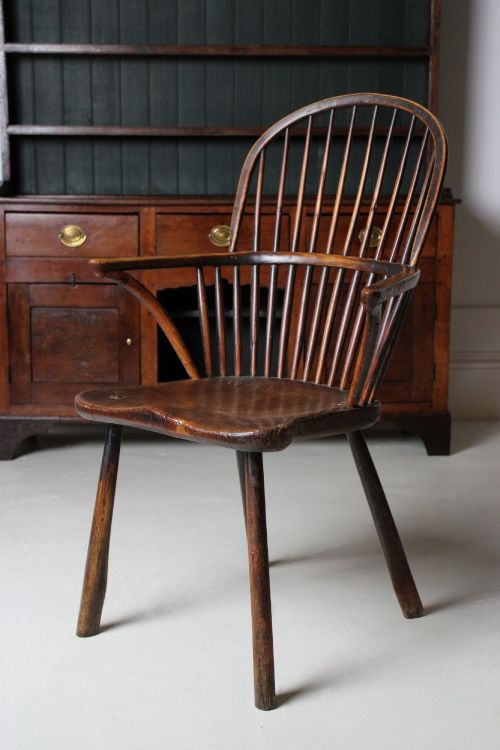
Maker construction relies on solid elm saddle seats bored to receive turned ash legs and stick backs using traditional wedge joinery. Frame stability depends on the contrasting properties of timber, pairing flexible ash for steam-bent bows with dense elm for the seat plank.
Green woodworking techniques allowed craftsmen to shape unseasoned timber that tightened naturally as the wood dried around tenon joints. Secondary woods like beech, fruitwood, and yew supplement the frame, whilst rush or tapestry textiles provide drop-in or woven seating surfaces.
Makers occasionally utilised scraps of laburnum wood for accent spindles when standard ash supplies ran low in provincial workshops.
What varies in quality
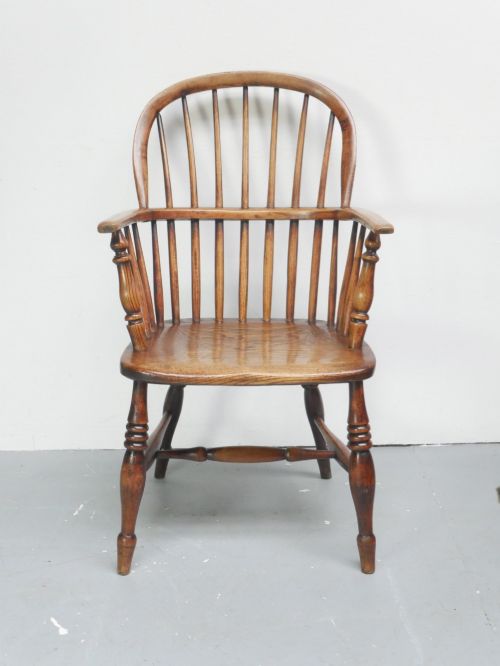
Quality rests on the depth of the saddle shaping in the solid elm seat and the visual balance of the turned spindles. Examples displaying crisply turned legs, matching crinoline stretchers, and original untrimmed feet command greater attention.
Surface preservation distinguishes standard regional output from exceptional vernacular pieces, particularly where patinated original finishes survive on the elm grain. Minimal intervention by historical restorers maintains the integrity of the original wedged joints.
The Country Elm Elbow Chair Glossary
- Elm
- A tough, interlocking hardwood traditionally chosen for chair seats because it resists splitting when nailed or bored. Its distinctive grain pattern provides durability under daily domestic stress.
- Windsor
- A chair construction method where legs and back spindles are wedged directly into a solid wooden seat rather than a framed chassis. This technique originated in rural joinery before gaining widespread regional popularity.
- Smokers Bow
- A low-backed Windsor variant featuring a continuous curved armrail supported by short turned spindles. These sturdy elbow chairs often served in provincial inns and farmhouse smoking rooms.
- Comb Back
- A high-backed Windsor style where vertical spindles pierce the top rail, resembling the teeth of a dressing comb. This form offers elevated back support through extended ash uprights.
- Crinoline
- A curved under-stretcher linking the legs of a Windsor chair to provide lateral bracing. The arched design resembles the shape of nineteenth-century crinoline petticoats.
Country Elm Elbow Chair: Frequently Asked Questions
How do I date an antique elm armchair?
Dating relies on observing construction methods, tool marks, and the evolution of chair styles from stick-backs to comb-backs. Earlier eighteenth-century models often feature simpler turning and broader proportions compared to later Victorian iterations.
Wood shrinkage, peg construction, and the wear patterns on the elm seat provide further clues regarding age. Comparing the turning profile of the legs helps place the piece within a specific regional decade.
Are these chairs comfortable for daily use?
These chairs offer surprisingly ergonomic support due to the deep saddle shaping carved into the solid elm seats. The raked back spindles and curved elbow rests accommodate natural sitting postures effectively.
Adding a loose cushion can enhance comfort for extended seating during dining or fireside reading. Their sturdy frames remain fully capable of supporting regular household use today.
How should I care for antique elm wood?
Maintain elm furniture by keeping it away from direct heat sources and sudden humidity changes that cause timber movement. Applying a traditional beeswax polish periodically helps nourish the dry grain and preserve the surface patina.
Avoid modern silicone-based sprays, which can degrade the historic finish over time. Gentle dusting with a soft cloth is sufficient for routine upkeep.