
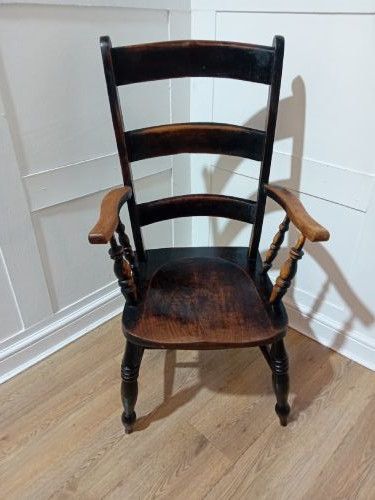
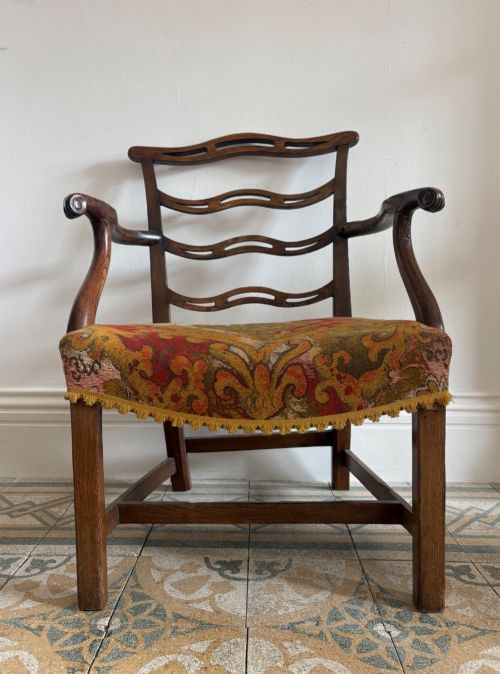
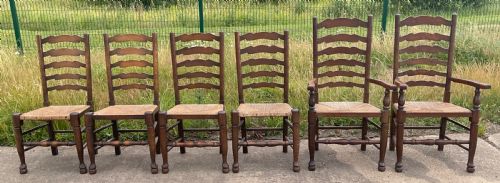
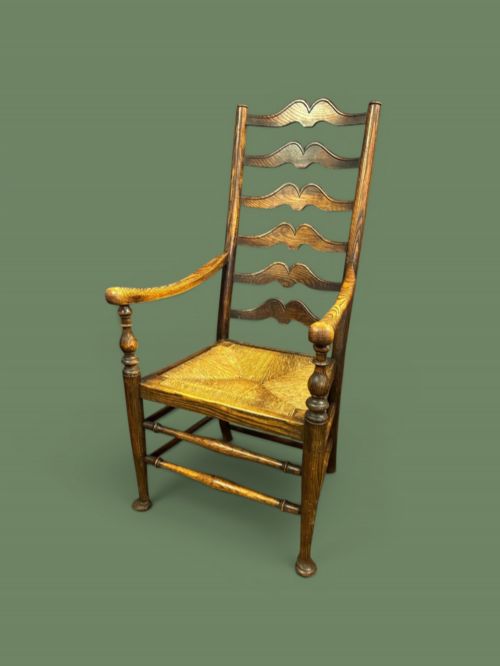


Elm Ladderback Carver Chair
An elm ladderback carver chair brings vernacular warmth and sturdy country construction to any interior.
Elm Ladderback Carver Chair
When you search for an elm ladderback carver chair, you are looking at sturdy seating rooted in English country traditions, featuring upright armchairs with horizontal slats across the back.
The versions you are most likely to meet on this page span the Georgian, Victorian, and Arts and Crafts periods, often combining elm with ash, beech, or oak.
These pieces function as robust armchairs for dining rooms or studies, originating from regional workshops rather than metropolitan cabinet makers.
Materials and construction methods
Maker workshops utilised native timbers, turning elm for seats and arm supports while pairing it with beech, ash, or oak for spindles and framing.
Seats were finished with woven rush or upholstered in tapestry fabric, supporting the wooden ladderback frames.
Some chairs bear the invisible scars of elbows resting through stormy Georgian dinners.
Judging quality in country chairs
Quality rests in the balance of the proportions and the grain figure of the elm seat, which shows more or less dramatic figuring depending on the timber selection.
The integrity of the turned joints and the tightness of the rush or fabric seating determine how well the chair has survived centuries of use.
The Elm Ladderback Carver Chair Glossary
- Carver chair
- An armchair, typically taller and wider than dining chairs, designed to sit at the head of a table.
- Ladderback
- A chair back constructed with a series of horizontal wooden slats resembling the rungs of a ladder.
- Rush seat
- A seating surface woven from dried marsh rushes, providing a resilient and traditional platform.
- Vernacular
- Objects designed by local craftsmen using regional materials to serve a practical function rather than following formal court styles.
Elm Ladderback Carver Chair: Frequently Asked Questions
What is a carver chair?
A carver chair is an armchair traditionally placed at the head of a dining table.
These chairs feature supportive armrests built into the frame.
How do I care for rush seats?
Rush seating requires dry conditions and occasional gentle cleaning to prevent brittle fibres.
Keep them away from direct heat sources and excessive moisture.
What woods were used?
Country makers relied on native hardwoods available in their local regions.
Elm was frequently paired with ash, beech, oak, and rush.
How do I date these chairs?
Dating relies on observing construction marks, timber wear, and stylistic indicators from periods like Georgian and Victorian.
Regional variations also help narrow down the decade of production.