



Cornish Coastal Landscape Artwork
Cornish coastal landscape artwork captures harbours, fishing boats, and rocky shores through the brush of painters working across the nineteenth and twentieth centuries.
Cornish Coastal Landscape Artwork
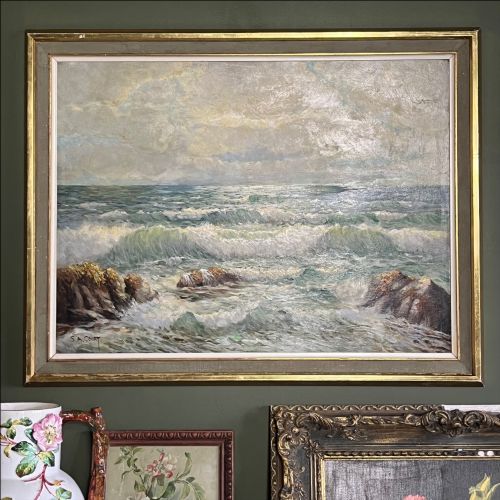
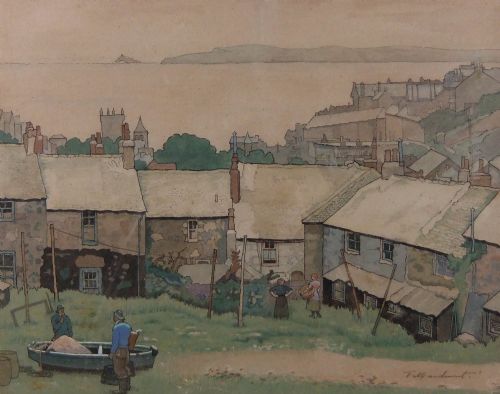
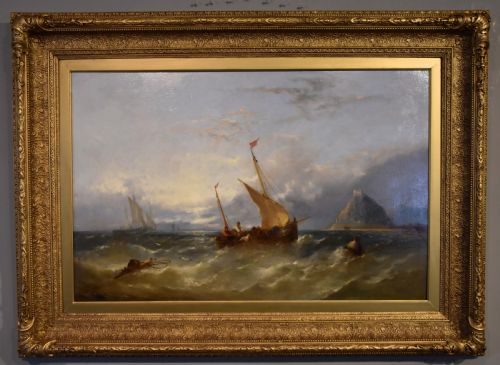
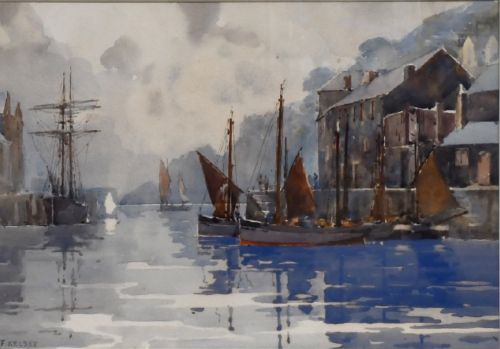
Cornish coastal landscape artwork brings together paintings that record the light, harbours, and maritime life of Cornwall from the nineteenth century into the mid twentieth century. Buyers seeking this phrase encounter framed oils and watercolours depicting specific fishing ports and coastal views such as St Ives, Polperro, and Mousehole.
The selections span distinct periods including Victorian and Edwardian examples alongside later movements like the Newlyn School and St Ives School. Works range from intimate watercolours on paper to large oil paintings on canvas framed in wood and gilt wood.
How they were made
Artists painted en plein air using oil paint on canvas or board, and watercolour or pastel on paper, capturing the shifting coastal light directly from the subject. Pigments were applied with varied brushwork, from tight traditional detail to looser impressionistic strokes.
Finished works were typically mounted behind glass for watercolours and drawings, or left unglazed for oil paintings, and set into wood or gilt wood frames.
Several artists clearly stood on the very same slipways in St Ives decades apart, painting identical harbour rocks at low tide.
What varies in quality
Quality rests on the sureness of the drawing, the handling of light and atmosphere, and the artist's ability to render the particular topography and maritime atmosphere of Cornwall. Stronger examples display confident handling of tone and colour, particularly in capturing sea and sky.
The choice and condition of the period frame, alongside the preservation of the original pigment without heavy restoration or damage, further distinguishes the standing of individual pieces.
Sidney A Court·William Banks Fortescue·Thomas Maidment·William Henry Williamson·Frank Kelsey·George F Pennington·Edward Matthew Elliott·Gyrth Russell·George Turland Goosey·William Pitt·Ernest F Hill·Frederick Stuart Richardson·William Lambert Bell·Jack R Mould·Walter Sweet·S J Lamorna Birch·Herbert James·Cuthbert Crossley·William Edward Webb
The Cornish Coastal Landscape Artwork Glossary
- En plein air
- Painting outdoors in direct natural light. This method allowed artists to capture rapid changes in weather and coastal atmosphere.
- Newlyn School
- An artist colony based in Cornwall from the late nineteenth century onwards. Members focused on naturalistic depictions of local fishing communities and coastal scenes.
- St Ives School
- A twentieth century grouping of artists associated with St Ives. Their work evolved from traditional landscape painting towards various forms of modernism.
- Seascape
- A work of art depicting the sea or marine subjects. These pieces frequently record harbour activity, fishing vessels, and coastal cliffs.
Cornish Coastal Landscape Artwork: Frequently Asked Questions
What subjects do these paintings show?
These works depict Cornish subjects including fishing harbours, coastal cliffs, fishing boats, and landmarks such as St Michael's Mount. Scenes frequently focus on locations like St Ives, Polperro, Mevagissey, and Mousehole.
Artists recorded daily maritime life, low tides in harbours, and the specific quality of light along the Cornish coast across different seasons.
Are these paintings original works?
The selection consists of original paintings, watercolours, and pastels created by individual artists rather than modern reproductions. Each piece is a unique hand-painted record made on location or in the studio.
Signatures, dates, and inscriptions on the works or frames often provide direct links to the artist and the specific Cornish location depicted.
How should I frame and display them?
Many pieces retain their original wood or gilt wood frames, which complement the period of the painting. Displaying them away from direct sunlight protects vulnerable watercolours on paper and oil pigments.
Watercolours and pastels require glass protection to prevent atmospheric damage, whereas oil paintings on canvas are traditionally exhibited unglazed.
How do I identify the period of a piece?
Periods can be identified through a combination of painting style, framing materials, artist signatures, and any biographical dates associated with the creator. Victorian and Edwardian works tend towards tighter realism, while later twentieth century pieces show impressionistic or modernist tendencies.
Examining the reverse of the canvas, stretcher bars, or paper backing often reveals historical labels, inscriptions, or dates left by the artist.