
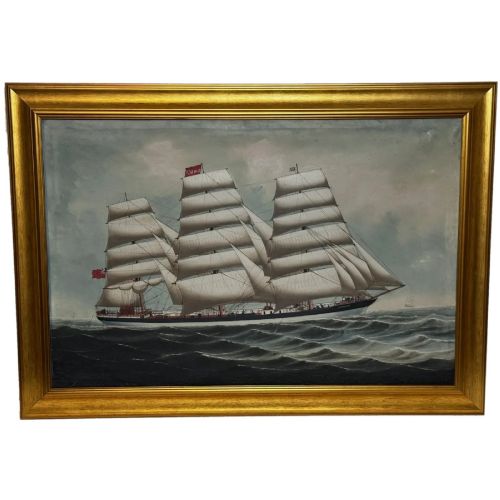

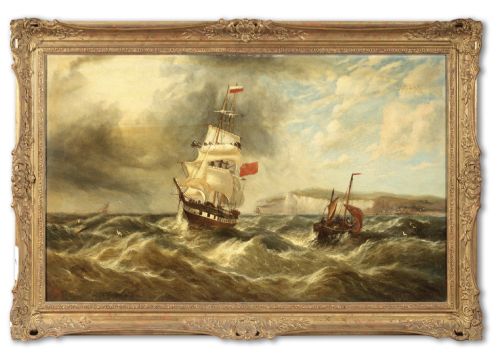
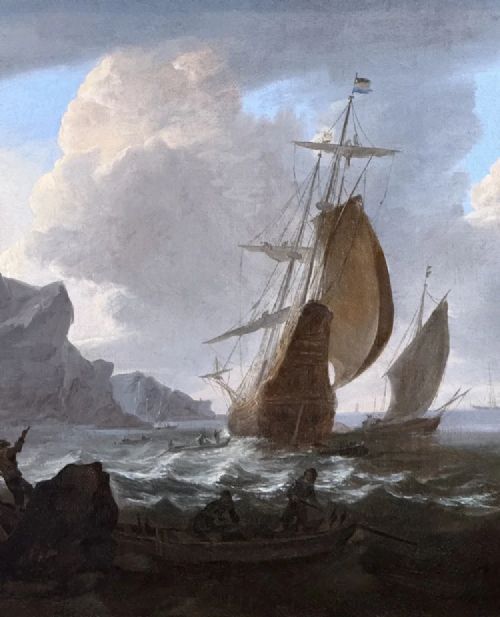
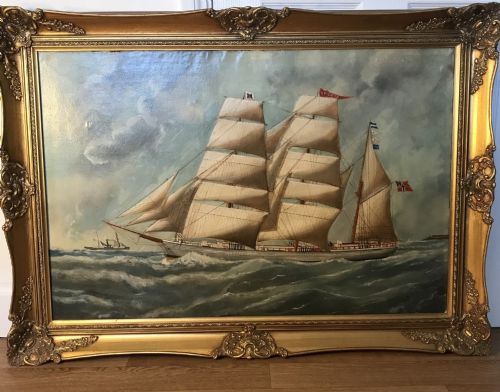

Antique Ocean Painting Gold
An antique ocean painting gold brings the movement of heavy seas and coastal light into a room through oil and watercolour.
Antique Ocean Painting Gold
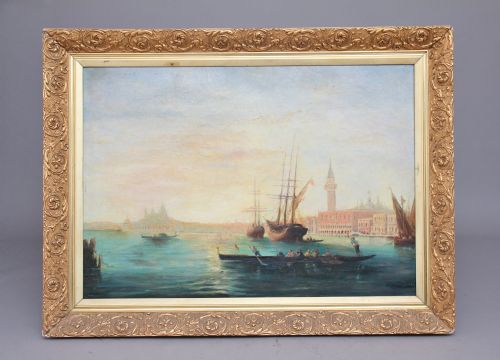
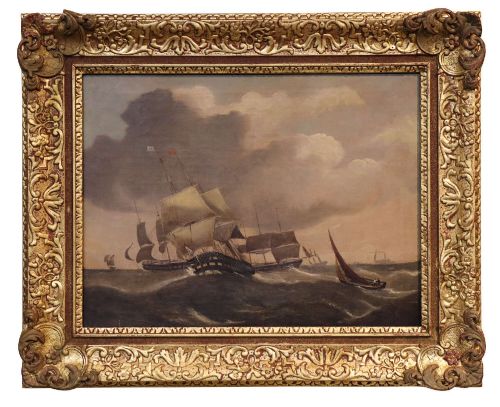
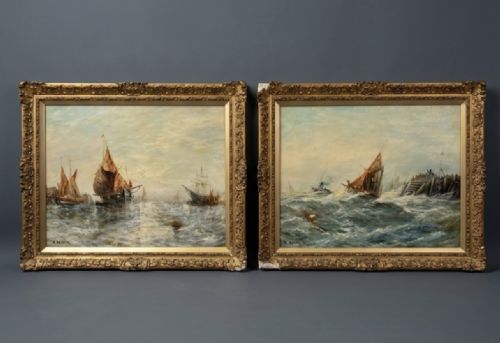
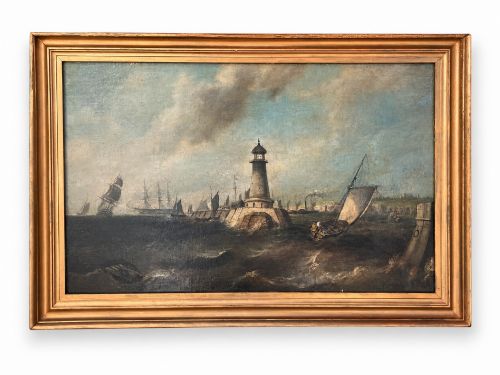
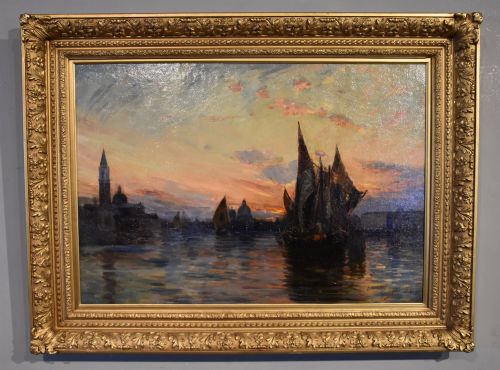
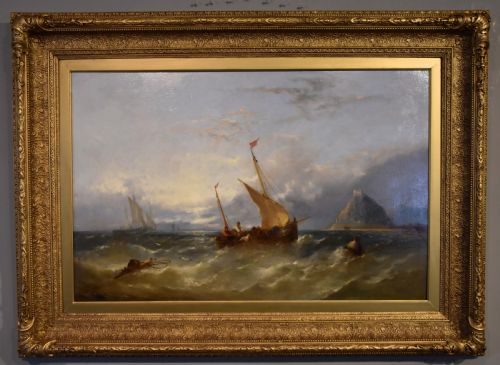
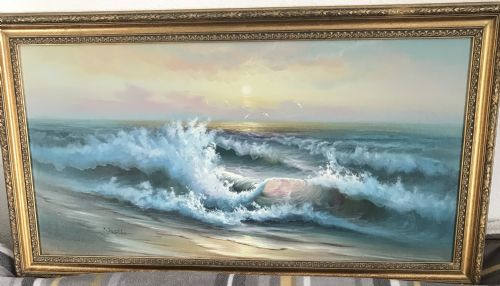
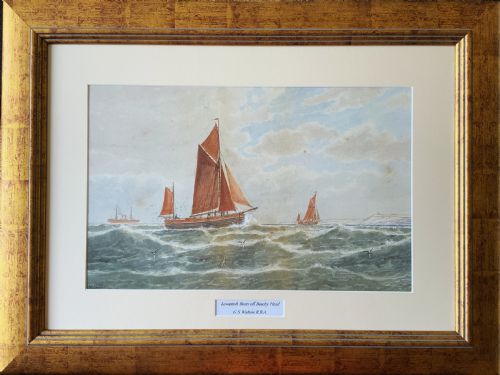
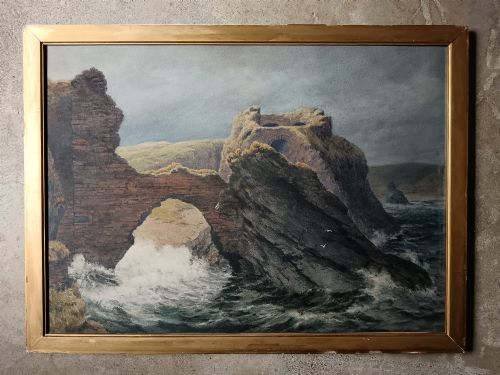
When you search for an antique ocean painting gold, you encounter maritime artworks executed across the nineteenth and early twentieth centuries. These pieces typically depict sailing ships, coastal harbours, and turbulent seas under varied atmospheric conditions.
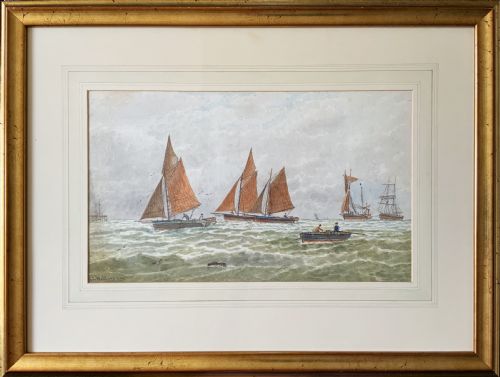
The works appearing here range from Victorian oil paintings on canvas to Edwardian watercolours on paper. Many are housed in their original gilt wood and gesso frames, which bring a warm metallic sheen to the composition.
Subjects stretch from British and Dutch coastal scenes to distant waters like the Venetian lagoon and the Pearl River. The most frequent examples combine nineteenth-century marine art with gilt framing.
How they were made
Artists applied oil paint to canvas or board, and watercolours to paper, building up marine scenes with careful brushwork. Canvases were stretched over wooden frames, whilst watercolours were mounted under glass.
Frames were constructed from wood and finished with layers of gesso before being gilded with gold leaf. This method created reflective borders that complemented the light playing across the painted water.
Listings feature oil on canvas, watercolour on paper, and gilt wood frames across nineteenth and twentieth-century periods.
What varies in quality
The skill of the brushwork in rendering water and rigging separates standard decorative items from accomplished fine art paintings. Handling of light upon choppy seas and stormy skies reveals the painter's direct observation.
The condition of the original gilt wood and gesso frame contributes significantly to the integrity of the piece. Frames retaining their original gilding without heavy restoration enhance the visual impact of the artwork.
Reginald Arthur Borstel·John Rose Miles·Bonaventura Peeters·Thomas Hodgson Liddell·William Henry Williamson·George Stanfield Walters·John Moxon·Charles Napier Hemy·Gustave De Bréanski·Daniel Sherrin·Abraham Hulk Snr·Charles Sim Mottram·Hendrik Willebrord Jansen·Claude Thomas Stanfield Moore·George Henry Knight·Sir David Murray·Frank Wood
The Antique Ocean Painting Gold Glossary
- Gilt wood
- Wood coated with gold leaf or a gold-coloured metallic finish. This material creates the bright frames often found on nineteenth-century marine art.
- Gesso
- A plaster-like mixture applied to wooden frames before gilding. It provides a smooth surface for shaping ornamental details.
- Oil on canvas
- Pigment mixed with drying oil applied to a woven fabric support. This combination allows for rich blending and deep tones in maritime scenes.
- Watercolour painting
- Pigments suspended in a water-soluble vehicle used on paper. It offers a transparent quality suitable for coastal atmospheres.
- Marine art
- Artistic representations of the sea, ships, and coastal views. It encompasses historical naval battles, merchant shipping, and quiet harbours.
Antique Ocean Painting Gold: Frequently Asked Questions
What periods do these paintings date from?
The works span the nineteenth and early twentieth centuries, with notable examples from the Victorian and Edwardian eras. Earlier Dutch maritime pieces also appear alongside later modernist interpretations.
Dates generally range from the mid-nineteenth century up to the mid-twentieth century, reflecting changing styles in marine art.
How should I display a framed canvas?
Hang the artwork away from direct sunlight and steady heat sources to protect both the oil paint and the gilt frame. Maintaining stable room humidity prevents the canvas and wooden stretcher from warping.
Ensure the wall fixings safely support the weight of the heavy wooden and gesso frame.
Are watercolours framed differently from oils?
Watercolour paintings on paper require glass protection to shield the delicate pigments from dust and moisture. Oil paintings on canvas or board are typically displayed open to the air within their frames.
Both types benefit greatly from original gilt frames that match the period of the artwork.
How do I identify a maritime scene?
Maritime scenes feature ships, boats, lighthouses, and coastal architecture set against open water or harbour views. Common elements include three-masted schooners, fishing boats in choppy seas, and serene coastal inlets.
Artists use these subjects to capture the changing weather and movement of the ocean.