
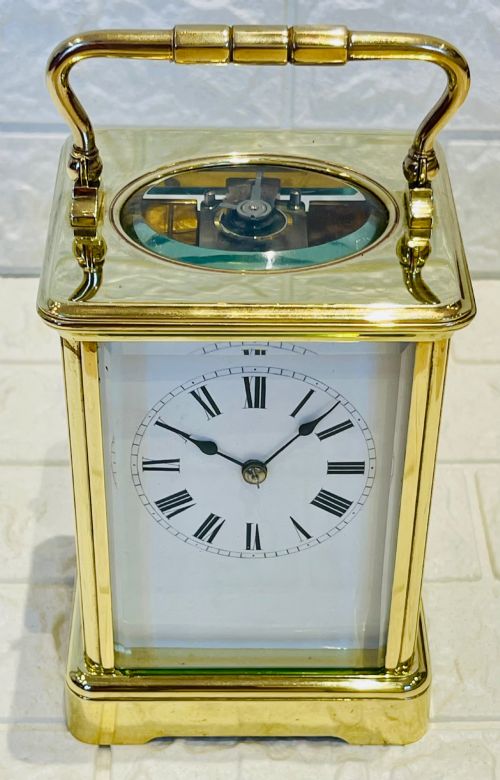


Corniche Brass Clock
A corniche brass clock is a portable timepiece housed in a distinctive bevelled glass and metal case, prized for combining mechanical precision with travel utility.
Corniche Brass Clock
When searching for a corniche brass clock, buyers look at portable mechanical timepieces typically produced during the nineteenth century and the early decades of the twentieth century. These pieces originate primarily from French makers working in styles spanning the Victorian period and the Second Empire.
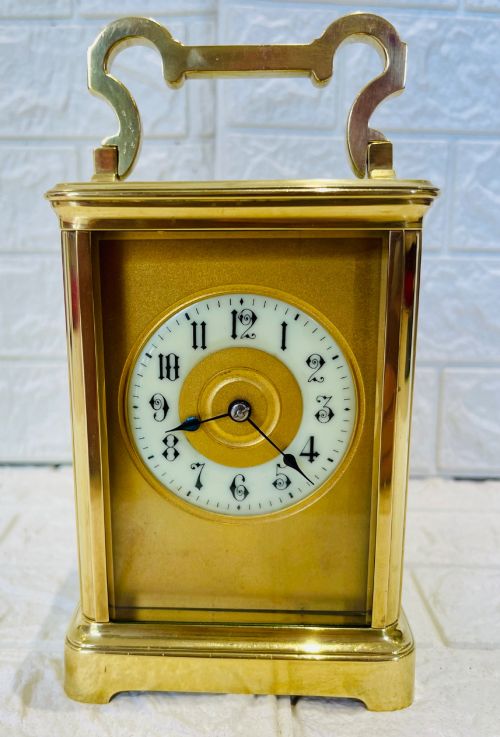
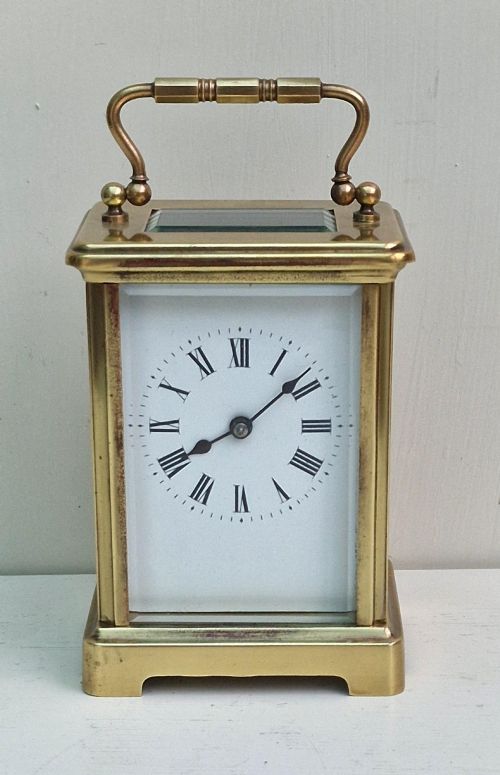
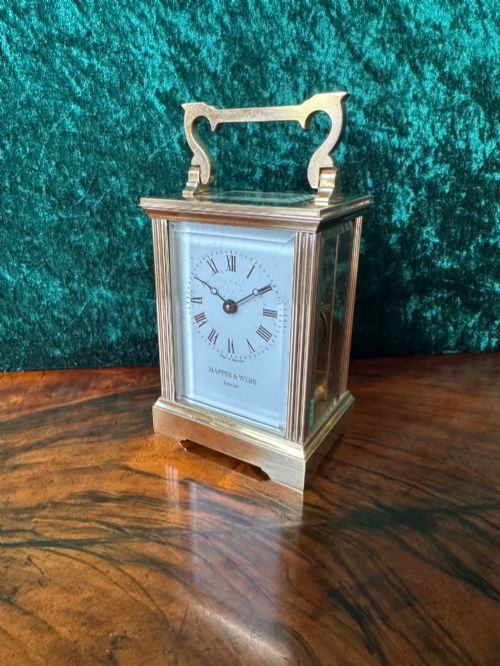
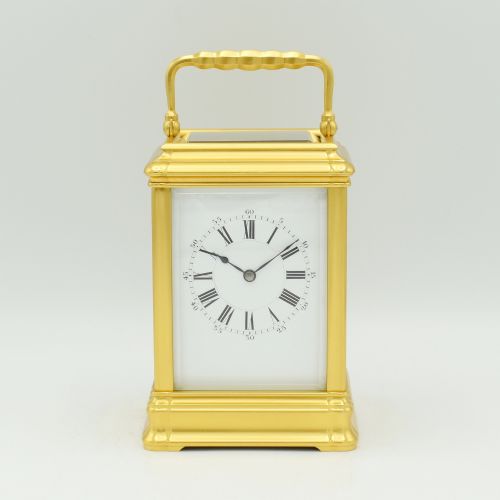
The most common form on this page is the carriage clock featuring a rectangular polished brass case with distinctive rounded columns at the corners and bevelled glass panels. Such pieces range from standard eight-day timepieces to complex examples equipped with striking mechanisms, repeaters, and alarms.
How they were made
These pieces utilise heavy brass and gilt bronze for the structural framework, shaped into corniche cases that enclose intricate steel gear trains and escapements. Enamel dials provide the face for the time indicators, carefully mounted behind protective bevelled glass windows.
Craftsmen built these mechanisms with eight-day movements, frequently integrating complications such as striking mechanisms, quarter-striking petite-sonnerie, and alarm functions within a compact portable housing.
What varies in quality
The distinction between tiers rests upon the complexity of the movement and the crispness of the gilt brass casting. Standard timepieces differ substantially from examples featuring repeating mechanisms, alarm complications, or quarter-striking gear trains.
Another measure of quality involves the refinement of the dial work and the retention of the original leather travelling case, which elevates the standing of an individual piece.
Mappin and Web·Henri Jacot·T. Martin & Co·Paul Garnier·Drocourt·James Grohe·J.W. Benson
The Corniche Brass Clock Glossary
- Corniche case
- A brass carriage clock case style characterised by flat top and bottom plates with rounded or columned corners framing glass panels. This design provides clear all-round visibility of the internal movement.
- Carriage clock
- A small, spring-driven portable clock designed for travel during the nineteenth century. These clocks usually feature a swing handle on top and an escapement visible through the dial or top glass.
- Striking mechanism
- A gear train that sounds the hours or quarters automatically on a bell or gong. More complex versions include repeating functions to restrike the last hour upon demand.
- Escapement
- The internal mechanism that controls the release of power from the mainspring to the gear train. It maintains the regular swing of the balance wheel to regulate timekeeping.
- Petite-sonnerie
- A quarter-striking complication that sounds the hours and quarters automatically as each quarter passes. It represents a higher standard of clockmaking complexity.
Corniche Brass Clock: Frequently Asked Questions
How do I wind a corniche brass clock?
Wind the clock using a proper fitting key inserted into the winding arbors located on the backplate. Turn the key gently until resistance indicates the mainspring is fully tensioned.
Avoid overwinding the mechanism, as this places undue strain on the internal springs and gear trains.
How do I date a brass carriage clock?
Dating relies upon stylistic indicators such as case proportions, escapement types, and maker signatures recorded on the backplate or dial. Victorian examples often display robust brass frames and specific serial numbers corresponding to maker records from the nineteenth century.
Comparing the movement architecture against known production periods helps narrow the manufacturing decade.
Where were most carriage clocks made?
The majority of nineteenth-century carriage clocks originated in France, particularly in workshops based in Paris. These Parisian makers exported portable timepieces across Europe and Britain.
Retailers in cities like Edinburgh and London frequently retailed these French movements, sometimes adding their own signatures to the dial or backplate.