
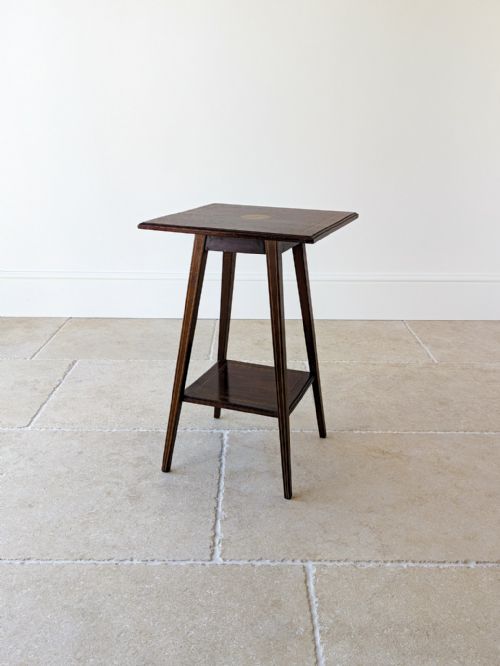
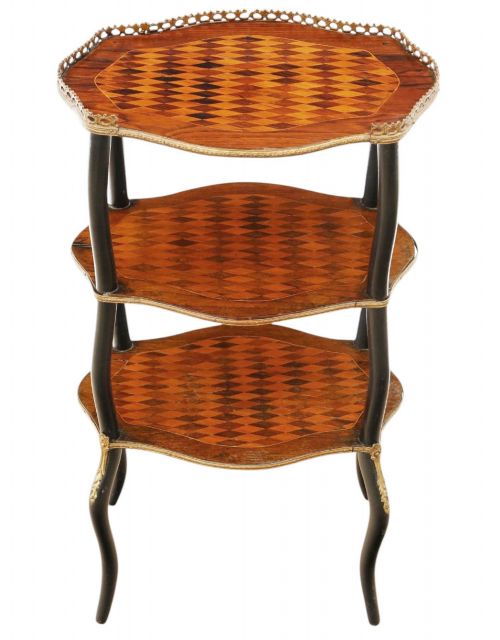
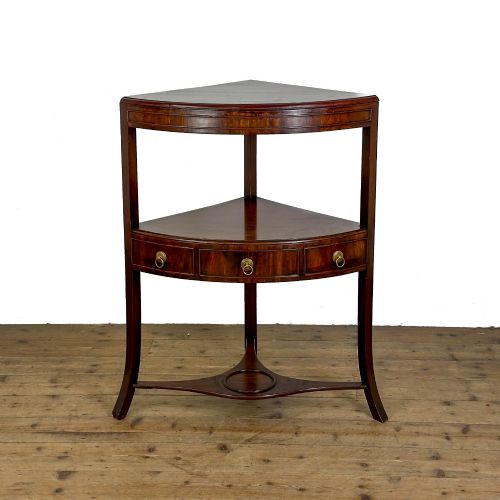
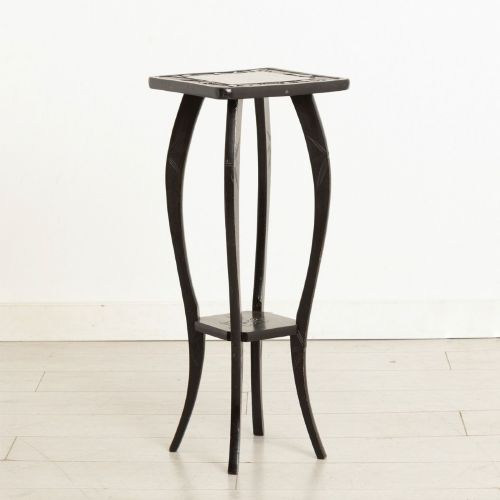


Corner Display Table
A corner display table occupies neglected space with tiers for silver, porcelain or books.
Corner Display Table
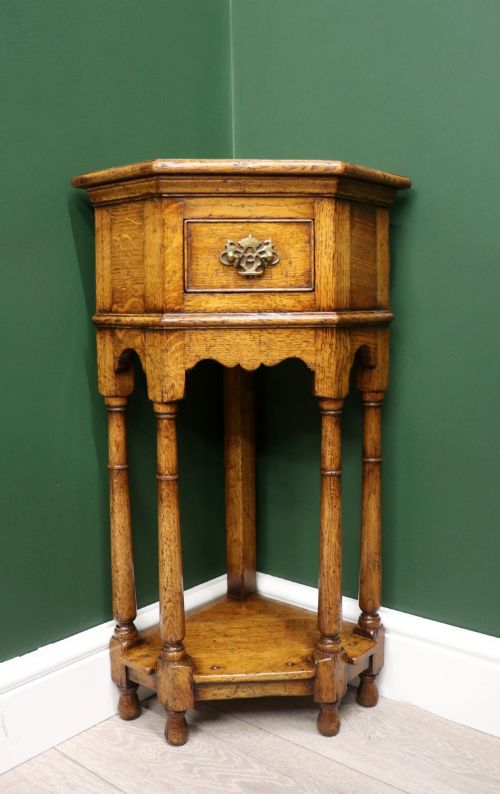
A corner display table solves the problem of empty angles in a room by turning unused wall junctions into functional stages for ornaments and everyday objects. When you search for a corner display table, you encounter diverse multi-tiered furniture built to fit snug against intersecting walls.
The pieces listed here span several centuries and styles, drawing heavily on Georgian and Regency forms alongside Victorian and Edwardian tiers. You are most likely to meet mahogany or burr walnut constructions with multiple shelves designed specifically to stand in a corner.
Makers and cabinetmakers adapted this footprint into various practical objects, from bow front washstands and wig stands to etageres and open corner bookcases. Each design prioritises vertical display without crowding the floor area of a traditional room.
Materials and construction
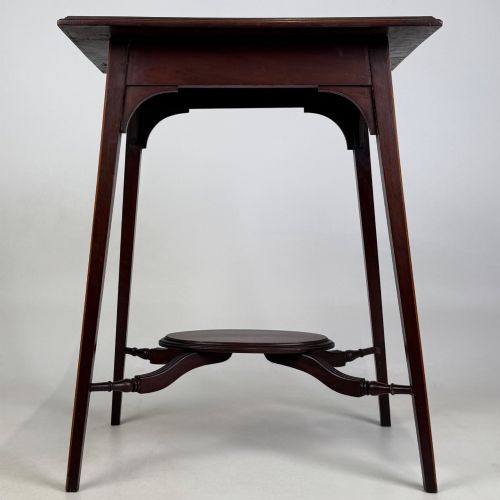
Timbers dictate the character of these tables, with dense mahogany, figured burr walnut and robust oak forming the primary structural carcasses. Craftsmen often enhanced these foundational woods with satinwood inlay, boxwood stringing, brass fittings and ebonised detailing.
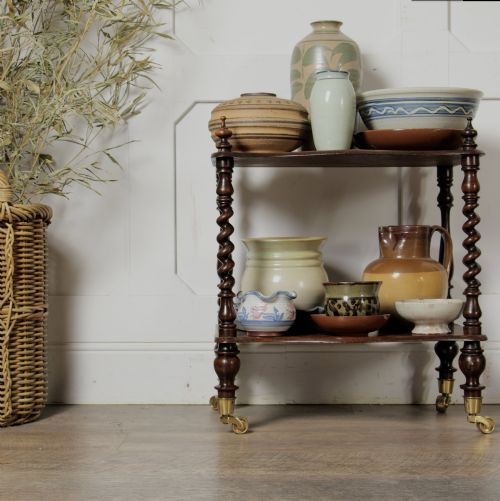
Tiered shelves rely on turned supports, barley twist columns or structural uprights to bear the weight of stacked platforms. Specialised items incorporate marble tops, hand-carved elements and glazed or open framing to support display requirements.
Current listings demonstrate a strong presence of mahogany and burr walnut timbers across Georgian, Victorian and Edwardian periods.
Distinctions in quality
The standard of a corner display table rests on the selection of timber veneers and the crispness of inlaid details such as boxwood and satinwood. Superior examples display carefully matched burr walnut or figured mahogany that flows naturally across each tier.
Construction rigidity separates superior cabinetwork from basic utilitarian pieces, visible in how firmly the upright supports join the shelves. Refined turnings, clean joints and undamaged brass mounts indicate workshop origins that valued decorative polish alongside everyday utility.
Liberty of London
The Corner Display Table Glossary
- Etagere
- A piece of furniture consisting of a set of open shelves for displaying small objects or ornaments. These tiers graduate in size or remain uniform depending on the specific corner design.
- Whatnot
- An open shelved cabinet used for holding bric-a-brac, books or ornaments. This form appears frequently in nineteenth century variations.
- Inlay
- A technique where pieces of contrasting wood, such as satinwood or boxwood, are inserted into a recessed wooden surface to form decorative patterns. It defines many Edwardian and Georgian pieces.
- Demi-lune
- A half-moon shape utilised for console tables and display units intended to sit flush against a wall or corner.
Corner Display Table: Frequently Asked Questions
What is a corner display table used for?
These tables provide vertical display space in room angles that standard furniture leaves empty. They hold porcelain, books, plants and decorative objects across multiple tiers.
Their compact footprints make them suitable for smaller rooms where floor space remains at a premium. Historic versions also served specialised domestic functions like holding wash basins or wigs.
How do I identify a Georgian corner table?
Georgian pieces rely on solid mahogany construction, restrained lines and functional adaptations like bow fronts designed for corner washstands. They emphasise structural joinery over heavy surface decoration.
Later Victorian and Edwardian iterations introduce busier grain patterns like burr walnut, alongside elaborate turnings and contrasting wood inlays.
Where should I place a tiered whatnot?
A whatnot belongs in an empty room angle where its graduated shelves can catch the light without blocking doorways or walkways. Positioning it against intersecting walls ensures the stability of stacked tiers.
Avoid placing delicate burr walnut or polished mahogany in direct sunlight to protect the timber veneers from fading.
Are these tables sturdy enough for heavy books?
Most tiered display pieces accommodate moderate weights of porcelain, small clocks and collections of books across their shelves. Heavier volumes sit best on the lowest, most supported tier.
Checking the tightness of the upright columns and shelf joints ensures the structure remains stable under daily use.