
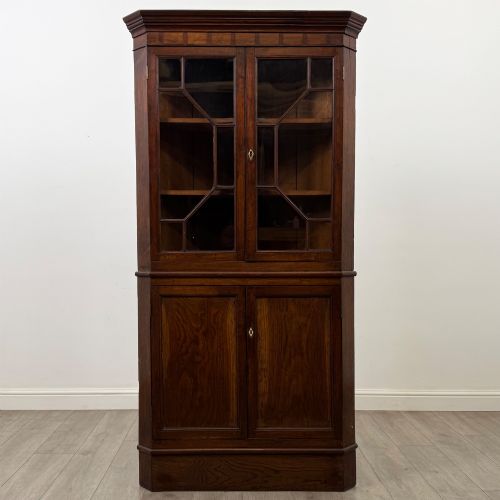
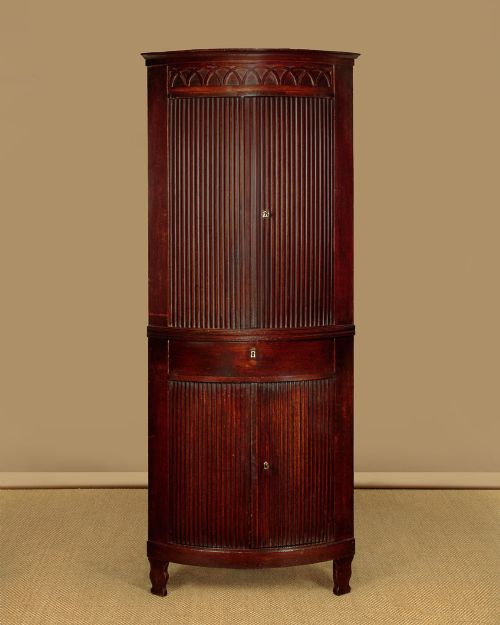
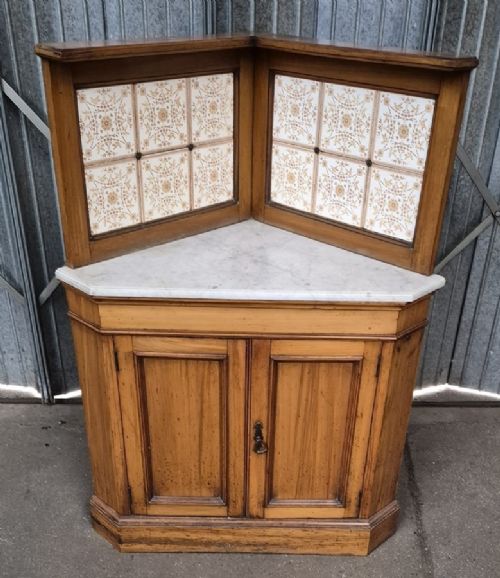

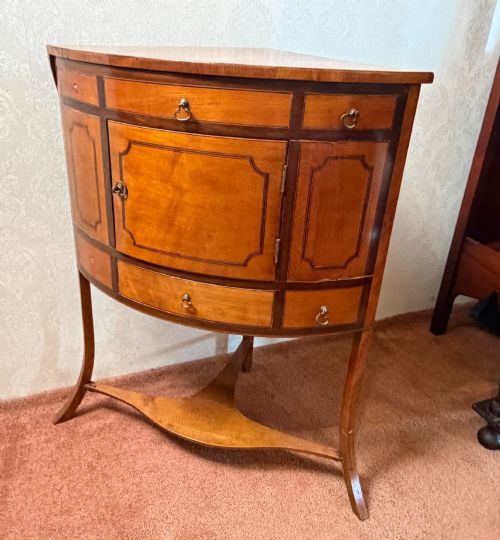
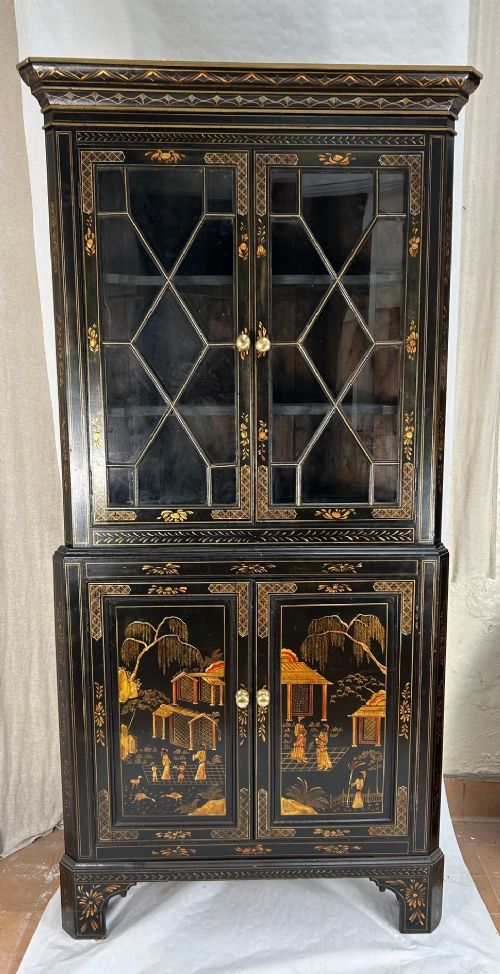
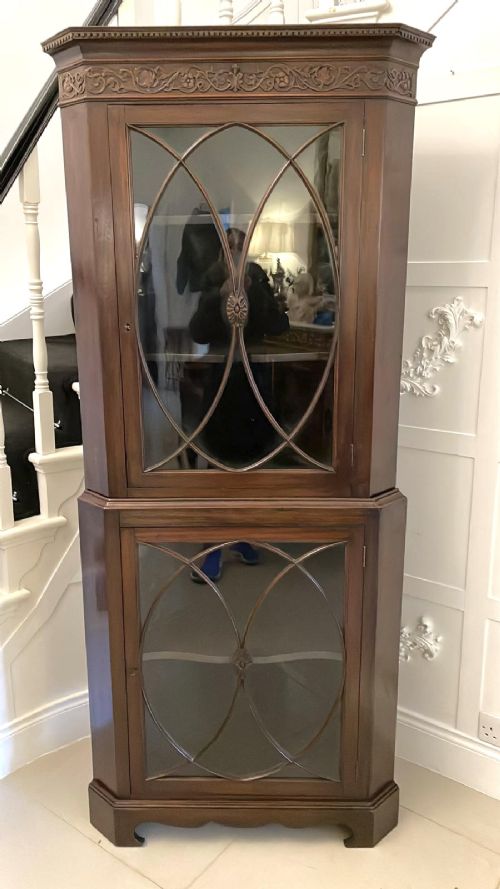
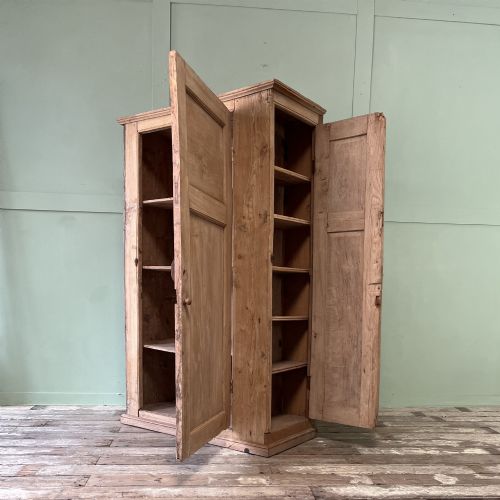
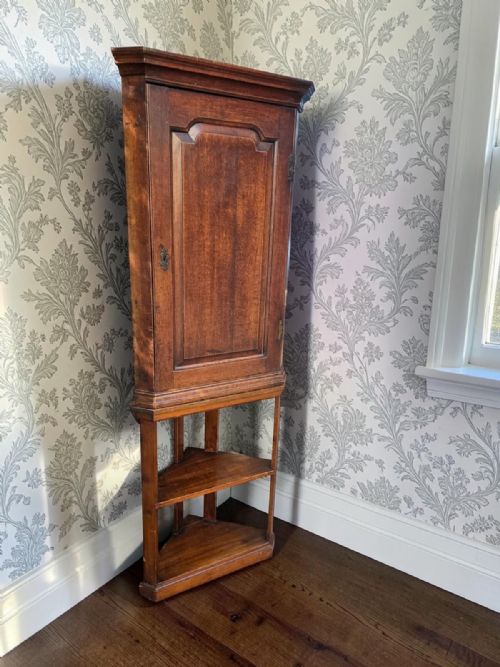
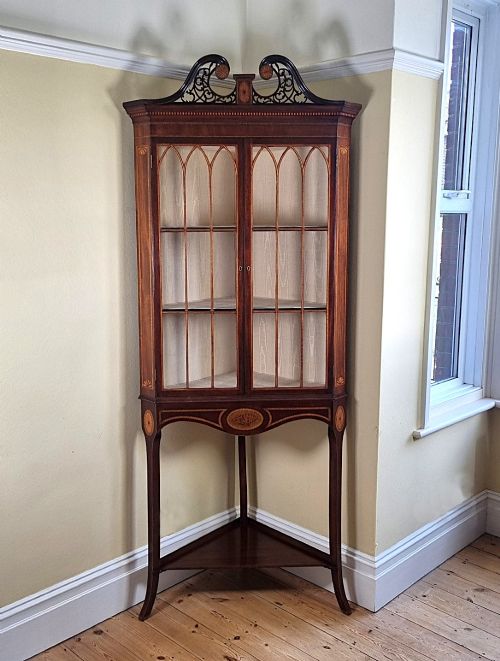
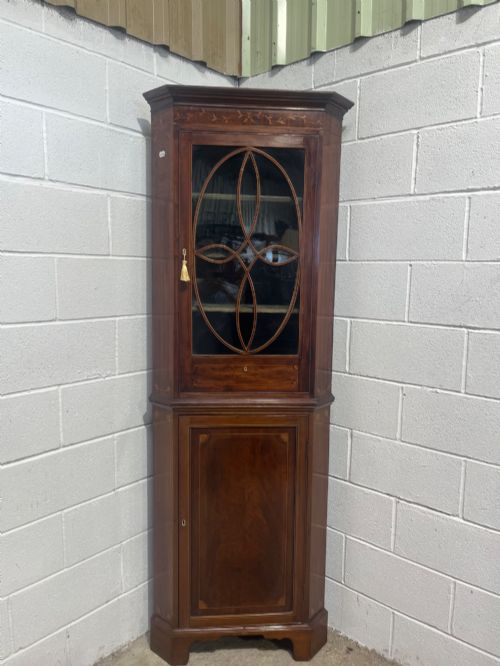
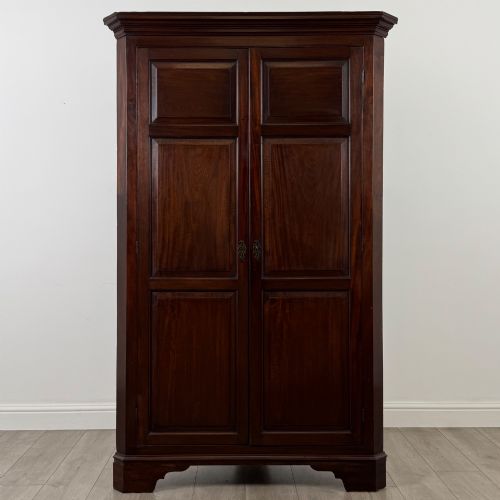
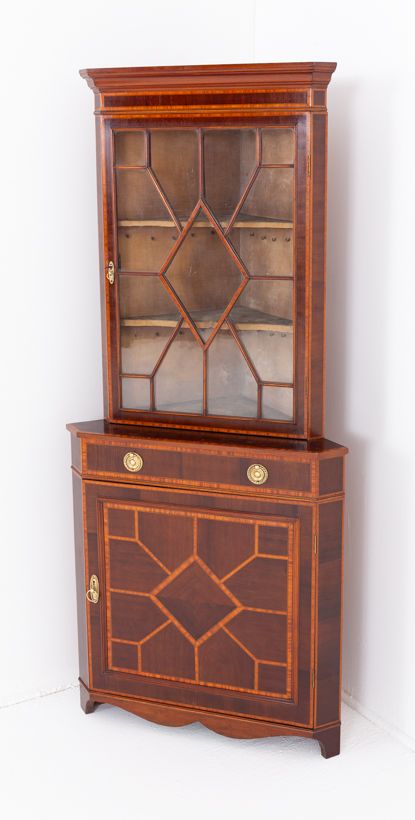

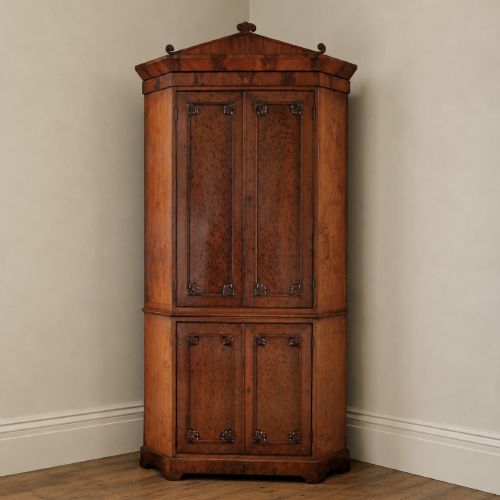
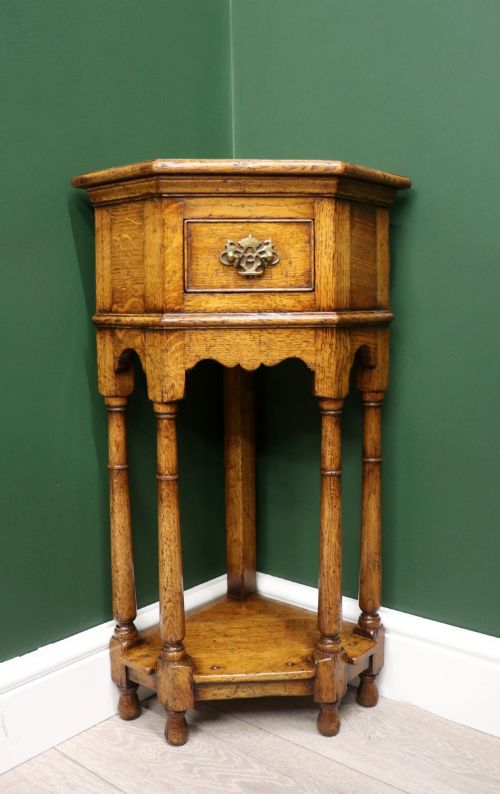
Corner Cabinet on Stand
A corner cabinet on stand is a fitted display or storage unit designed to occupy an unused room angle, elevated upon a distinct base.
Corner Cabinet on Stand
When you search for a corner cabinet on stand, you encounter architectural forms designed to utilise neglected room angles while providing elevated display and storage. The pieces meeting this description span several centuries, appearing in Georgian, Victorian, and Edwardian periods.
The format typically divides into two parts, featuring an upper cupboard resting upon a supportive stand, table, or bracket base. Woods such as oak, mahogany, and satinwood dominate the selection, often incorporating glass doors or marquetry inlay.
Examples range from compact folding washstands to tall double-height standing display cupboards. These items served domestic functions across country houses and urban properties, evolving from utilitarian storage into decorative focal points.
How They Were Made
Cabinetmakers constructed these pieces primarily using dense hardwoods like mahogany and oak, frequently employing pine or elm for internal elements and secondary structures. Timber selection governed both structural integrity and the decorative grain patterns visible on exterior surfaces.
Advanced techniques included curved bow fronts, cross-banding, brass hardware integration, and delicate marquetry or inlaid stringing in satinwood. Glazed doors utilised timber astragals to hold individual glass panes securely within the upper cupboard frame.
Plum pudding mahogany adds natural spotting that looks remarkably like a heavily fruited festive dessert.
What Varies In Quality
Quality reveals itself in the choice of timber and the precision of the joinery connecting the upper cabinet to its base stand. Superior examples display carefully matched grain patterns, such as flame mahogany or figured oak, across the primary elevation.
The refinement of decorative details, including hand-carved mouldings, inlaid marquetry, and original brass fittings, distinguishes standard utility pieces from exceptional cabinetmaking.
Edwards & Roberts·Walker & Sons
The Corner Cabinet on Stand Glossary
- Astragal
- A small, moulded profile strip used to divide glass panes within a cabinet door. These timber bars provide both structural support and decorative division.
- Marquetry
- Decorative veneer patterns formed by fitting together contrasting pieces of wood, shell, or ivory. Craftsmen applied these intricate designs to cabinet doors and cornices.
- Bow Front
- A convex, outwardly curved front surface characteristic of specific cabinet designs. This curved form requires advanced woodworking skill to shape accurately.
- Bracket Feet
- Simple architectural foot supports positioned at the corners of a base stand. They elevate the main body of the cabinet off the floor.
- Cross-Banding
- A border veneer applied around the edges of a panel where the grain runs perpendicular to the central area. This technique frames the primary timber surface.
Corner Cabinet on Stand: Frequently Asked Questions
What is a corner cabinet on stand?
A corner cabinet on stand is a dual-component furniture item featuring an upper storage or display cupboard supported by a dedicated base frame. These units fit directly into room angles to maximise floor space.
They combine architectural utility with decorative display, utilising glazed doors or open shelving to showcase contents while concealing items below.
How were these cabinets used?
These cabinets served primarily to store and display household ceramics, glassware, and valuable personal possessions in domestic interiors. Their placement in room corners utilised otherwise dead space efficiently.
Certain variations functioned specifically as washstands or utility cupboards, holding basins or household stores within accessible reach.
How do you date a corner cabinet?
Dating relies on examining the timber species, construction joints, hardware, and prevailing stylistic influences. Georgian pieces often display dense mahogany or oak with bracket feet, while Edwardian versions feature intricate marquetry and glazed framing.
Interior components and secondary woods like pine or elm also offer reliable clues regarding the period of manufacture.
Where should you place one?
These units belong in room angles where their angled backs fit flush against adjoining walls. They work effectively in dining rooms, hallways, or drawing rooms to anchor an empty corner.
Positioning them away from direct heat sources helps protect older wood and glass from environmental stress.