




Georgian Corner Vitrine
A georgian corner vitrine is a glazed display piece built to fit a room's angle, offering refined storage that draws the eye without dominating the floor space.
Georgian Corner Vitrine
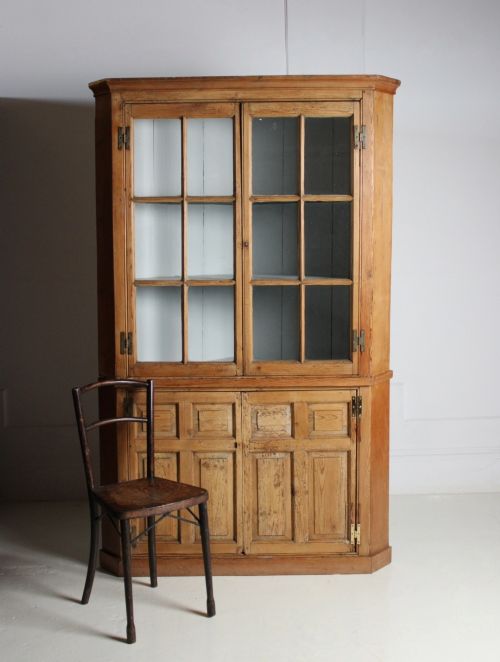
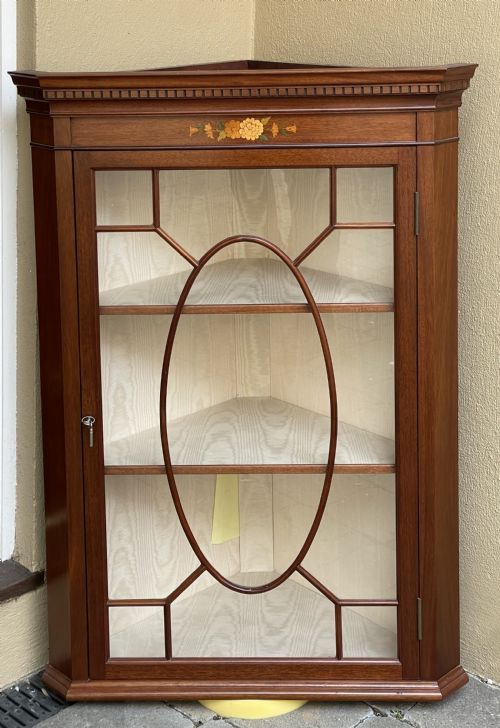
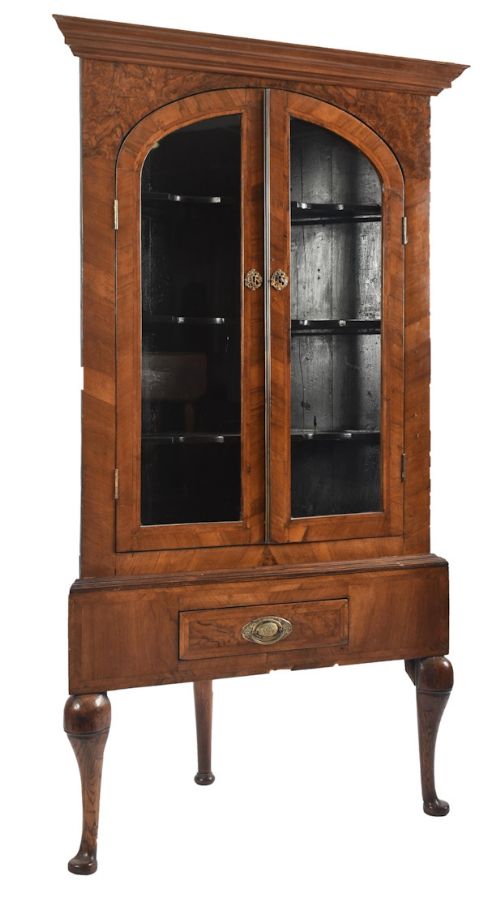
A georgian corner vitrine spans periods from the eighteenth century into later revivals, utilising the architectural angle of a room to display precious items behind glass doors. You will find floor-standing examples as well as taller two-part configurations designed to maximise display capacity.
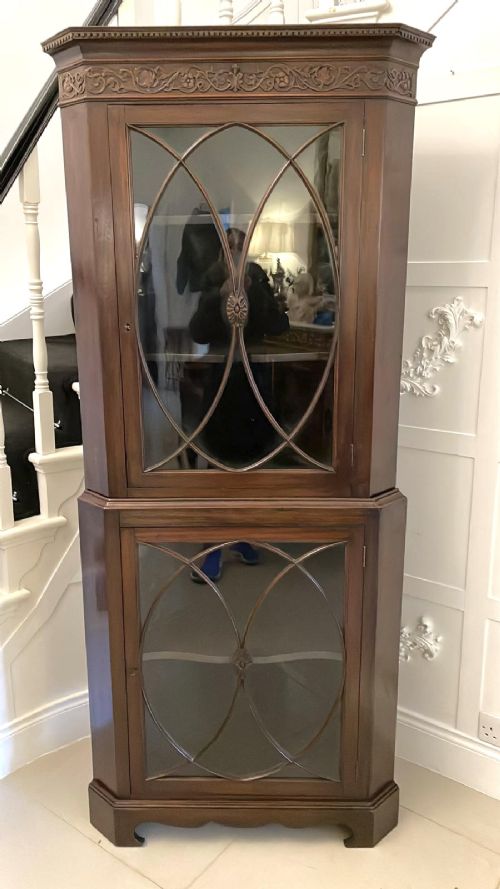
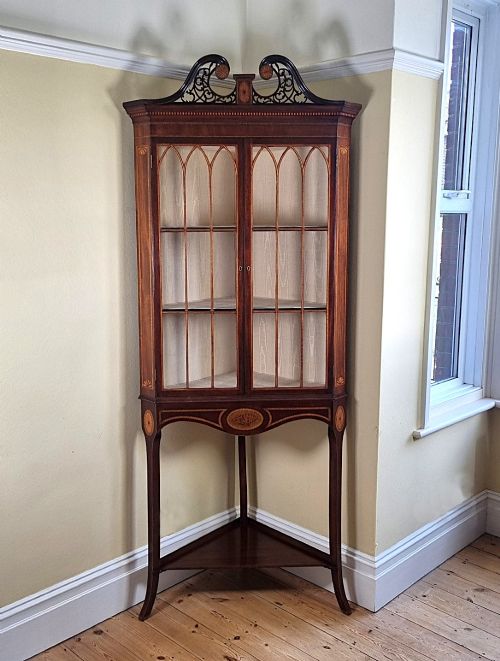
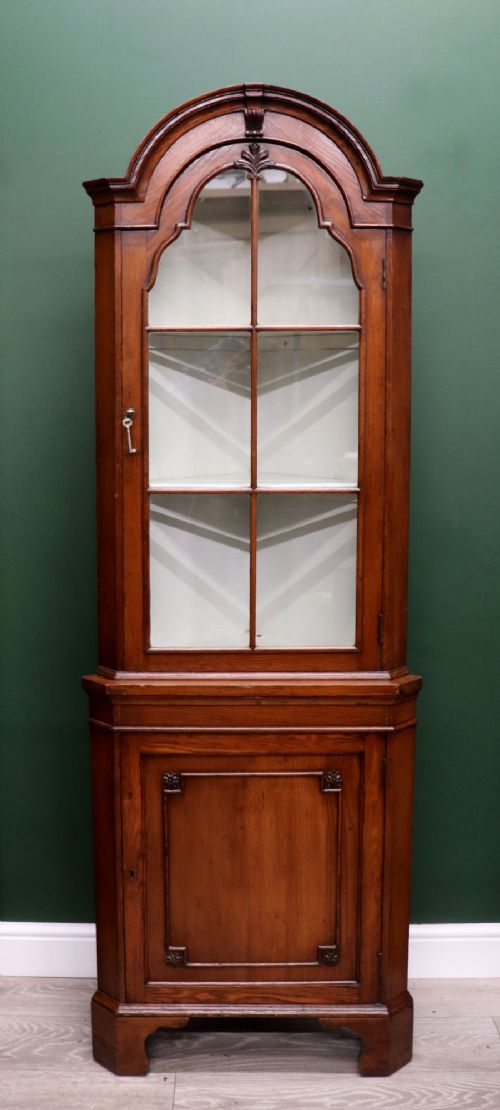
The primary forms take shape as corner cabinets, display cabinets, and bow-front cupboards. Many pieces integrate astragal glazing bars and delicate stringing, reflecting stylistic revivals ranging from Sheraton and Queen Anne to Dutch marquetry influences.
Materials and construction
Makers relied predominantly on mahogany and walnut as the foundational timbers, frequently incorporating oak for internal structural elements. Surfaces often display decorative contrasting veneers, satinwood inlay, and brass hardware.
Glazing techniques range from simple rectangular panes to intricate interlaced ovoid and diamond wooden bars. Cabinets built on stands or in two distinct sections required careful joinery to support the weight of heavy glass doors.
Listings feature mahogany and walnut predominantly, alongside satinwood inlay and brass details spanning multiple centuries.
Distinguishing craftsmanship
The finesse of the timber selection dictates the visual impact, particularly where figured mahogany or elaborate satinwood inlay meets the eye. Cabinets featuring precise, slender astragal glazing bars demonstrate a higher level of cabinet-making skill than heavier, simpler frames.
Proportion and structural integrity define the better examples, especially in taller two-part models or pieces standing on dedicated bases. Original brass fittings and well-fitted doors that close true add significantly to the integrity of the piece.
The Georgian Corner Vitrine Glossary
- Astragal glazing
- Wooden bars holding small panes of glass within a cabinet door. These slender dividers create geometric patterns across the display front.
- Bow front
- A convexly curved cabinet facade that projects forward. This curved shape softens the sharp angles typical of corner furniture.
- Marquetry
- Decorative veneer work created by fitting together small pieces of coloured wood to form intricate patterns. Dutch examples frequently employ this technique.
- Stringing
- Thin inlay lines of contrasting wood used to edge panels and drawers. It provides a sharp visual border against the main timber.
Georgian Corner Vitrine: Frequently Asked Questions
Where should I place a corner vitrine?
These cabinets are specifically engineered to slot neatly into the internal angle where two walls meet. They make efficient use of dead space while opening up a room.
Position one away from direct sunlight and damp exterior walls to protect antique timbers and glass from environmental strain.
How do I distinguish original Georgian from revival pieces?
Original eighteenth-century pieces often show hand-cut joinery, older secondary woods like oak inside, and subtle wear patterns consistent with age. Revival pieces from later periods typically display machine precision and different secondary woods.
Examine the backboards, hinges, and glass consistency to understand the era of construction.
Can these cabinets support heavy porcelain?
Most interior shelves rest on fixed wooden supports or simple adjustable brackets designed for display items. While sturdy, they suit lighter ceramics, glass, and collectibles rather than heavy stoneware.
Distribute weight evenly across the timber shelves to prevent bowing over time.
What is a two-part corner cabinet?
A two-part cabinet consists of a separate upper display section resting on top of a lower cupboard base. This construction made transport and placement easier in older homes.
The vertical split is usually concealed by a decorative moulding running around the middle.