
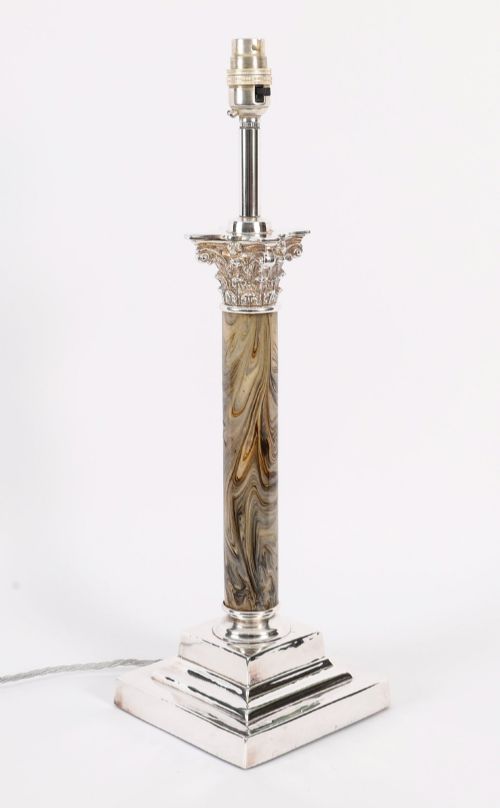
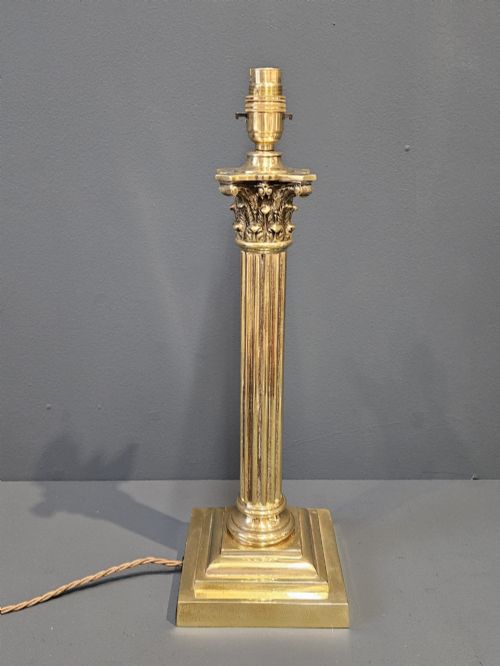
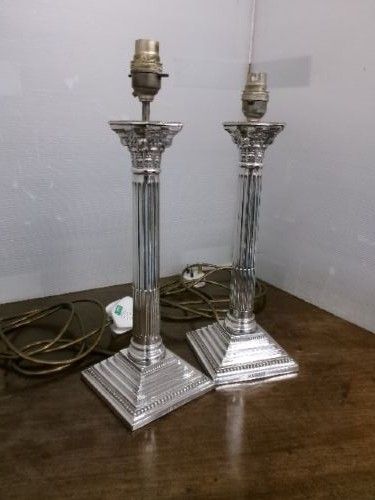
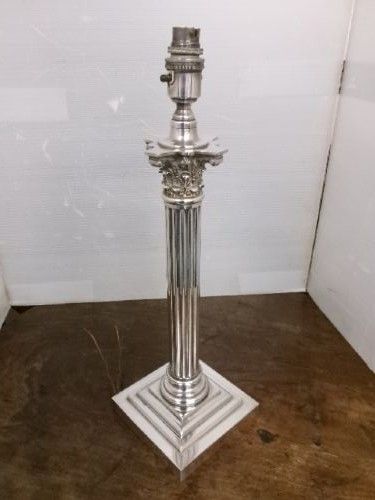
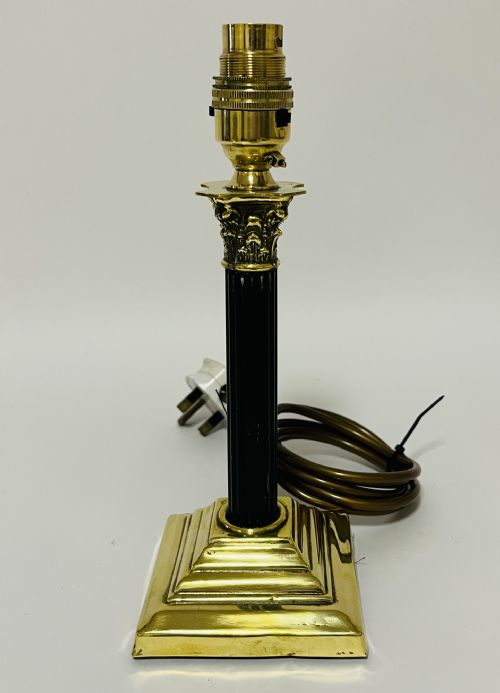
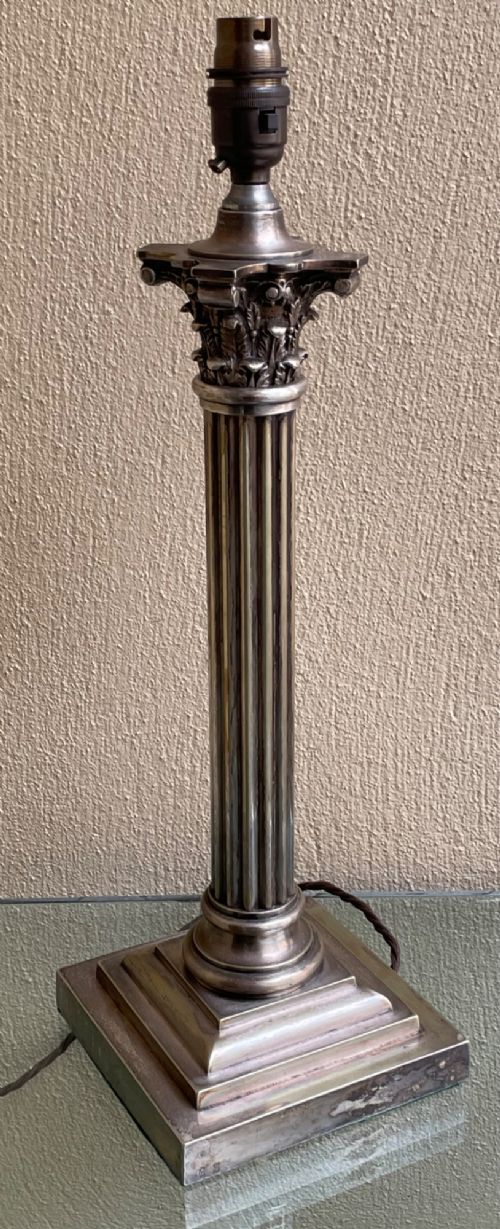
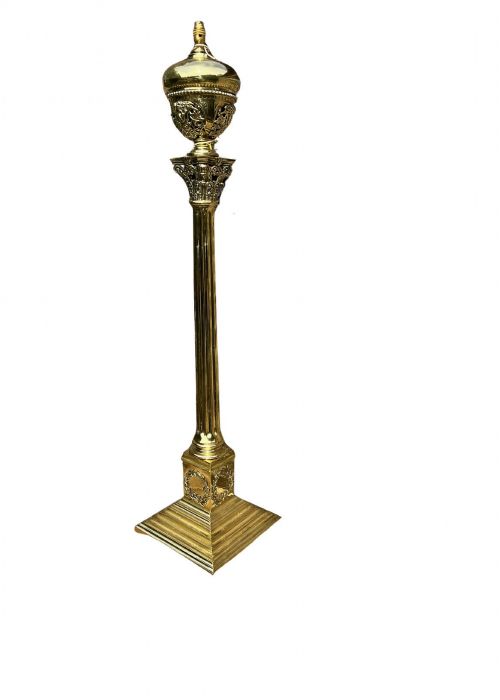
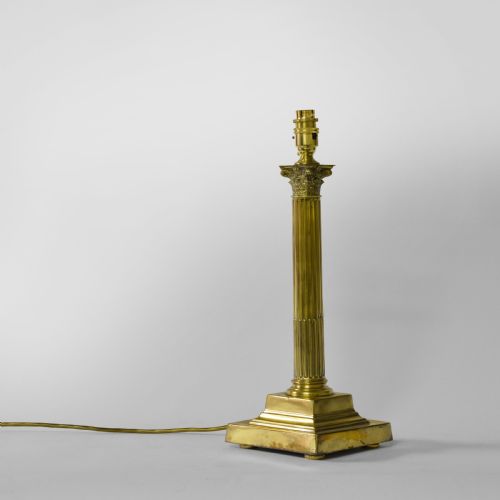
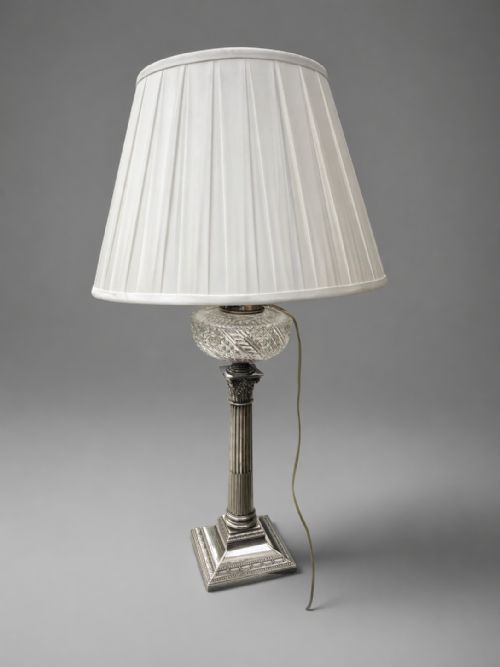


Corinthian Column Lamp Base
A corinthian column lamp base brings classical architectural weight to an interior, built for those who appreciate formal symmetry and historical presence on a table or floor.
Corinthian Column Lamp Base
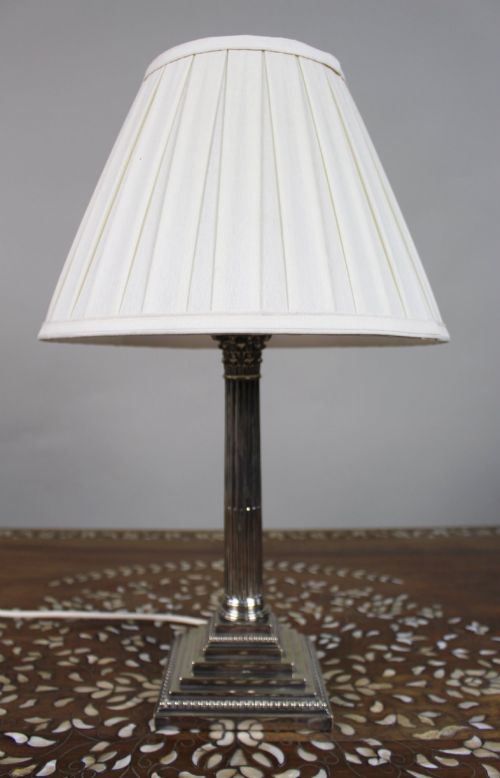
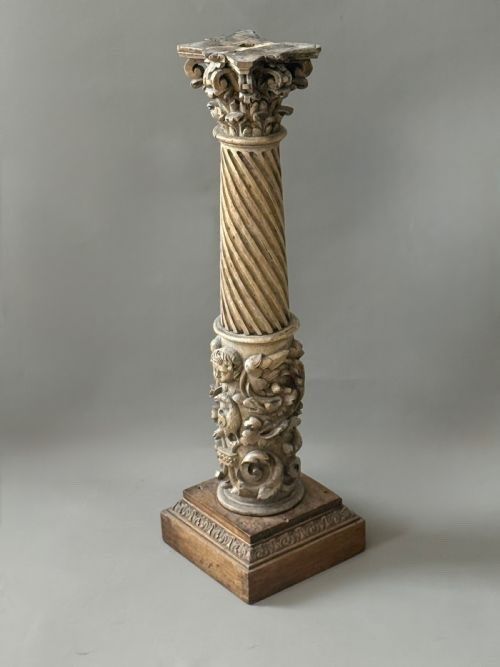
A corinthian column lamp base draws on classical architectural orders, translating stone pillars into domestic lighting forms. When searching for a corinthian column lamp base, collectors encounter items adapted from earlier oil lamps alongside pieces manufactured specifically for electricity.
The pieces on this page span the Victorian era, the Edwardian period, and the early twentieth century, with examples dating across the nineteenth century. Table lamps dominate the selection, accompanied by floor and standard lamps designed for height and presence.
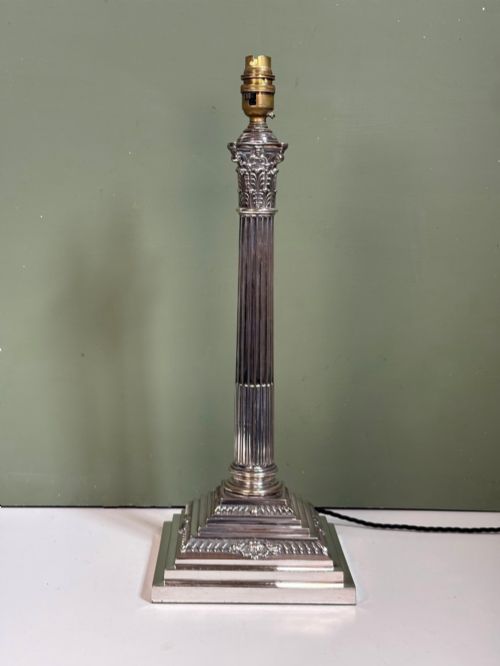
Brass and silver plate provide the primary metallic structure for these columns, often supported on stepped plinths or lion's paw feet. Variations include cast and patinated metals, sometimes combined with cut glass or ceramic reservoirs.
Materials and Construction Techniques
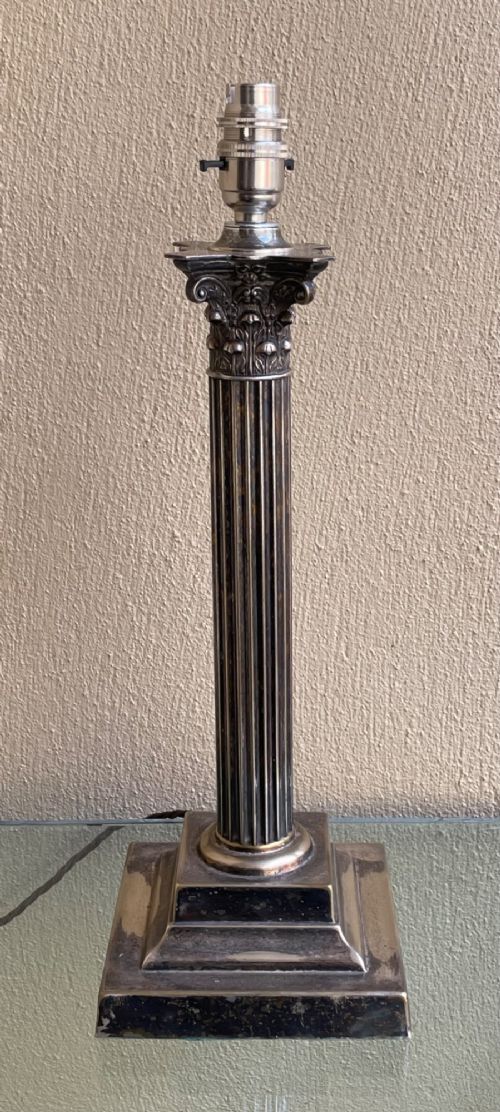
Makers constructed these columns primarily from cast brass or through silver plating over base metals, achieving sharp definition in the acanthus leaves of the capital. Sterling silver appears on select examples, bearing hallmarks that record the year and maker.
Heavier pieces utilise solid cast components to support the height of the shaft without tipping, while others combine metal shafts with glass or ceramic reservoirs and gilt relief bases. Surface finishes range from polished brass to patinated metal and bright silver plate.
Several Victorian columns stand firmly upon tiny lion's paw feet, lending a surprising beastly dignity to classical architecture.
Markers of Quality and Distinction
Quality rests in the crispness of the casting on the capital, where deeply undercut acanthus leaves and well-defined volutes distinguish superior examples from softer, worn productions. Proportions dictate visual balance, with heavier gauge metals and substantial square bases providing both stability and presence.
Maker stamps from established silversmiths or retailers on the base or collar elevate an object's standing. Intricate details such as lion's paw feet, cut glass reservoirs, or heavy gauge silver plate separate standard items from the finest surviving pieces.
Goldsmiths and Silversmiths Company·Walter Latham And Son·Goldsmiths
The Corinthian Column Lamp Base Glossary
- Capital
- The uppermost member of a column, carved with acanthus leaves and scrolls in the Corinthian order. It forms the decorative crown directly beneath the lamp fitting.
- Fluting
- The series of shallow vertical grooves carved or cast into the shaft of the column. This classical detail creates play of light along the height of the lamp base.
- Plinth
- The heavy square or stepped block at the foot of the column that provides stability. It often incorporates classical moulding or decorative feet.
- Reservoir
- The container originally designed to hold oil before a lamp was converted to electricity. Some surviving bases retain cut glass or ceramic reservoirs.
- Volute
- The spiral scroll ornament characteristic of classical capitals, positioned at the corners beneath the abacus.
Corinthian Column Lamp Base: Frequently Asked Questions
Are these lamps converted from oil lamps?
Many examples from the nineteenth century began life as oil lamps before receiving electrical wiring later in their existence. Other pieces were manufactured specifically as electrical table or floor lamps during the Edwardian period and the early twentieth century.
Collectors find both converted and original electrical fittings represented in the current selection, reflecting the long domestic utility of these columns.
How do I date a brass column lamp?
Dating relies on the style of the base, the weight of the metal, and any stamped maker marks or hallmarks present on the silver or silver plate. Victorian and Edwardian examples often display distinct casting techniques and mounting styles that separate them from later twentieth-century reproductions.
Examining the internal wiring channels, collar threads, and wear patterns on the underside helps confirm the period of manufacture.
Do silver plated columns require special care?
Silver plated surfaces benefit from gentle cleaning with a soft cloth and proprietary silver polish formulated to preserve the thin metal layer. Avoid abrasive cleaners that can wear through the plate down to the brass or base metal underneath.
Regular light dusting prevents tarnish buildup in the recessed crevices of the acanthus leaf capitals.
How tall are standard column lamps?
Table lamps generally measure between twelve and twenty-four inches to the top of the brass fitting, while standard and floor lamps rise significantly higher to stand independently on the floor. Proportions vary from slender single columns to monumental scaled pieces designed for larger rooms.
Checking the listed dimensions ensures the lamp suits the intended side table, sideboard, or floor space.