


Corbeille Style Bedstead
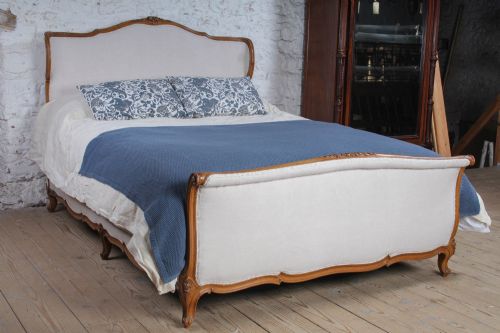
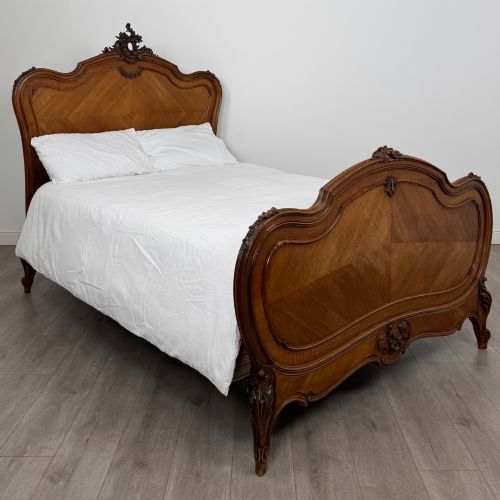
These corbeille style bedstead examples bring sweeping curves and classic French proportions straight to the bedroom.
Corbeille Style Bedstead
A corbeille style bedstead offers curved headboards and footboards designed to wrap the sleeper in traditional Continental comfort. These frames draw heavily on Louis XV and Louis XVI revivals, bringing ornate woodwork and soft lines into domestic spaces.
Most pieces seen here originate from the late nineteenth century through to the nineteen-thirties, spanning Victorian and Edwardian decades. Buyers frequently encounter French painted timber, carved walnut, and upholstered finishes in various sizes from single to king.
The aesthetic leans towards French chateau and provincial interiors, providing a distinct focal point for a bedroom scheme. Proportion and woodwork dictate the presence of each piece, whether finished in plain painted wood or detailed carving.
Materials and construction
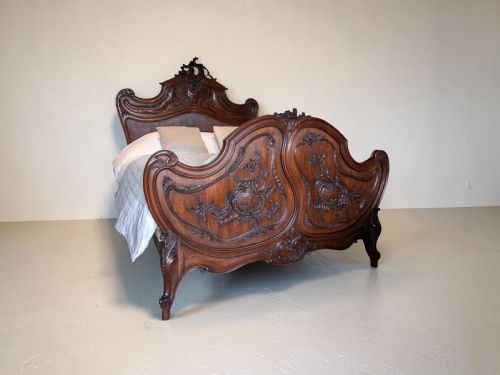
Cabinetmakers shaped these frames primarily from solid timber, utilising walnut and painted woods for the structural carcasses. Carved elements required skilled handwork to achieve the asymmetrical scrollwork and floral motifs characteristic of rococo revivals.
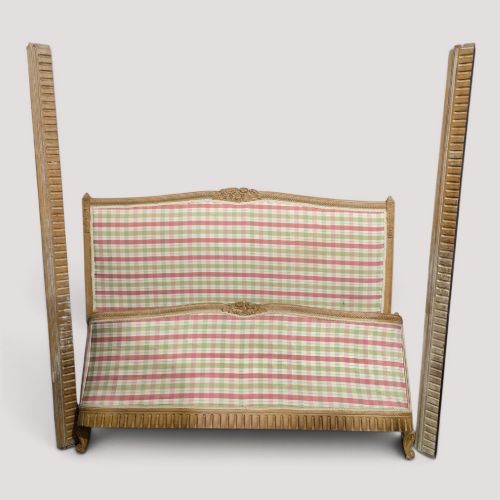
Textiles and fabrics play a major role in softening the wooden profiles, often applied to headboards and footboards through upholstery. Many examples incorporate cane panelling alongside painted paintwork or limed surface treatments.
Listings span periods from eighteen ninety through to nineteen thirty, showing materials including walnut, painted wood, and cane.
What separates the best from the rest
Depth and crispness of the hand carving dictate the initial visual tier of a bedstead, separating simple turned elements from intricate floral reliefs. Timber selection also matters, as dense walnut ages with a richer grain than softer painted woods.
Proportion and scale influence how successfully a frame sits within a room, with larger king and super king sizes demanding balanced curved rails. The integration of matching side cabinets or original fabric schemes elevates certain pieces above standard production.
The Corbeille Style Bedstead Glossary
- Corbeille
- Basket shape in French, describing beds with curved, enveloping headboards and footboards. This profile creates an enclosed sleeping area characteristic of nineteenth-century revival furniture.
- Louis XV Style
- An eighteenth-century aesthetic revived during the Victorian and Edwardian eras, defined by asymmetrical curves, cabriole lines, and natural scrollwork. It forms the basis for most decorative carving seen on these beds.
- Limed
- A surface finish treatment applied to timber to highlight the grain with a pale wash. This technique lightened dark woods during restoration and manufacture.
- Caned
- Woven rattan material used to form open-work panels in headboards and footboards. It provides lightweight ventilation and texture within the wooden frame.
Corbeille Style Bedstead: Frequently Asked Questions
What defines a corbeille bedstead?
A corbeille bedstead is distinguished by its curved, basket-like headboard and footboard that wrap inward around the mattress.
These shapes derive from French revival styles of the nineteenth and early twentieth centuries, offering a distinct alternative to straight-edged wooden frames.
How do I choose the right size?
Sizes range from single beds up to king and super king dimensions, though historical French sizing differs slightly from modern standards.
Checking exact mattress dimensions against the internal space of the wooden rails ensures a proper fit for daily use.
Are these beds suitable for modern mattresses?
Most antique frames accommodate standard modern mattresses with the addition of appropriate modern slat systems or base supports.
Careful measurement of the internal length and width prevents any overhang or gaps within the carved wooden borders.
How do I care for painted wooden finishes?
Painted wood surfaces require gentle dusting with a dry microfibre cloth to protect the decorative finish from moisture and abrasion.
Avoiding harsh cleaning agents preserves the original or period-applied paint layers over decades of domestic use.