


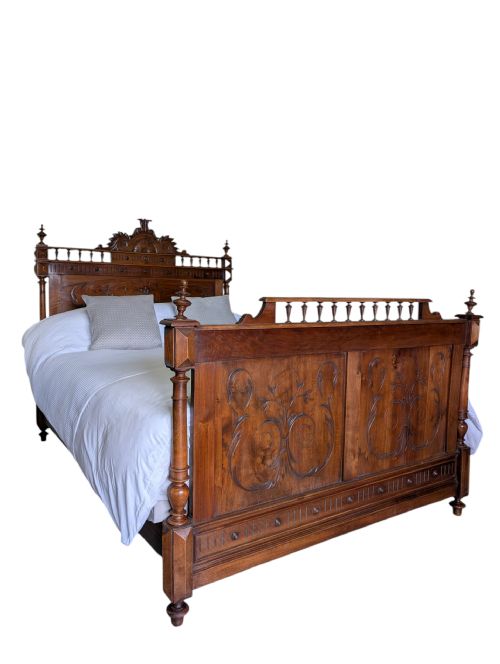


Ornate Carved Wooden Bed
An ornate carved wooden bed brings the scale and romance of European revivalism straight into a modern bedroom, offering heavy timberwork and deep historical moulding.
Ornate Carved Wooden Bed
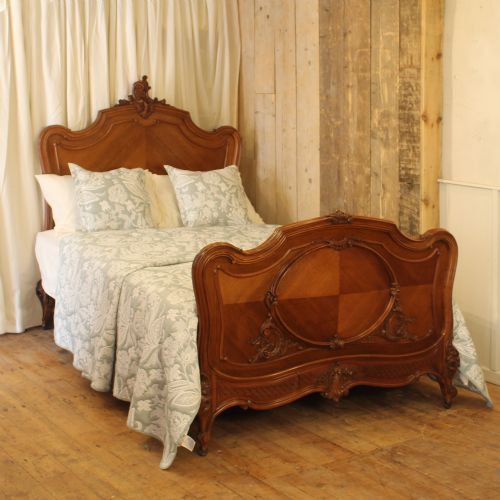
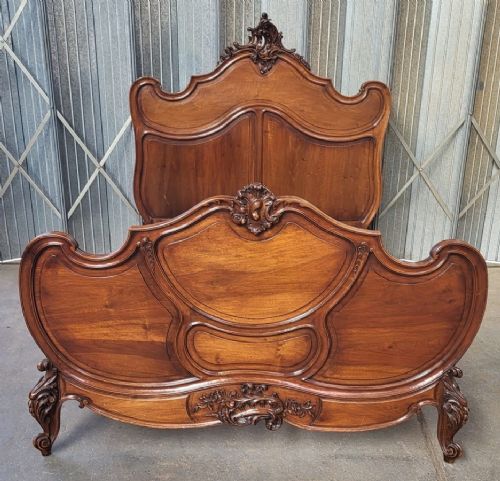
When you search for an ornate carved wooden bed, you encounter heavy timber furniture built during the nineteenth and early twentieth centuries. These pieces draw heavily on continental European design vocabularies like French Rococo, Italian Rococo, and Portuguese Baroque Revival.
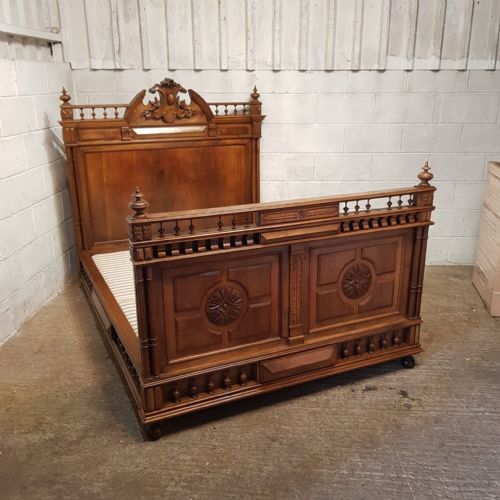
You are most likely to meet walnut and oak bedsteads spanning double and king sizes, originating from French, Italian, and Portuguese workshops. The forms range from grand French Louis XV bedsteads to robust carved oak Breton beds.
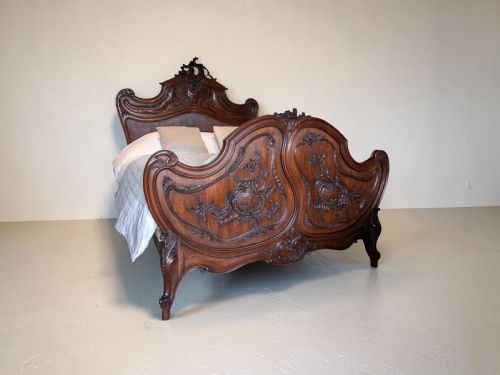
The aesthetic prioritises sweeping headboards and footboards dominated by intricate relief work, scrolls, and naturalistic motifs. These grand proportions require careful room planning to accommodate their substantial wooden frames.
How they were made
Cabinetmakers constructed these bedsteads using solid hardwoods including walnut, oak, and chestnut, frequently applying walnut veneer to key display surfaces for varied grain patterns. Artisans also integrated giltwood highlights to accentuate specific carved flourishes.
Master carvers worked directly into the timber to execute deep relief panels, scrolls, and asymmetrical Rococo motifs by hand. Upholstered elements occasionally incorporated rich textiles such as damask to contrast against the polished wood.
Listings span the nineteenth and early twentieth centuries, running from the 1880s through to the 1920s.
What varies in quality
Quality rests primarily in the depth, crispness, and artistic ambition of the timber carving rather than surface finish alone. Finer examples display deep, three-dimensional undercut foliage and scrolls where the wood appears almost pliable.
The choice of primary timber and veneer selection dictates structural prestige, with dense figured walnut and quarter-sawn oak commanding superior presence. The integration of matching side cabinetry or unified proportions across both headboard and footboard elevates a piece further.
The Ornate Carved Wooden Bed Glossary
- Bedstead
- A framework of a bed consisting of headboard, footboard, and side rails. It supports the mattress base independently of built-in bedroom architecture.
- Walnut Veneer
- A thin layer of figured walnut timber applied over a secondary wood core. This technique allows cabinetmakers to display symmetrical grain patterns across large flat surfaces.
- Rococo Revival
- A nineteenth-century design movement mimicking the curved lines, asymmetrical scrolls, and organic motifs of the eighteenth-century French movement. It dominates the ornamentation found on these beds.
- Giltwood
- Wood that has been treated with gold leaf or a gold-coloured metallic finish. It highlights specific carved details against the darker natural grain of walnut or oak.
- Damask
- A reversible figured fabric traditionally woven on a loom with a pattern visible on both sides. It provides a textured upholstered contrast to polished wooden bed frames.
Ornate Carved Wooden Bed: Frequently Asked Questions
Will modern mattresses fit these antique beds?
Many of these historical bedsteads were built to nineteenth-century continental dimensions rather than modern standard UK or US mattress sizes. You may need custom mattress sizing or minor internal rail adjustments to ensure a secure fit.
Consult the precise internal length and width measurements of each bedstead before committing to a mattress purchase. Professional upholstery shops can also adapt modern slats or bases discreetly within the antique frame.
How do I care for carved wooden beds?
Maintain the polished timber by dusting regularly with a dry, soft cloth and avoiding silicone-based polishes that build up over time. Keep the bed away from direct heat sources and strong sunlight to prevent the timber or walnut veneer from drying and splitting.
Periodically check and gently tighten any visible joint bolts or structural fixings to compensate for natural wood movement. Treating the carved sections with a microcrystalline wax once a year helps preserve the finish against moisture.
How do I identify French Rococo Revival pieces?
Look for characteristic design markers such as asymmetrical cartouches, C-scrolls, floral garlands, and cabriole legs. These elements mirror the eighteenth-century Louis XV style but often feature heavier, deeper relief carving typical of the late nineteenth century.
The use of French walnut and regional construction methods further confirms the stylistic origin. Makers during this revival period freely combined playful serpentine lines with imposing room presence.
What is a Breton bed?
A Breton bed originates from the Brittany region of France and traditionally forms a highly enclosed, architectural cabinet structure. The carved oak style seen in these listings represents the heavy regional craftsmanship of the late nineteenth century.
These pieces feature dense geometric and figural woodcarvings reflecting local folklore and rural traditions. They offer a much more enclosed, substantial silhouette than standard open headboard beds.