


Copper Water Urn Tap
These copper water urn tap pieces are substantial vessels designed for heating and dispensing water, prized for their warmth and metalwork.
Copper Water Urn Tap
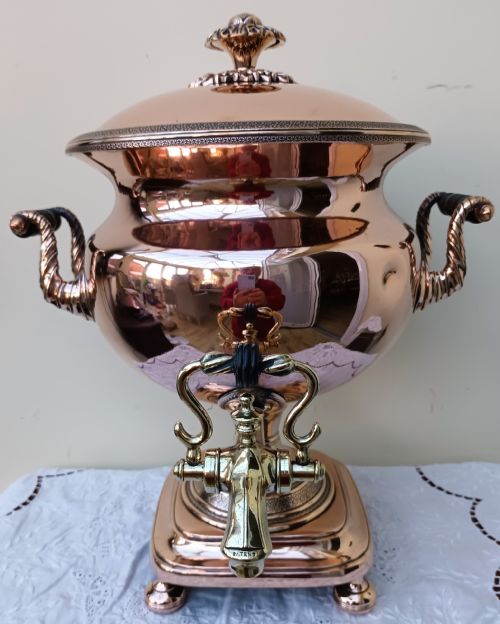
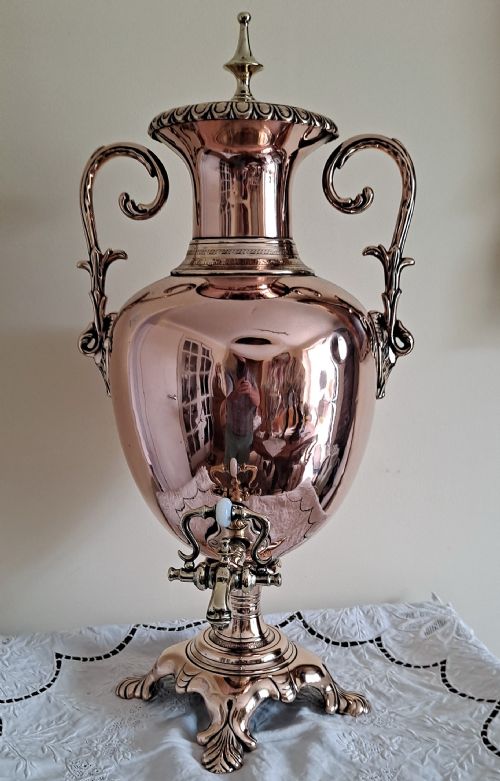
A copper water urn tap search brings up vessels designed to hold and dispense heated water, appearing primarily as tea urns and samovars. These objects span the Georgian, Regency, and Victorian periods, showcasing domestic metalwork from the nineteenth century and around eighteen hundred.
Materials and construction
The primary construction relies on hammered or sheet copper, frequently accented with brass for taps, handles, and mountings. Selected pieces also incorporate bronze, iron, ceramic components, and ebonised wood details to create contrast.
Makers shaped these metals into large urn and samovar bodies, integrating functional brass taps for dispensing water. The combination of copper bodywork with durable brass fittings defined the standard method of production across the Georgian and Victorian eras.
Some vessels double as planters or coolers, proving that nineteenth-century copper containers were ready for a career change.
Judging quality in metalwork
Quality rests in the handling of the metal, where heavier gauge copper and finer surface finishing distinguish superior pieces from standard domestic items. The integration of secondary materials like brass mounts and ebonised wood further indicates the tier of the piece.
Proportion and decorative restraint set the better examples apart, particularly in Regency and George III designs where clean lines and balanced forms take precedence. The presence of original fitted taps and harmonious colouration across the copper and brass elements completes the higher grade.
The Copper Water Urn Tap Glossary
- Samovar
- A heated metal container traditionally used to boil and heat water in Russia and throughout Britain during the Georgian and Victorian periods. These vessels usually feature an internal heating tube and a spigot or tap at the base.
- Regency
- A British design period spanning roughly from seventeen ninety-five to eighteen thirty-seven, characterised by classical influences and refined proportions. Pieces from this era often display restrained ornamentation and elegant silhouettes.
- Georgian
- The period covering the reigns of the Hanoverian kings from seventeen fourteen to eighteen thirty-seven, known for substantial craftsmanship and enduring domestic forms. Items from this time frequently utilise heavy copper and brass components.
- Ebonised wood
- Timber treated to resemble ebony, frequently used for handles and insulators on metal vessels. This dark finish provides a sharp visual contrast against polished copper and bright brass.
Copper Water Urn Tap: Frequently Asked Questions
How did people use samovars?
Samovars were employed to heat water efficiently for tea and other hot beverages in homes. Users would operate the internal heating mechanism and draw water through the fitted brass tap.
These vessels held enough hot water for gatherings, maintaining temperature over extended periods while sitting on a table or sideboard.
How do I date a copper urn?
Dating relies on stylistic clues, construction methods, and period characteristics visible in the metalwork and mountings. Georgian and Regency pieces often show classical lines, while Victorian examples introduce heavier ornamentation.
Comparing the form, the style of the brass tap, and accompanying materials like ebonised wood helps place the object within the nineteenth century or around eighteen hundred.
Where should I display an urn?
These large metal vessels suit prominent positions on sturdy sideboards, tables, or within period dining spaces. Their rich copper tones and brass taps provide a strong visual focal point in a room.
Placement should account for the substantial weight and proportions of the piece, allowing the craftsmanship of the metal body to remain visible.