
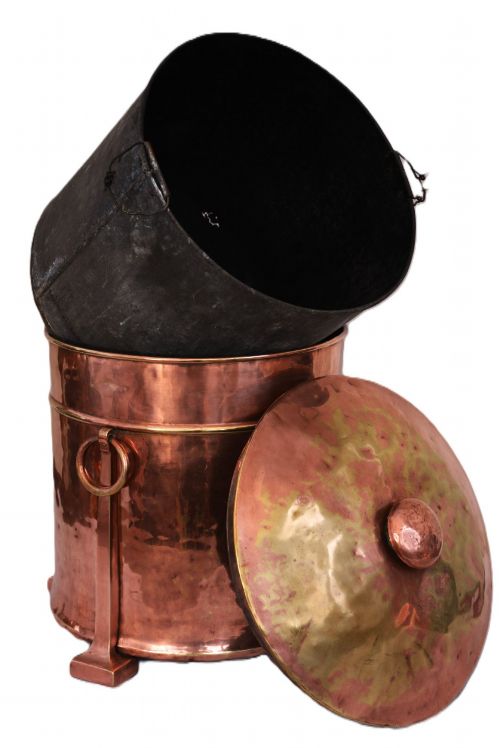


Copper Log Storage Bin
A copper log storage bin brings warmth and a reflective metallic sheen to a fireside, combining practical fuel containment with decorative weight.
Copper Log Storage Bin
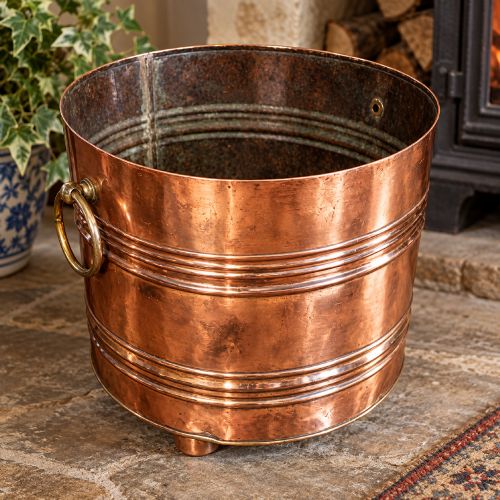
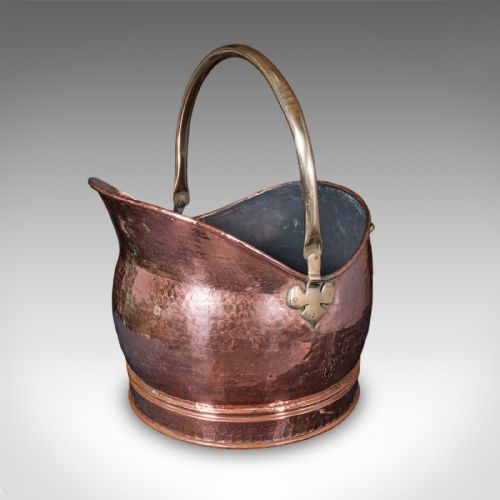
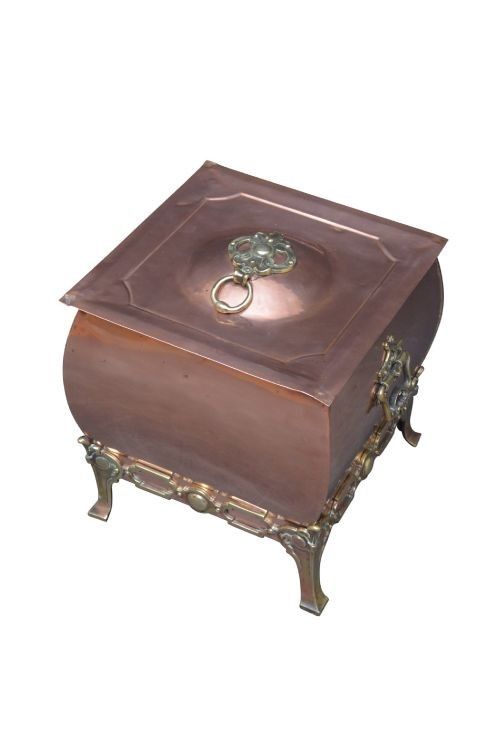
A copper log storage bin serves as a functional fireside accessory designed to hold firewood, coal, or kindling near a hearth. These vessels appear in forms ranging from traditional bucket shapes to lidded boxes and water barrels.
The pieces listed here span the Victorian, Edwardian, and later periods, with Victorian examples most commonly appearing alongside Arts and Crafts designs. Makers often combined copper with brass mounts, iron frames, or oak bodies to create sturdy hearth furniture.
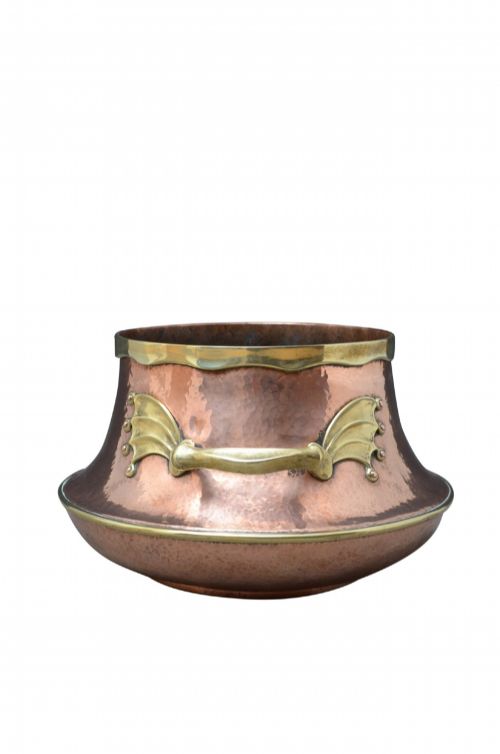
Many items share dual purposes as garden planters or jardiniere vessels, reflecting how utilitarian metal containers transition across domestic uses over time.
What varies in quality
Quality rests on the thickness of the copper sheet and the robustness of the underlying construction, such as whether an iron frame or wooden core provides solid support. Thicker metal resists denting and holds its structural integrity under heavy use.
The refinement of decorative details, including hand-hammered texturing, embossed brass banding, and securely riveted handles, separates standard utilitarian bins from finer Arts and Crafts or Georgian pieces.
The Copper Log Storage Bin Glossary
- Jardiniere
- An ornamental pot or stand for holding plants or flowers. These vessels frequently share forms with log bins and coal buckets.
- Scuttle
- A metal bucket or container used for holding coal or fuel near a fireplace, typically featuring a pivoting handle and a slanted opening.
- Purdonium
- A specific type of coal box or bin, often fitted with a sloping front and a scoop, designed to stand neatly by the hearth.
- Arts and Crafts
- A design movement emphasising handcraftsmanship, simple forms, and natural materials, visible in many copper and oak log boxes on this page.
Copper Log Storage Bin: Frequently Asked Questions
How do I clean a copper log bin?
Maintenance depends on the desired finish, as many owners prefer to leave an aged patina rather than polish the metal to a bright shine. Gentle dusting and occasional wiping with a soft cloth preserve the historic surface.
Harsh chemical cleaners can strip the natural oxidation built up over decades, which detracts from the character of Victorian and Edwardian metalwork.
Were these bins only used for logs?
Historical uses extend well beyond firewood, as these metal vessels frequently served to hold coal, kindling, or even water.
Many examples were also designed or later repurposed as plant holders, garden planters, and waste bins inside the home.
Can I use an antique bin outside?
While some copper and brass vessels double as garden planters, prolonged exposure to damp outdoor conditions accelerates corrosion and weakens iron frames or wooden components.
Keeping them indoors protects the original joints, handles, and decorative panels from weather damage.
How do I date a copper log bin?
Dating relies on stylistic clues such as embossed Victorian motifs, Arts and Crafts hand-hammered surfaces, or Georgian proportions.
Materials like oak panels, wrought iron frames, and specific brass mount designs also help narrow down the period of manufacture.