


Vintage Copper Hearth Decor
These vintage copper hearth decor pieces bring warmth and texture to a room, and you want one for its honest utility and rich metallic surface.
Vintage Copper Hearth Decor
When you search for vintage copper hearth decor, you are looking at functional metalware designed to warm rooms, manage fuel, and screen open fires. The selection centres on coal scuttles, kettles, warming pans, fire screens, and fireside boxes used beside the hearth.
You are most likely to meet Victorian and George III items on this page, alongside Edwardian and Art Nouveau examples. These pieces span the nineteenth century and the early twentieth century, showing periods from eighteen hundred up to nineteen ten.
The objects combine practical service with decorative presence, using copper bodies often paired with brass or wrought iron fittings. English Country and Arts and Crafts styles appear frequently among the listings, reflecting domestic needs of past centuries.
How they were made
Makers shaped sheet copper by hand, hammering seams and joining sections with rivets to create durable vessels for coal and water. Handles and hinges often employ cast brass or wrought iron, adding strength where the pieces experience daily handling.
Surfaces receive varying degrees of polishing and finishing, leaving tool marks that reveal the manual labour involved in their construction. Wood components appear on handles, providing insulation against heat during use beside an active fire.
The selection spans periods from 1800 to 1910, featuring copper alongside brass, wood, and wrought iron.
What varies in quality
Weight and gauge of the metal separate heavier, durable vessels from lighter items made for purely decorative purposes. Substantial gauge copper resists denting and holds its structural integrity through decades of practical service.
The refinement of handles, hinges, and decorative mounts distinguishes standard production from superior examples. Quality shows in the precise fit of joints and the retention of original brass and iron fittings without modern replacements.
The Vintage Copper Hearth Decor Glossary
- Coal scuttle
- A container designed to hold and transport fuel for an open fire, often shaped as a helmet with a hinged mouth. These vessels sit beside the hearth ready for use.
- Warming pan
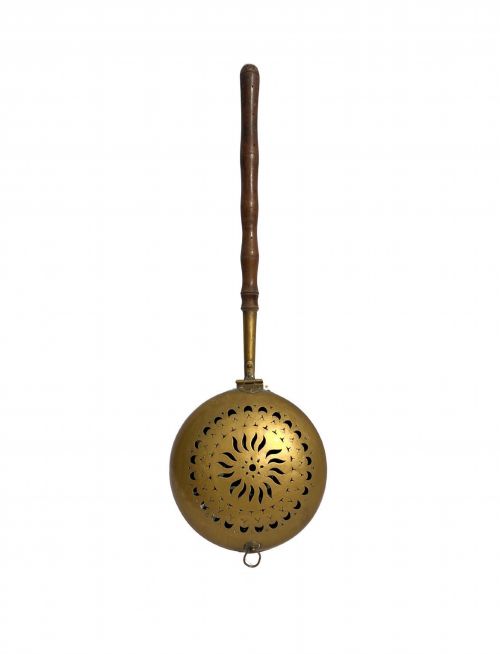
- A long-handled metal pan filled with hot embers and passed between bedsheets to warm the mattress. The flat copper lid often bears hand-beaten decoration.
- Fire screen
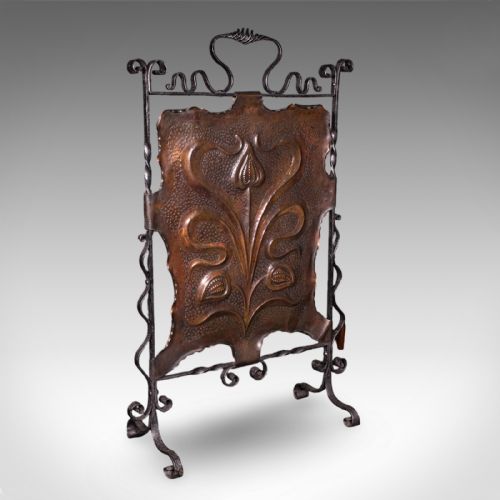
- A movable panel placed before a fireplace to block excessive heat or conceal an unlit grate. Art Nouveau examples use polished copper reflective panels.
- Bed warming pan
- A historical sleeping accessory featuring a hinged brass or copper pan attached to a wooden handle. They were slid between sheets before bedtime.
- Fireside box
- A lidded container used to store matches, kindling, or small hearth accessories near the fireplace. They keep fuel and tools tidy.
Vintage Copper Hearth Decor: Frequently Asked Questions
What is vintage copper hearth decor used for today?
These items serve primarily as decorative accents in living spaces, bringing historic character and metallic warmth to modern rooms.
Many collectors also use coal scuttles and boxes for practical storage of logs, kindling, or magazines near active fireplaces.
How do I clean vintage copper hearth decor?
Dusting with a dry cloth preserves the aged patina that accumulates over decades of domestic life.
If you prefer a bright finish, mild metal cleaners formulated for copper will remove tarnish without scratching the soft metal.
How can I tell the period of a copper kettle?
George III pieces typically show hand-beaten construction methods and specific spout profiles characteristic of the late eighteenth and early nineteenth centuries.
Later Victorian and Edwardian examples often incorporate machine rolling and different handle attachments.
Are brass and copper used together on these pieces?
Many items combine copper bodies with brass handles, rims, and feet to create a contrasting two-tone metallic effect.
This combination was common across Victorian and Edwardian fireside accessories for both strength and visual appeal.