
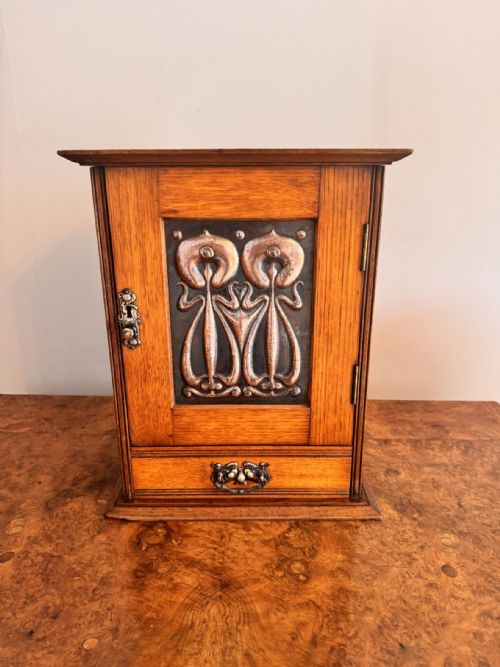


Arts Crafts Repousse Box
These arts crafts repousse box pieces bring hand-worked metal and timber into the home, prized for their tactile hammered surfaces and honest construction.
Arts Crafts Repousse Box
When you search for arts crafts repousse box, you encounter a variety of functional household containers created during the late nineteenth and early twentieth centuries. These pieces encompass small tabletop decorative containers, letter boxes, and smokers cabinets alongside larger fireside coal and log bins.
The aesthetic bridges the Victorian period into Edwardian times, often drawing on Art Nouveau lines or William Morris inspired motifs. You are most likely to meet copper panels mounted on oak or brass vessels featuring hand beaten ornamentation.
Makers utilised durable materials designed for daily utility, meaning many survivors served practical domestic roles before entering the collector market. The forms remain grounded in the philosophy of the movement, prioritising visible craftsmanship over mass production.
Materials and construction
The primary construction relies on sheet copper and brass worked in repousse, where artisans hammered the metal from the reverse side to create raised designs on the front. These metal panels are frequently mounted onto sturdy timber carcases, particularly golden oak or darker varieties.
Designers incorporated decorative ironwork and subtle pewter coverings to add textural contrast to the boxes and fireside containers. The joinery on the wooden elements remains straightforward and robust, aligning with the principles of the period.
Several fireside containers feature detailed galleon ship designs, letting you sail a metal pirate vessel across your hearth rug.
Assessing quality in metalwork and timber
Quality rests upon the crispness of the hand beaten relief and the depth of the repousse work across the copper or brass panels. Superior examples display deliberate, varied tool marks that evidence individual artistry rather than mechanical stamping.
The integration between the metal panels and the wooden frames determines the integrity of the piece, with finer items showing careful housing and secure fixings. The artistic ambition of the design, such as figurative galleon motifs or distinctive Ruskin style elements, separates standard utility items from exceptional works.
Artificer's Guild·William Morris
The Arts Crafts Repousse Box Glossary
- Repousse
- A metalworking technique where the artisan hammers a design from the reverse side to form a raised relief on the front. This method creates tactile, light catching surfaces on copper and brass panels.
- Arts and Crafts
- A design movement spanning the late nineteenth and early twentieth centuries that valued traditional craftsmanship and honest materials. It rejected industrial standardisation in favour of handmade domestic objects.
- Art Nouveau
- An international style characterised by organic, fluid lines and motifs inspired by natural forms. It frequently appears alongside the geometric tendencies of the movement.
- Smokers cabinet
- A small tabletop enclosure designed to store tobacco, pipes, and matches securely. These containers often feature internal wooden drawers and decorative metal door panels.
- Fireside container
- A heavy duty box or bin utilised for holding coal, logs, or kindling near the hearth. They combine timber bodies with protective metal linings and decorative repousse fronts.
Arts Crafts Repousse Box: Frequently Asked Questions
What is an arts crafts repousse box?
These items are domestic containers featuring hammered metal panels produced during the late nineteenth and early twentieth centuries. They range from small tabletop letter boxes to large fireside coal bins.
Craftsmen used malleable metals like copper and brass, applying hand beaten relief decoration often inspired by natural forms or historical motifs.
How were these boxes used originally?
Many smaller examples served specific desktop or tabletop functions, holding letters, trinkets, or smoking requisites. Larger variations stood by the hearth to store fuel.
Their dual purpose of practical utility and decorative display meant they sat prominently in domestic interiors.
How do I care for copper and oak?
Copper and brass benefit from gentle dusting and minimal interference to preserve the natural oxidation and patination built up over decades. Harsh metal polishes should be avoided.
Oak timber requires simple conditioning with appropriate wax to maintain the grain and prevent the wood from drying out in heated rooms.
How can I tell the period?
Dating relies on observing construction methods, timber types, and stylistic indicators such as Art Nouveau curves or Edwardian proportions. Maker marks and stamps occasionally provide specific production windows.
Comparison with documented pieces from the movement helps contextualise the materials and decorative vocabulary used by the maker.