





Copper Charger Tray
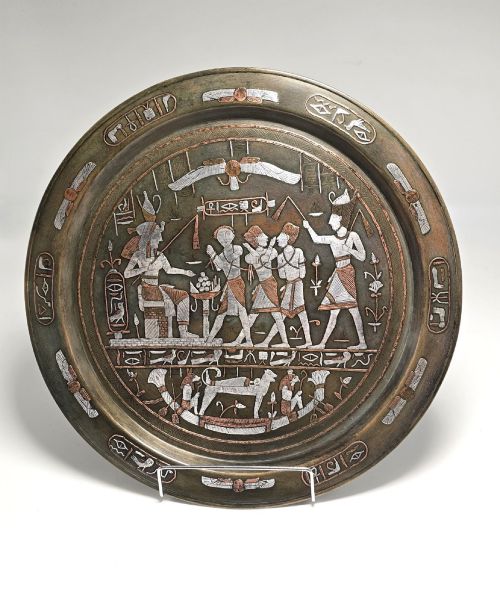
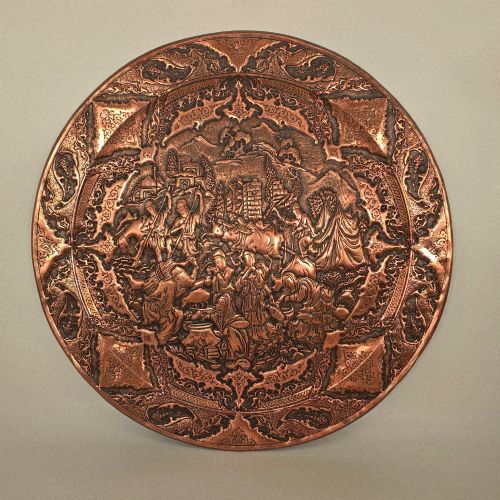
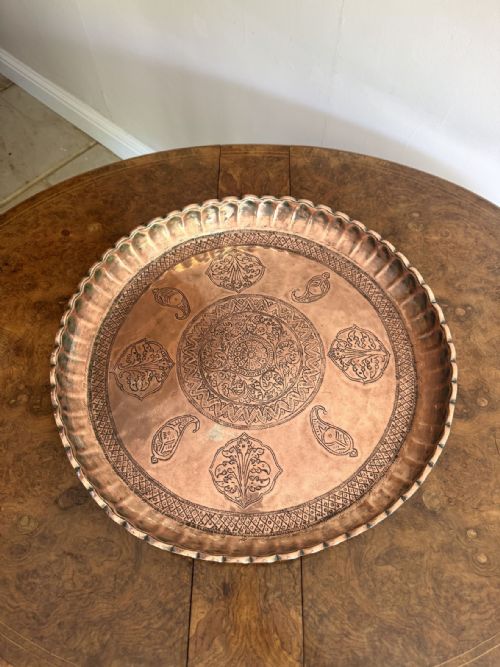
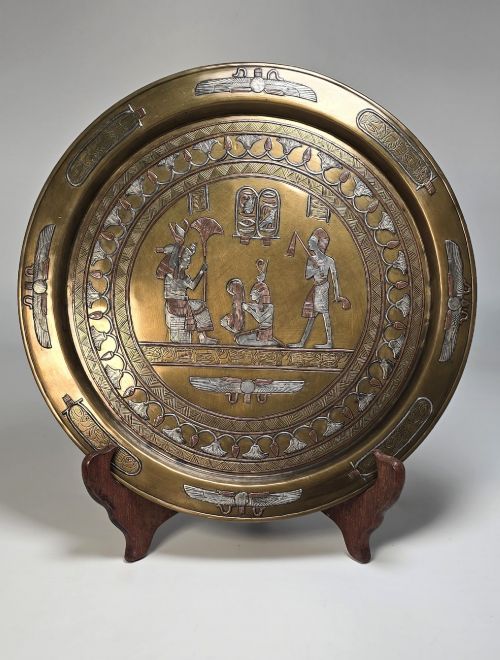
These copper charger tray examples span late Victorian domestic output and international revivalist workshops, offering decorative impact for modern interiors.
Copper Charger Tray
A copper charger tray serves as a substantial display dish or wall plate, frequently measuring large in diameter with a broad rim. When you search for a copper charger tray, you encounter pieces designed primarily for visual display rather than dining service.
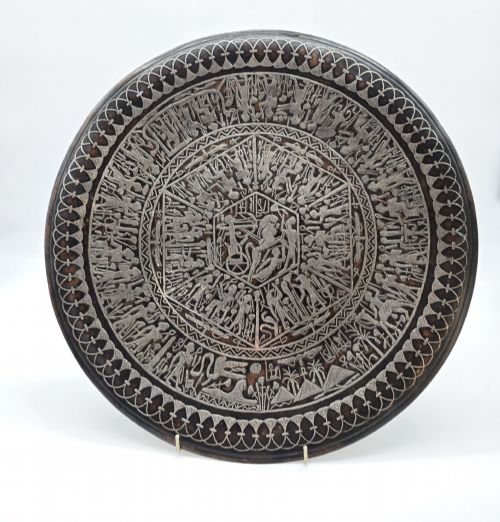
The selections here encompass domestic Arts and Crafts hammered metalwork alongside imported Middle Eastern Cairo Ware and Japanese Meiji period metalwork. These domestic and international pieces share a circular or occasionally square format suited to wall hanging or table placement.
Most entries date from the late nineteenth century around eighteen hundred and eighty to nineteen hundred, reflecting the Victorian appetite for decorative metalwork. Regional variations span Egyptian revival silver inlay, Persian engraved motifs, and British beaten copper.
Materials and construction methods
Makers shaped the primary body from sheet copper, brass, or bronze, often applying patination to deepen the metallic tones. Artisans utilised hammering, repoussé, and hand piercing to raise motifs from the metal surface.
Many Middle Eastern and Cairo Ware items incorporate silver or mixed metal inlay hammered directly into the copper base. Japanese examples employ cloisonne enamel or mixed-metal application upon metal plates.
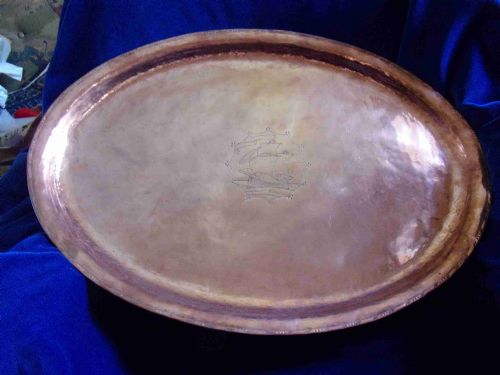
British Arts and Crafts examples display visible hammer marks left deliberately on the beaten copper surface. Pierced borders and engraved foliage complete the decorative scheme across both domestic and imported pieces.
Copper Charger Tray Retail Price Guide 2026
Typical asking prices for copper charger tray among the pieces listed under this phrase on Sellingantiques today, from the lower quarter to the upper quarter. They describe what is for sale here now, not the wider market.
Several trays depict Diana the huntress and leaping koi fish, proving that Victorian artisans enjoyed wildlife as much as geometric symmetry.
Assessing quality in metalwork
Quality rests upon the crispness of the hand engraving and the depth of the repoussé relief work. Superior pieces display intricate detail without mechanical uniformity, showing the direct touch of the artisan.
The integration of mixed metals, such as silver inlay on patinated copper or complex cloisonne enamel, indicates higher workshop skill. Plain hammered surfaces rely entirely on balanced proportions and disciplined hammer technique.
Condition of the original surface patina and the integrity of any inlaid elements dictate the desirability of an object. Intact piercing and secure structural edges separate standard production items from finer studio outputs.
Hugh Wallis·Faulkner Bronze Company
The Copper Charger Tray Glossary
- Charger
- A large ornamental plate or dish intended for display on a wall or sideboard rather than practical dining use. They often feature wide decorative borders.
- Repoussé
- A metalworking technique where an artisan hammers the design from the reverse side to form a raised relief on the front. This creates textured pictorial scenes.
- Cairo Ware
- Nineteenth-century metalwork produced in Egypt, typically constructed from bronze or copper inlaid with silver and copper wire in Islamic geometric patterns.
- Cloisonne Enamel
- A decorative technique where enamel paste is applied within compartments created by soldered wire strips on a metal base.
- Patination
- The natural or induced surface coloration developed on copper and bronze over time, which protects the metal and adds tonal depth.
Copper Charger Tray: Frequently Asked Questions
How do I hang a heavy copper charger safely?
Most large chargers feature a solid metal rim or a suitable foot ring on the reverse. Utilise a secure wall hook rated for the specific weight of the copper or brass object.
Ensure the hanging wire or spring clips grip the outer rim firmly without scratching the patinated metal surface.
How do I clean an antique copper tray?
Dust the surface regularly with a soft, dry cloth to prevent particulate buildup. Avoid aggressive metal polishes that strip away historical patina and dull the engraved details.
Consult a conservator if the metal shows active corrosion or green verdigris spots that threaten the integrity of the plate.
What is the difference between Cairo Ware and Arts and Crafts copper?
Cairo Ware originates from Egyptian workshops and relies on dense silver and copper wire inlay over dark patinated bronze or copper bases. The motifs follow traditional Islamic geometric and calligraphic designs.
Arts and Crafts copper emerges from British studios, favouring plain hammered surfaces with plant motifs like pomegranates, executed with visible hand tool marks.
Were these trays used for serving food?
Few of these decorative pieces served domestic dining functions. Their primary purpose was visual enrichment within Victorian and Edwardian interiors.
The presence of delicate silver inlay, raised repoussé figures, or pierced fretwork makes them unsuitable for holding food or liquids.