


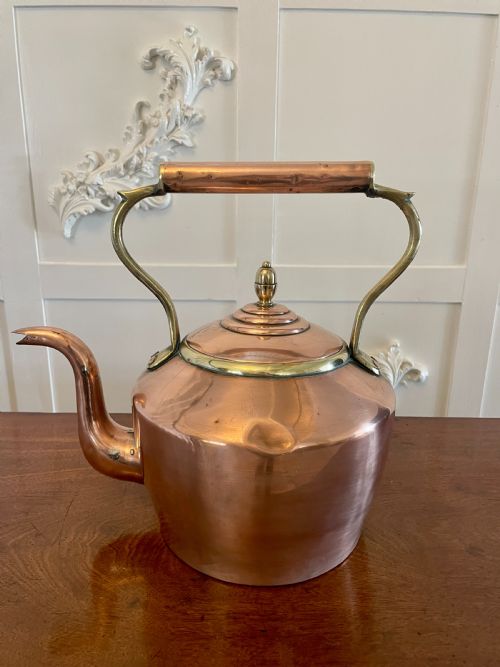


Copper Boiler Urn
These copper boiler urn pieces are heavy metal vessels built to heat and hold water, bringing warmth and character to a room.
Copper Boiler Urn
These items originate primarily from English workshops and domestic settings where hot water provision was central to daily life. Many pieces bridge the gap between functional kitchenware and decorative room furnishing. Today, buyers use them as statement display items, log buckets, or rustic planters in both traditional and modern interiors.
How they were made
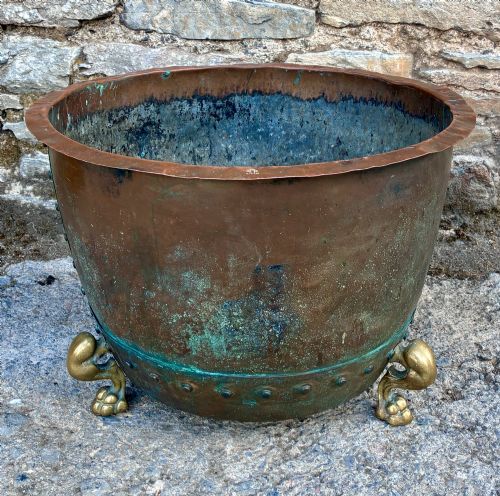
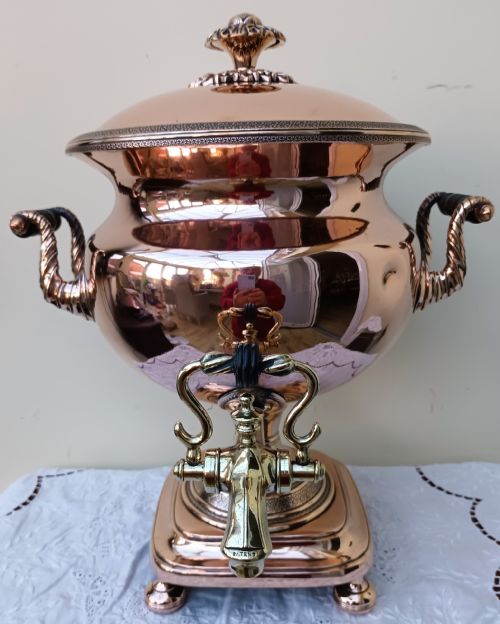
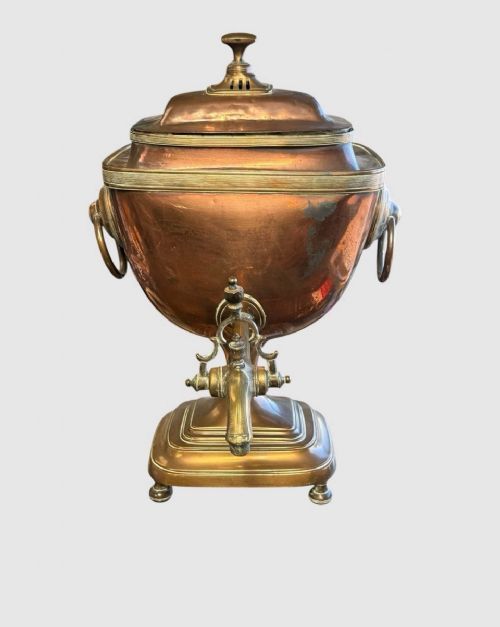
Makers built these vessels using heavy sheets of copper, shaping them with visible riveted seams that provide both structural strength and distinct industrial texture. Workshops incorporated contrasting metals such as brass for taps, handles, and mounts, while utilising bone and ebonised wood for heat-insulating handle grips.
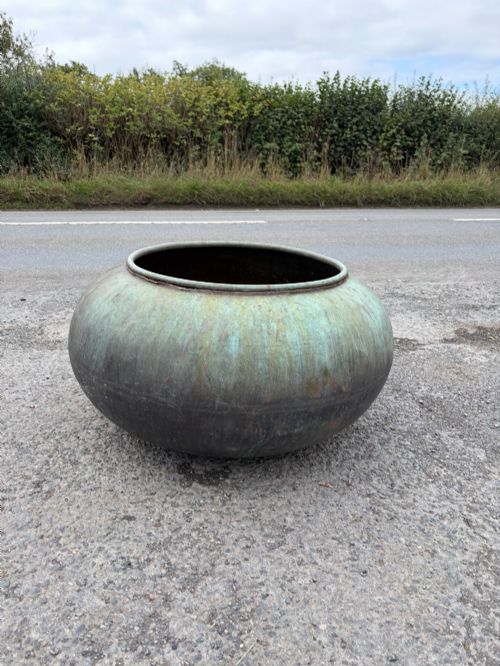
The construction relies on traditional metalworking techniques including hand-beating, rolling, and riveting. Surfaces developed rich patinas over time, sometimes displaying verdigris where copper reacted with moisture in agricultural or domestic environments.
Listings span the nineteenth century and the Georgian period, featuring copper combined with brass, bone, and ebonised wood.
What varies in quality
Quality in these vessels rests upon the gauge of the metal and the integrity of the construction. Heavier copper plates and robustly hammered seams separate substantial pieces from lighter decorative items. The presence of original brass fixtures, bone insulators, and ebonised wood handles marks the difference between standard utility wares and finer examples.
Finer pieces retain balanced proportions and crisp detailing on taps and mounts. The overall preservation of the metal surface and the strength of the riveted joints dictate the standing of an individual piece within its period.
The Copper Boiler Urn Glossary
- Samovar
- A heated metal vessel traditionally used to boil and heat water in Russia and throughout Europe. These pieces often feature an internal central tube for charcoal or a modern heating element.
- Verdigris
- The green patina that forms naturally on copper and brass through long exposure to moisture and air. This coloration indicates genuine age and weathering on metal surfaces.
- Ebonised wood
- Timber treated to resemble ebony, providing a dense, dark finish. Makers used this material for handles and knobs to insulate hands from hot metal.
- Riveted
- Joined together using metal bolts or pins that are hammered flat. This technique secures heavy copper plates before modern welding techniques existed.
Copper Boiler Urn: Frequently Asked Questions
What is a copper boiler urn?
A copper boiler urn is a large metal container originally used for heating and holding water. These vessels date from the Georgian and Victorian periods and often include taps and handles.
Today, collectors and interior decorators source these items to use as distinctive planters, log bins, or decorative display pieces in living spaces.
How were copper urns used originally?
These vessels heated water for tea service and domestic washing in large households. Servants operated the internal mechanisms and taps to dispense hot water efficiently during social gatherings.
Over time, many of these utilitarian items transitioned from functional kitchen equipment to decorative objects displayed in reception rooms.
How do I clean a copper urn?
Cleaning depends entirely on the aesthetic finish you prefer for your interior space. Many owners choose to leave the natural patina and verdigris intact to showcase the age of the metal.
If you prefer a brighter look, specialised copper cleaners remove oxidation. Avoid abrasive pads that scratch the historic metal surface.