




Brass Handle Copper Urn
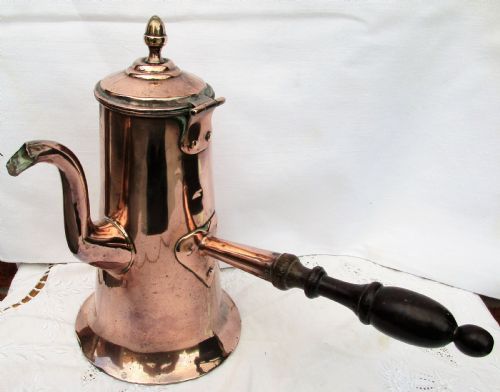
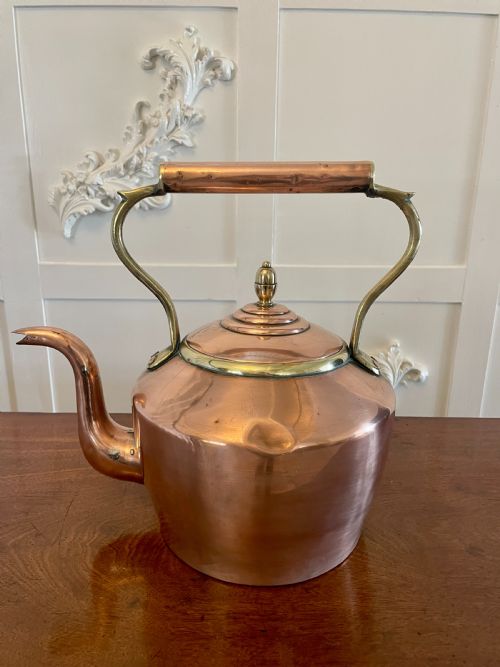
A brass handle copper urn brings warmth and practical weight to a room, combining rich metallic tones with sturdy mounts.
Brass Handle Copper Urn
Most entries on this page take the form of tea urns, samovars, water barrels, kettles, and coal buckets. These items demonstrate how functional household objects were built to endure heavy daily use while maintaining decorative presence.
Originating largely from 19th-century workshops, these vessels combine deep-hued metal bodies with contrasting fittings. You will encounter everything from large hanging water urns to smaller coffee pots and planters.
How they were made
The primary construction relies on hammered or sheet copper paired with cast brass handles, taps, and feet. Wood, iron, and bone appear selectively for insulation and structural reinforcement on items such as kettles and samovars.
Artisans utilised hand-shaping techniques to form large water barrels, cauldrons, and coal scuttles. The joins were typically folded, riveted, or brazed to ensure liquid containment and long-term durability under heat.
Listings span the 1800s through the 1930s, featuring copper, brass, wood, iron, and bone.
What varies in quality
Quality rests upon the weight of the metal gauge and the integrity of the construction. Heavier copper bodies and substantial cast brass mounts distinguish superior examples from lighter, purely decorative wares.
The refinement of form and detail separates standard utilitarian items from those carrying maker attribution or finer period styling, such as Georgian and Regency proportions.
William Soutter & Sons
The Brass Handle Copper Urn Glossary
- Samovar
- A heated metal container traditionally used to boil and heat water for tea. These vessels often feature an internal vertical metal tube that holds burning charcoal.
- Dinanderie
- An umbrella term for various types of medieval and later European brass and copper ware. It describes decorative objects fashioned from beaten or cast non-ferrous metals.
- Helmet coal scuttle
- A coal bucket shaped with a flared rim resembling a traditional helmet. This design allowed fuel to be poured neatly into a hearth.
- Regency
- A period in British history spanning from 1811 to 1820, though the style often extends from 1795 to 1837. It is characterised by classical restraint and clean, elegant lines.
Brass Handle Copper Urn: Frequently Asked Questions
What is a copper samovar?
A copper samovar is a large heated container designed for boiling water. They were central to tea preparation in many households.
These pieces typically combine a copper body with brass spigots, handles, and internal heating tubes.
Are these urns still functional?
While many historical vessels can hold water, antique pieces are often repurposed for display, as planters, or as fireside accessories. Checking internal seals is recommended before active use.
The aged metal patinas accumulated over centuries add character to contemporary interiors.
How do I spot a Regency piece?
Regency items date from the late 18th to the early 19th century and favor classical architectural proportions. They eschew heavy ornamentation in favour of clean, balanced silhouettes.
The metalwork from this era often displays restrained elegance and high craftsmanship in the brass fittings.