
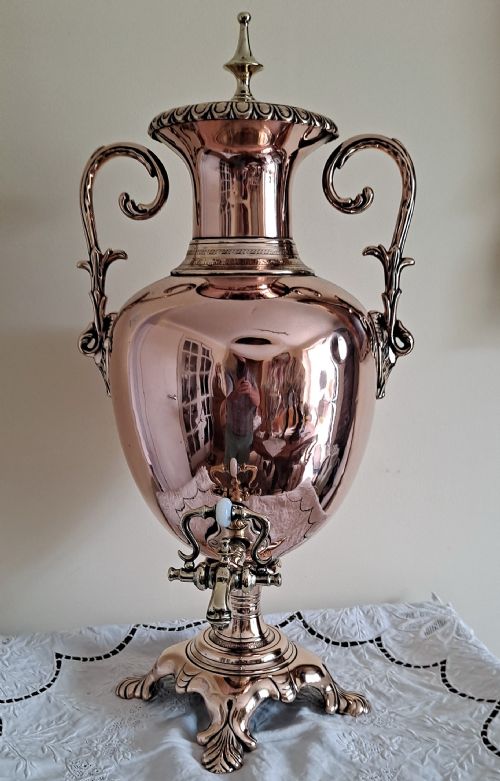


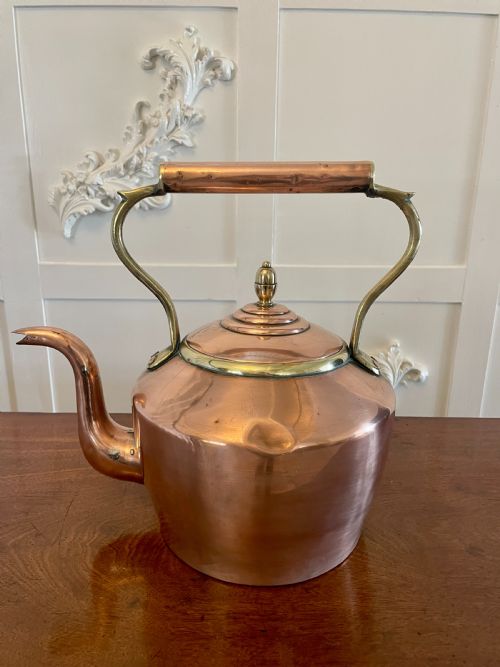


Traditional Copper Urn
These traditional copper urn pieces are heavy, metal vessels from the Georgian and Victorian eras, prized for their warmth and craftsmanship in historical interiors.
Traditional Copper Urn
When you search for a traditional copper urn, you encounter heavy metal vessels primarily originating from the Georgian and Victorian periods. These pieces include samovars, tea urns, and kettles, often combined with brass or bell metal elements.
The items you are most likely to meet on this page date from the nineteenth century, reflecting the domestic hearth and tea-serving traditions of the time. Alongside tea urns and samovars, the evidence includes related fireside accessories and milk churns.
Originating largely from English and Dutch makers, these objects served practical roles in heating water and dispensing tea before transitioning into decorative display items for the home.
How they were made
The primary construction relies on hammered copper sheets, frequently contrasted with cast brass fittings, handles, and spigots. Some examples incorporate bell metal or feature ebonised wood and bone details on the tap handles.
Surface treatments range from polished metallic finishes to japanned metal coatings, such as Pontypool Ware. Makers joined the metal sections carefully, ensuring structural integrity for holding hot water while maintaining an aesthetic display.
Listings feature items spanning the Georgian era through the Victorian period, predominantly constructed from copper, brass, and bell metal.
What varies in quality
Quality in these vessels depends heavily on the retention of original fittings, taps, and handles rather than replacements. Pieces retaining their matching components and original lids command greater attention from collectors.
The gauge of the metal and the precision of the hand-beaming or dovetail joints also distinguish superior examples. Finer items exhibit careful integration of contrasting brass or bell metal components without looseness or awkward proportions.
Benetfink & Co
The Traditional Copper Urn Glossary
- Samovar
- A heated metal container traditionally used to boil and heat water in Russia and throughout Europe. These large vessels typically feature an internal central tube for charcoal or a spigot at the base.
- Japanned Metal
- European furniture and metalware finished with a hard, black or dark resinous lacquer imitating Asian lacquerwork. Pontypool Ware is a notable British manifestation of this technique.
- Bell Metal
- A hard alloy used for bells and metalware vessels, consisting of copper and tin. It provides a resonant quality and a slightly different hue compared to standard brass.
- Andirons
- Horizontal iron bars or fire dogs raised on legs, used to support logs in an open fireplace. The evidence includes neoclassical brass and copper pairs from the Victorian era.
- Tea Urn
- A large, footed vessel designed for holding and dispensing brewed tea or hot water at large gatherings. They usually stand on a pedestal base with a small tap.
Traditional Copper Urn: Frequently Asked Questions
What is a traditional copper urn used for?
These vessels were originally manufactured to heat and dispense water for tea in domestic settings during the Georgian and Victorian eras. Their large capacity made them practical for entertaining guests before the widespread use of modern kettles.
Today, they function primarily as decorative interior pieces for the hearth, dining room, or hallway. Collectors display them to introduce warmth and historic metal texture into period or contemporary spaces.
How do I date a copper urn?
Dating relies on stylistic clues, construction methods, and materials recorded across the nineteenth century and Georgian periods. Neoclassical motifs, specific handle designs, and the presence of bell metal or japanned finishes often point towards specific decades.
Makers' marks or stamps, when present, provide a direct link to firms like Benetfink and Company. Comparing the joinery techniques helps distinguish earlier Georgian examples from later Victorian productions.
How do I clean a copper urn?
Maintenance generally involves dusting and occasionally applying a mild metal cleaner if you prefer a bright finish. Many collectors choose to preserve the mellow, aged patina accumulated over the centuries rather than polishing it to a mirror shine.
Harsh abrasives should be avoided to protect the underlying copper and any applied japanned surfaces. Gentle care ensures the original metal integrity and historical character remain intact.
Are these urns safe for boiling water?
Most antique metal vessels are sold as decorative collectibles or historical display pieces rather than functional kitchen equipment. Over long periods, internal linings can degrade or contain metals unsuitable for modern consumption standards.
It is advisable to check the interior condition thoroughly if you intend to use the spigots and containers for liquids. For safety, many owners simply keep them dry as ornamental focal points.