
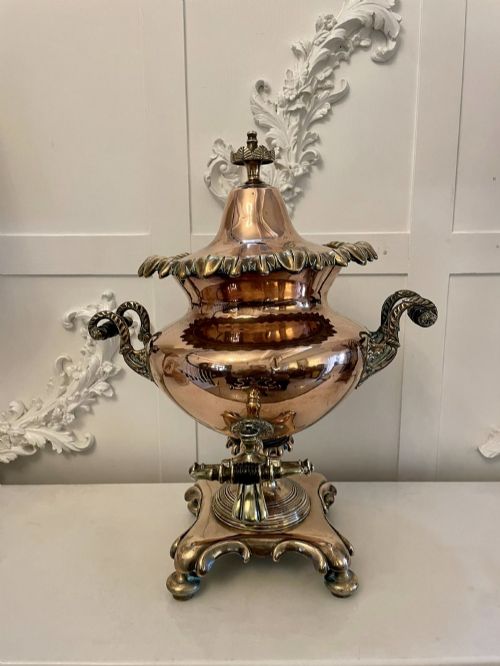
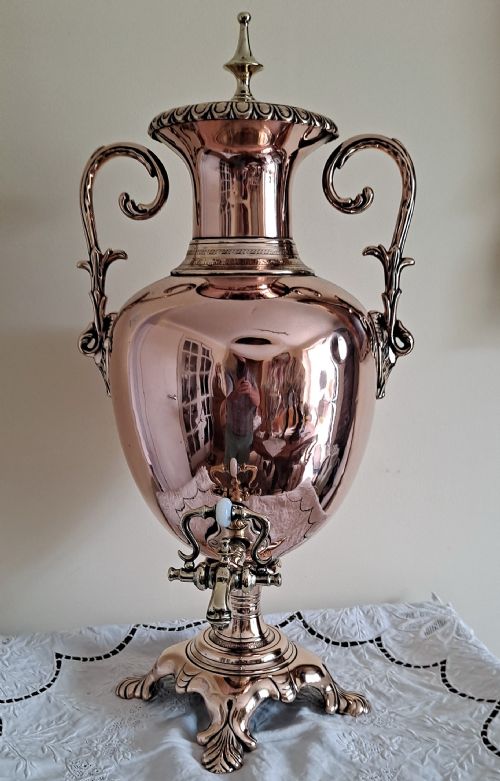


Brass Spigot Samovar
A brass spigot samovar is a heated metal vessel for water, built to serve tea or coffee with genuine domestic theatre.
Brass Spigot Samovar
A brass spigot samovar is a heated vessel designed for dispensing hot water, appearing primarily as tea urns, coffee urns, and water urns across this selection. These pieces date across the Georgian, Regency, and Victorian periods, with 19th-century examples forming the core of the available inventory.
Makers shaped these utilitarian objects in various forms, ranging from standard tea urns and kettle samovars to hanging copper water urns and Dutch toleware coffee urns. English regional pieces dominate the offerings alongside Dutch Regency variants.
How they were made
Craftsmen built these vessels principally from copper and brass, often combining bell metal and tinplate linings with exterior treatments of paint and gold leaf. Details such as ebonised wood provided contrasting insulation for handles and knobs.
Construction relied on heavy-gauge metalworking techniques to withstand internal heat, pairing robust handles with functional brass spigots and original fittings.
Some nineteenth-century water urns were designed to hang rather than sit, giving domestic staff an eccentric alternative to the sideboard.
What varies in quality
Quality rests in the weight of the metal and the integrity of the original fittings, distinguishing standard utility pieces from ornate George III examples. The presence of undamaged ebonised wood handles and intact brass spigots elevates an object's standing.
The refinement of surface decoration, such as painted toleware or gilt highlights, separates basic kitchen containers from sophisticated reception room vessels.
The Brass Spigot Samovar Glossary
- Spigot
- A small tap or nozzle attached to the base of the urn for dispensing hot water. Original brass spigots are integral to the piece's authenticity.
- Toleware
- Metalware painted and lacquered, often in the Dutch style seen on early nineteenth-century coffee urns. This surface treatment provides decorative colour.
- Bell Metal
- An alloy of copper and tin used for casting metal vessels and fittings. It produces a resonant tone and offers durability.
- Ebonised wood
- Timber treated to resemble ebony, utilised for handles and insulators. This material prevents heat transfer to the user's hand.
Brass Spigot Samovar: Frequently Asked Questions
How do you use a samovar?
Water is poured into the main body of the vessel and heated via an internal chamber or external heat source. Once hot, guests draw water directly from the brass spigot.
Historically, these urns sat on sideboard tables during formal gatherings to maintain a ready supply of hot water for continuous tea and coffee service.
What is the difference between a tea urn and a samovar?
While both serve hot water, a samovar traditionally incorporates a central vertical heating tube. Tea urns often function simply as large heated reservoirs.
Both forms utilise functional brass spigots at the base to dispense water into waiting cups during nineteenth-century dining rituals.
How do you date a copper samovar?
Dating relies on stylistic markers from the Georgian, Regency, and Victorian periods. George III pieces often display distinct neoclassical proportions and heavier casting.
Later Victorian examples tend towards greater ornamentation, while material shifts from plain copper to painted toleware indicate regional Dutch origins from around eighteen thirty.
Can you still use these antique urns?
Most antique samovars serve primarily as decorative display items rather than daily kitchen appliances. Modern usage requires professional plumbing checks to ensure internal linings and spigots remain safe.
Collectors generally preserve them for their period copper and brass aesthetics within traditional dining spaces.