



Coopered Oak Tub
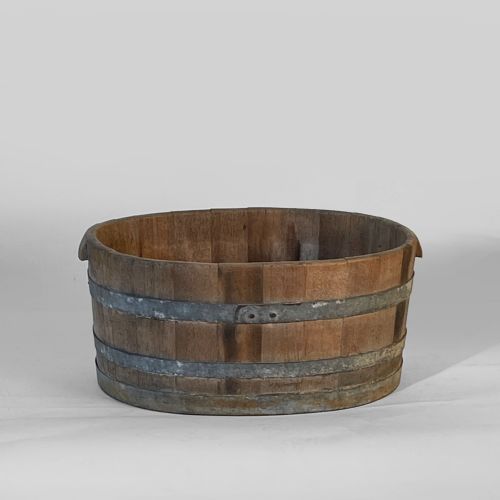
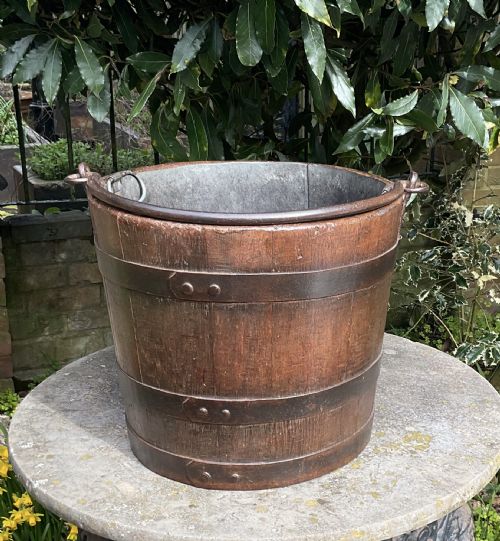
These coopered oak tub examples are solid, stave-built vessels shaped by traditional barrel-making methods, prized for bringing robust utility and rustic warmth into interiors.
Coopered Oak Tub
A coopered oak tub is a vessel constructed from narrow wooden staves bound tightly together by metal bands of iron, brass, or copper, following centuries-old cask-making traditions. When you search for a coopered oak tub, you encounter a surprisingly varied group of forms ranging from deep washing buckets and oyster carriers to umbrella stands, plant planters, and log bins.
The versions most frequently met on this page span the nineteenth century and the Edwardian period, often displaying the strong grain of oak combined with dark metal hoops. Many examples retain functional details such as iron handles, swing bails, or zinc liners, reflecting their transition from demanding domestic or agricultural service to decorative home storage.
How they were made
Makers formed these vessels using seasoned oak staves, bevelled at the edges to fit closely together into a watertight cylinder before being secured with tensioned metal bands. Blacksmith-wrought iron, brass, and copper hoops were driven onto the wooden bodies while hot or under pressure so that the metal contracted to hold the staves immovably firm.
Surfaces were left plain or simply rubbed down to highlight the natural figuring of the timber, sometimes paired with applied metal swing handles or internal metal liners to protect the wood from moisture. The construction required no glue, relying entirely on the precise geometric angles of the staves and the crushing grip of the exterior hoops.
Some nineteenth-century tubs spent their early working lives hauling fresh oysters out of coastal waters before ending up holding umbrellas.
What varies in quality
Quality in a coopered oak tub rests upon the crispness of the stave jointing, the weight and tightness of the metal banding, and the preservation of the original timber surface. Superior pieces show precise hand-shaping along every stave edge and retain their original patinated iron or brass hoops without excessive corrosion or loose joints.
The presence of maker stamps, original zinc or metal liners, and authentic mounting furniture such as matching stands or swing handles elevates an ordinary utility vessel into a more substantial decorative object. Finer examples maintain their structural rigidity and clear oak grain, whereas lesser pieces suffer from mismatched replacement staves or overly rusted bands.
Lister and Co
The Coopered Oak Tub Glossary
- Coopered
- Constructed from curved wooden staves joined edge-to-edge and bound with hoops, a method traditionally used for barrels, buckets, and tubs.
- Stave
- One of the narrow, tapered lengths of oak that form the vertical sides of a tub or barrel.
- Hoop
- A band of iron, brass, or copper encircling the staves to maintain structural tension and keep the vessel tight.
- Jardiniere
- An ornamental pot or stand designed to hold growing plants or flowers, often adapted from coopered wooden buckets.
- Log bin
- A deep vessel utilised beside a fireplace for holding firewood, frequently formed from heavy oak staves and metal banding.
Coopered Oak Tub: Frequently Asked Questions
What were coopered oak tubs used for originally?
These vessels served heavy domestic and agricultural purposes, functioning as washing tubs, butter barrels, well buckets, and oyster carriers.
Their robust stave construction and metal banding allowed them to hold water, grain, and provisions safely before later retirement into household decorative use.
How do I use a coopered oak tub at home?
Modern interiors employ these tubs as umbrella and stick stands in hallways, log bins beside hearths, or planters for large houseplants.
Adding an internal liner protects the historic oak from damp soil or wet umbrellas while preserving the exterior visual character.
How can I tell a Victorian tub from an Edwardian one?
Victorian examples generally display heavier hand-finished oak staves and hand-forged iron bands associated with nineteenth-century country utility.
Edwardian pieces sometimes incorporate lighter oak forms, cleaner machine-planed timber edges, and branded maker details reflecting structured commercial production.
Are the metal bands always made of iron?
While wrought iron and blackened metal hoops appear most frequently on utility buckets and log bins, brass and copper bands are also found.
Brass and copper bindings usually appeared on finer domestic vessels such as jardiniere planters and butter barrels intended for visible indoor display.