

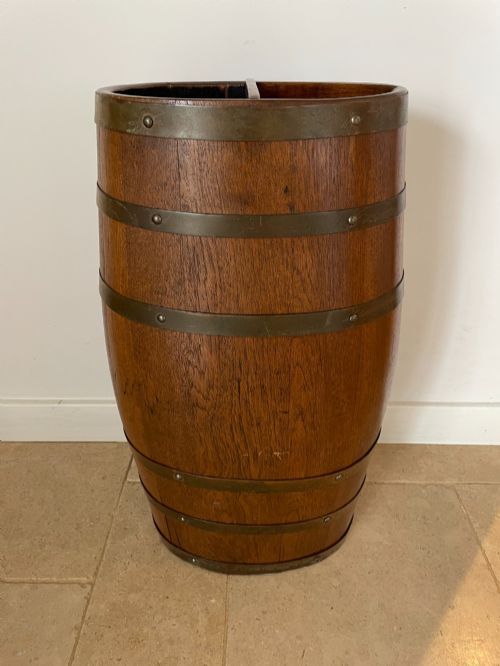


Antique Oak Container
An antique oak container brings sturdy utilitarian craft indoors, holding everything from walking sticks to coal.
Antique Oak Container
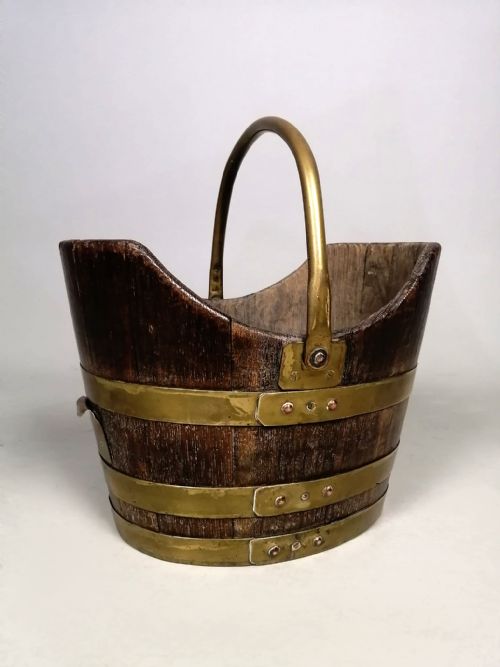
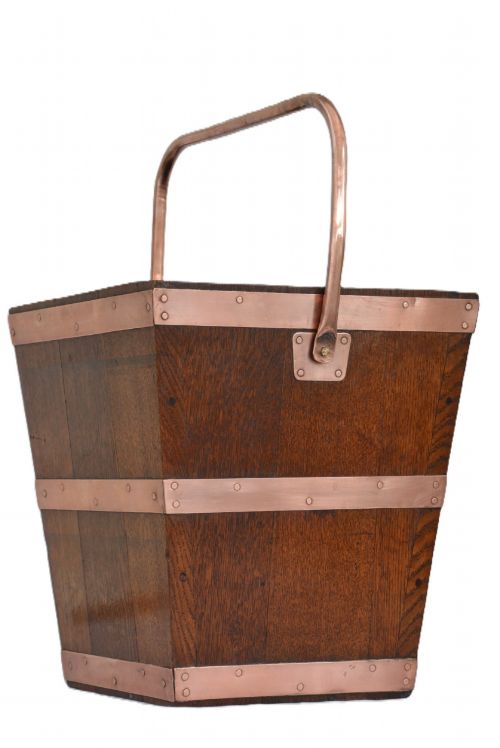
Domestic household storage dominates the selection, featuring coal scuttles, grain bins, salt boxes, and coopered buckets. These pieces originate across the seventeenth, eighteenth, nineteenth, and early twentieth centuries.
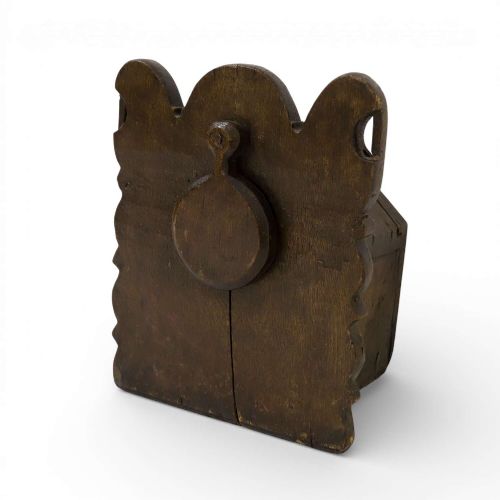
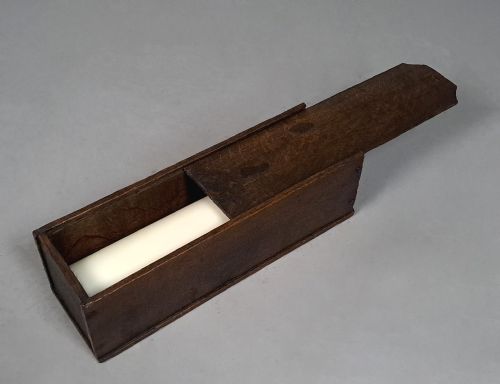
Country house and rustic vernacular pieces appear frequently alongside formal Victorian and Edwardian examples. Buyers find specific functional items like knife boxes, tinder boxes, and butter tubs sharing this category.
Materials and Construction
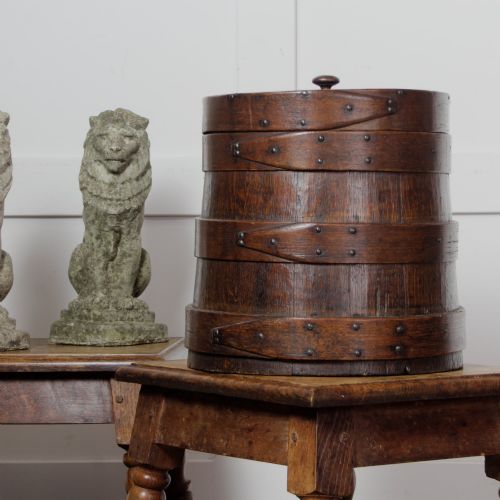
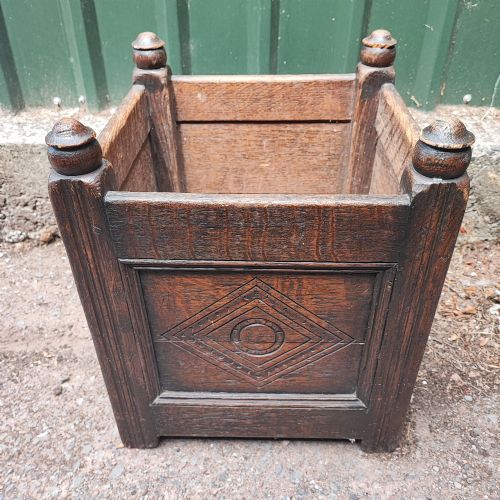
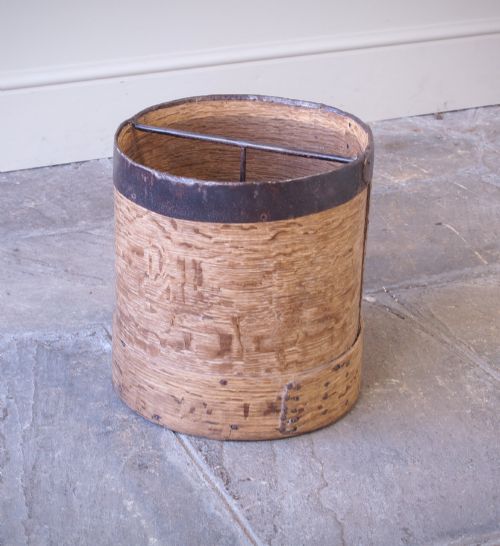
Solid oak provides the primary structural body for these vessels, frequently shaped through coopering techniques using staves bound with brass, copper, or iron bands. Blacksmiths forged the original iron hinges, latches, and hardware seen on wall boxes and salt containers.
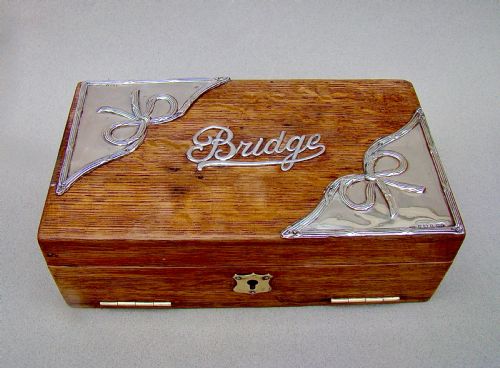
Makers utilised traditional joinery, including dovetailing and pegged joints, to construct rigid frames for boxes and bins. Metal mounts in brass and sterling silver add functional reinforcement, while occasional carved decoration or paint traces finish the surfaces.
One curious offering includes a secret safe disguised as a carved book.
Distinctions in Quality
The integrity of the timber and the original state of the hardware dictate the standing of any vessel. Pieces retaining their original iron hinges, copper bands, or interior liners command greater respect among collectors.
Execution of technique separates utilitarian work from finer studio output, visible in tight coopering, clean dovetail joints, and restrained carved detailing. Surfaces displaying honest wear and patination without excessive restoration represent the upper tier of survivals.
Christopher Dresser·Levi & Salaman
The Antique Oak Container Glossary
- Coopered
- Constructed from wooden staves curved and fitted together, then bound with metal hoops. This technique created watertight vessels like buckets, barrels, and umbrella stands.
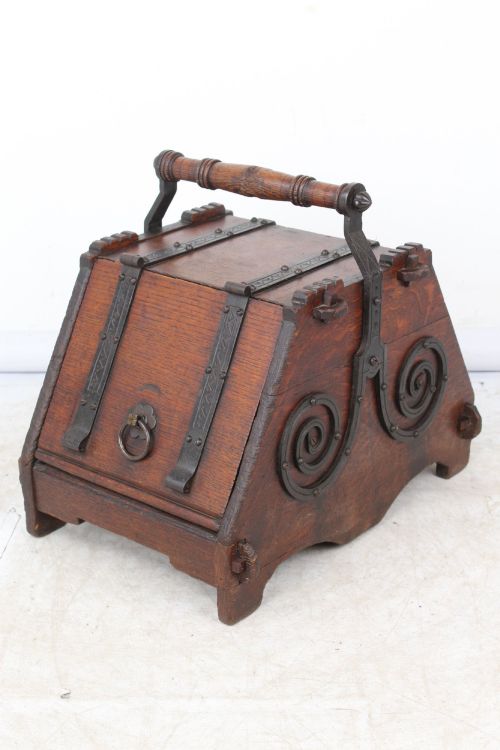
- Purdonium
- A specific type of Victorian domestic coal cabinet featuring a hinged sloping front and a drop-down interior metal box or liner. It kept coal contained near the hearth.
- Treen
- Small handmade wooden objects produced before mass manufacturing took over domestic items. These range from small boxes to vessels used for specific domestic tasks.
- Salt box
- A wall-mounted container with a sloping lid designed to keep household salt dry. They often feature carved details and a hinged back panel for hanging.
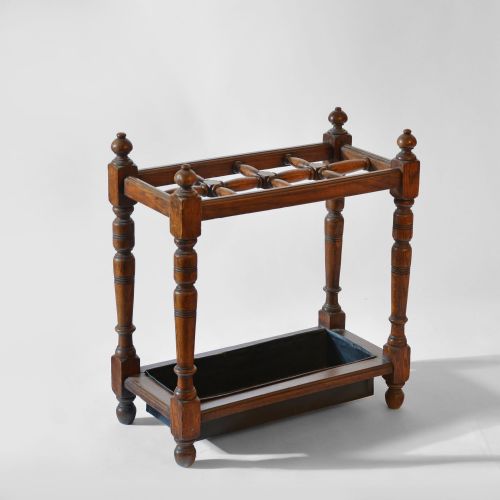
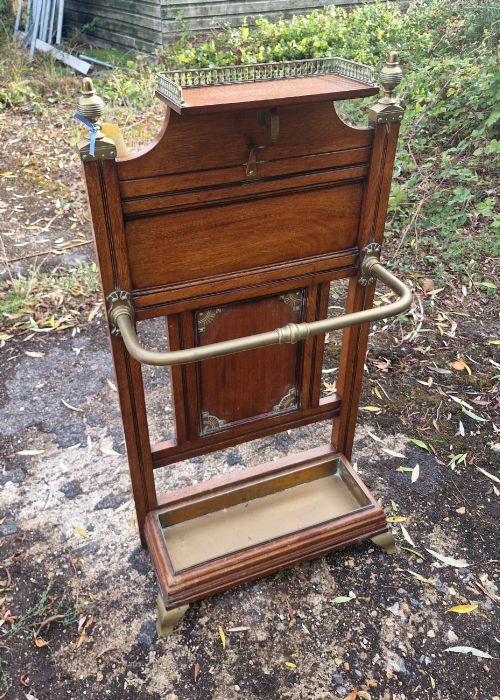
- Stick stand
- A tall hallway piece designed for umbrellas and walking sticks, often incorporating a metal drip pan at the base. They appear in oak, sometimes with barley twist supports.
Antique Oak Container: Frequently Asked Questions
What were oak wall boxes used for?
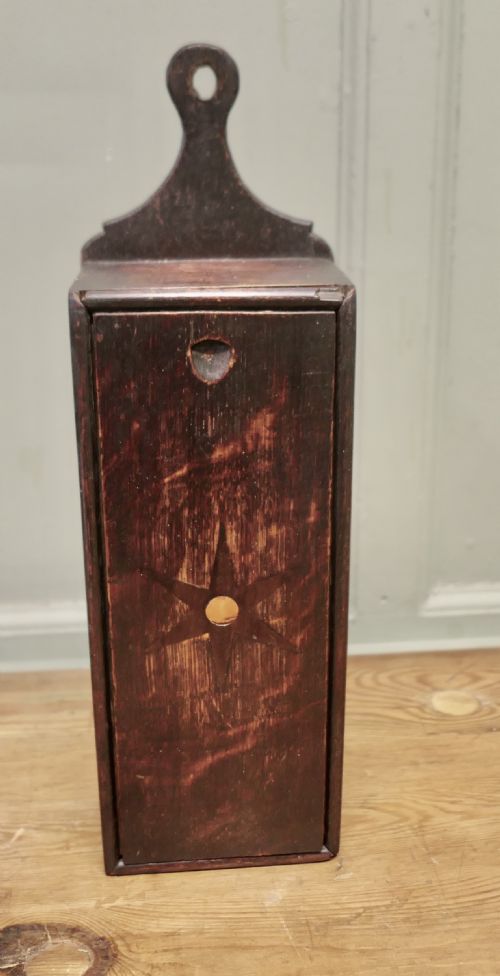
Wall-hanging boxes stored household goods like candles, salt, or knives within easy reach in domestic kitchens and living spaces. Their elevated position kept contents away from damp floors and household pests.
Craftsmen designed them with hinged lids and shaped backboards pierced for wall hanging. They remain practical for small storage in modern homes.
How do I care for antique oak?
Keep wooden vessels away from direct heat sources and drastic humidity changes to prevent the timber from splitting. Apply occasional traditional beeswax to nourish the dry grain and maintain the surface sheen.
Avoid harsh chemical cleaners or excess water on coopered seams and metal bands. Gentle dusting preserves the natural patination built up over centuries.
Are coal scuttles still usable?
Historic coal scuttles and purdoniums serve modern interiors as log holders, magazine racks, or fireside accessory stores. Their robust metal liners and sturdy oak construction handle heavier items easily.
Inspect the interior metal components and handles to ensure structural stability before loading them with heavy fuel or logs. They bring period character to modern hearths.
How do I date an oak container?
Dating relies on examining construction methods, ironwork, fixings, and overall wear patterns. Hand-forged iron hinges and pegged joinery generally indicate earlier periods, while machine-cut screws and silver hallmarks point to the Victorian or Edwardian eras.
Stylistic cues like Gothic Revival motifs, Aesthetic Movement lines, or specific maker marks also narrow down the manufacturing decade. Comparing hardware styles provides the clearest chronological guide.