



Continental Renaissance Carving
Continental renaissance carving encompasses heavy timber furniture and devotional figures designed with the architectural proportions and classical ornament of the sixteenth and seventeenth centuries.
Continental Renaissance Carving
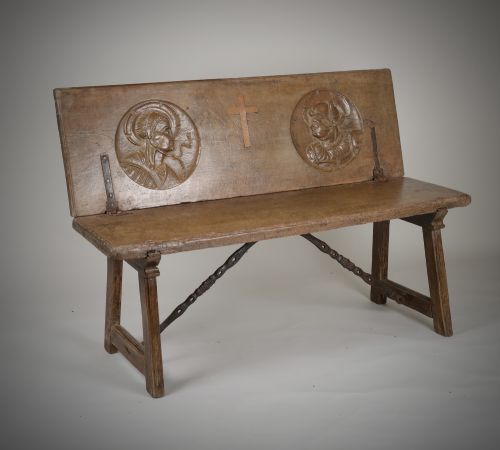
Buyers seeking continental renaissance carving encounter significant timber furniture and figurative sculpture spanning original sixteenth-century work alongside later nineteenth-century revivals. The selection balances devotional sculpture in walnut and oak with functional domestic storage including cabinets, sideboards, credenzas, and benches.
Original sixteenth- and seventeenth-century pieces appear alongside revival items produced during the nineteenth century. Walnut and oak dominate the corpus, frequently augmented by polychrome paint, gesso, iron, and brass fittings.
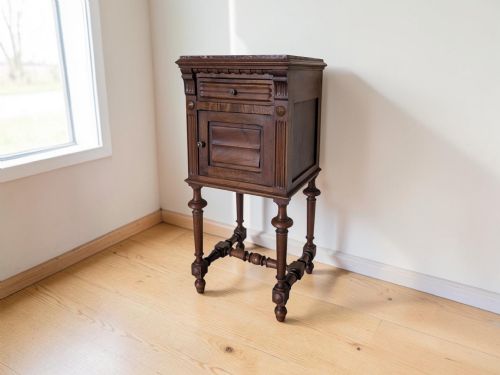
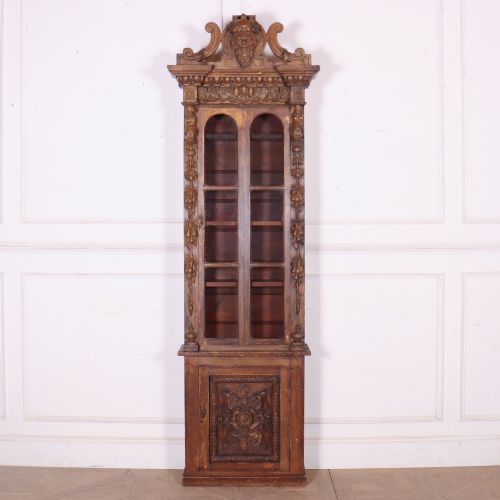
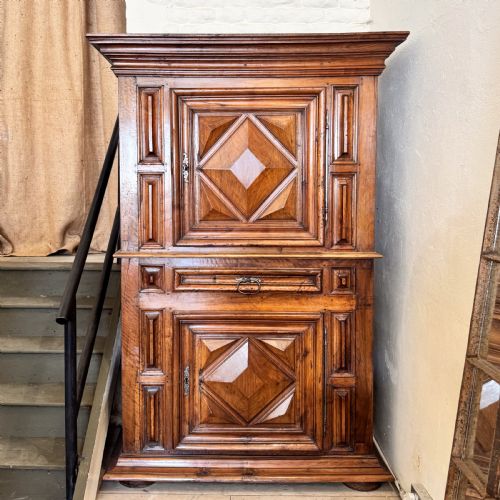
Forms range from monumental Italian credenzas and caquetoire armchairs to domestic coffers and bedside cupboards. Architectural elements such as pilasters, panels, and marquetry inlay characterise the visual language of these pieces.
Materials and construction methods
Makers utilised dense hardwoods including walnut, oak, limewood, and pine as the structural foundation for carving and cabinetry. These timbers allowed carvers to execute deep relief panels, figurative sculpture, and crisp architectural mouldings.
Surface decoration frequently incorporated polychrome finishes, gesso, and contrasting marquetry inlays to enhance the visual depth of cabinets and figurative works. Iron and brass hardware served both structural and decorative purposes on doors, coffers, and cupboards.
Listings span four centuries of production, recording seventeenth-century walnut alongside nineteenth-century revival oak cabinets.
Distinctions in quality and execution
The depth and definition of the carved relief separate standard revival production from superior sixteenth-century work. Crisp detail in drapery folds, facial expressions, and architectural motifs indicates skilled hand execution rather than mechanical repetition.
The choice and conservation of primary timbers heavily influence the character of each piece. Intact original surfaces, harmonious timber figure, and minimal structural alteration distinguish the finer examples in this category.
The Continental Renaissance Carving Glossary
- Caquetoire
- A light sixteenth-century armchair designed for conversation, featuring a tall narrow back and trapezoidal seat. This form originated in France during the renaissance period.
- Credenza
- A large sideboard or storage cabinet originating in Italy, often raised on feet and fitted with doors and drawers. Renaissance examples display prominent architectural cornices and carved panelling.
- Polychrome
- Decoration applied in several colours to the surface of wood or gesso sculpture. This technique was frequently utilised on sixteenth-century devotional figures.
- Marquetry
- The art of applying decorative veneer pieces to a timber structure to form geometric or pictorial designs. This technique appears on later cabinets and sideboards.
- Cofer
- A large timber chest used for storage, constructed with heavy planking and reinforced joints. Sixteenth-century examples often feature carved panels across the front.
Continental Renaissance Carving: Frequently Asked Questions
How do I identify a sixteenth-century piece?
Authentic sixteenth-century items exhibit period tool marks, genuine timber shrinkage, and wear consistent with centuries of handling. Revival pieces from the nineteenth century often display more uniform machine-sawn timber and harder surface patination.
Construction methods also differ between eras. Earlier joinery relies on pegged mortise and tenon joints, whereas later revival furniture may incorporate nineteenth-century hardware and secondary woods.
Where should I place a heavy cabinet?
Large cabinets and credenzas require stable flooring and adequate wall clearance to support their substantial timber weight. Positioning them away from direct heat sources prevents the walnut or oak panels from splitting.
Ensure the room humidity remains relatively constant throughout the year. Sudden environmental changes cause antique hardwoods and gesso surfaces to expand and contract.
How are carved figures displayed safely?
Figurative wood sculptures require secure mounting on flat surfaces or stable brackets away from high-traffic areas. Placing them out of direct sunlight protects any surviving polychrome paint and gesso finishes from fading.
Dusting should be performed gently with a dry, soft brush. Avoid using liquid polishes or commercial cleaning agents on historic wood and painted surfaces.
What defines the Renaissance revival style?
The nineteenth-century revival movement emulated the architectural forms, column structures, and relief carvings of the sixteenth century. Makers utilised historic design books to recreate Italian and Flemish cabinet forms for Victorian interiors.
While these revival pieces copy earlier aesthetics, they often combine different regional styles such as mixing Flemish oak framing with Italian walnut motifs.