





Continental Religious Figure
A continental religious figure represents centuries of devotion, carved from timber and shaped by hands across European workshops.
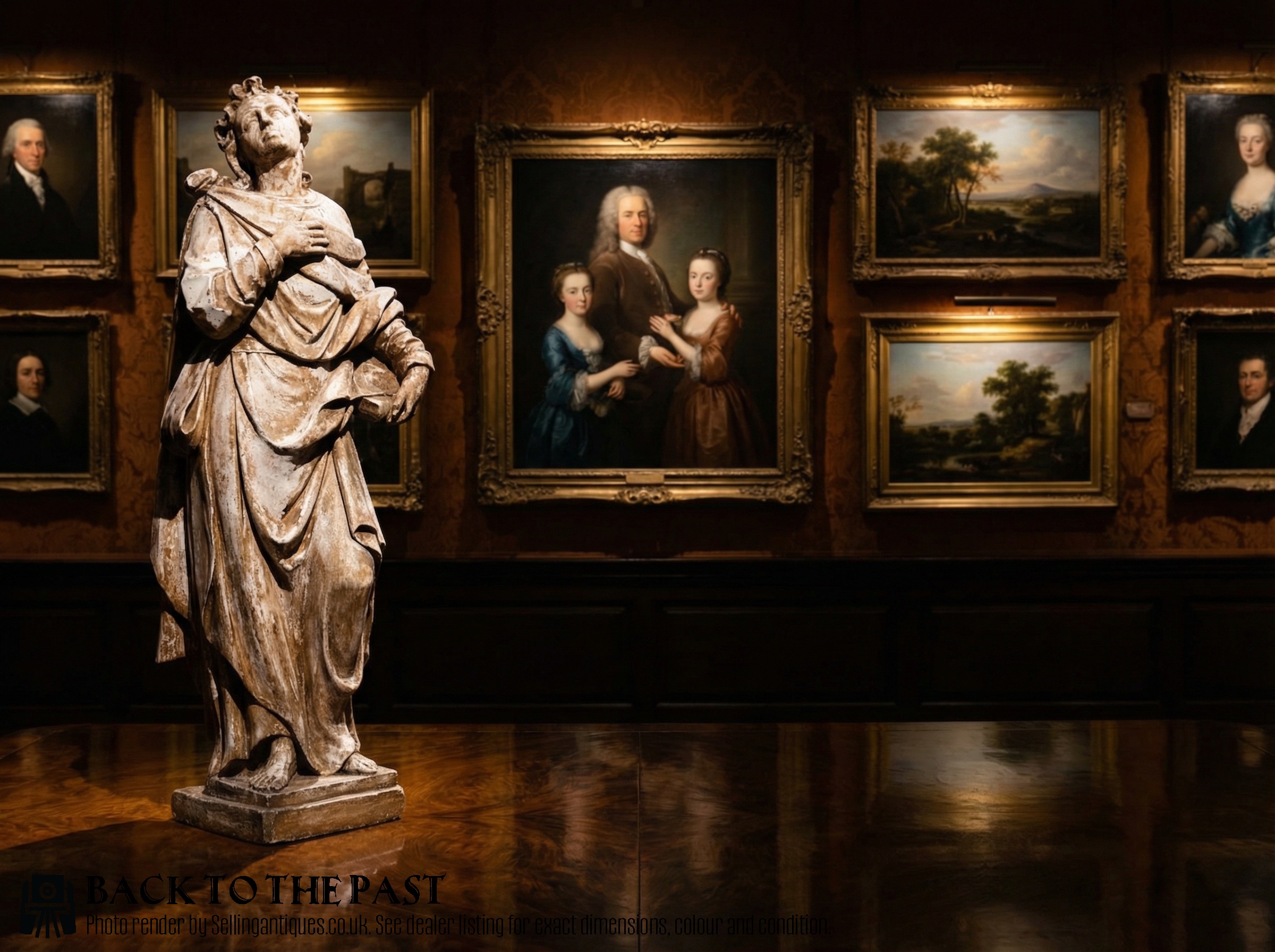
Continental Religious Figure
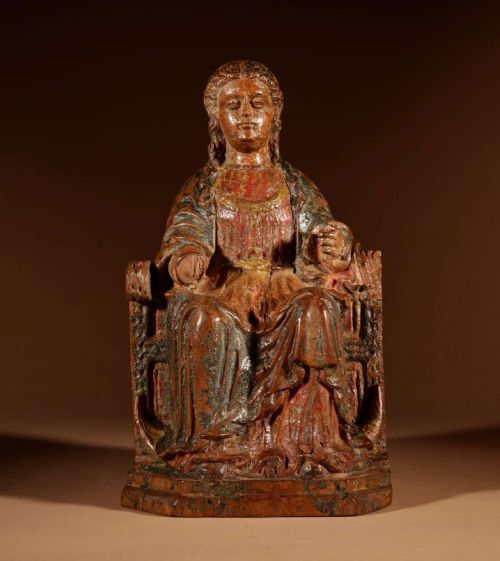
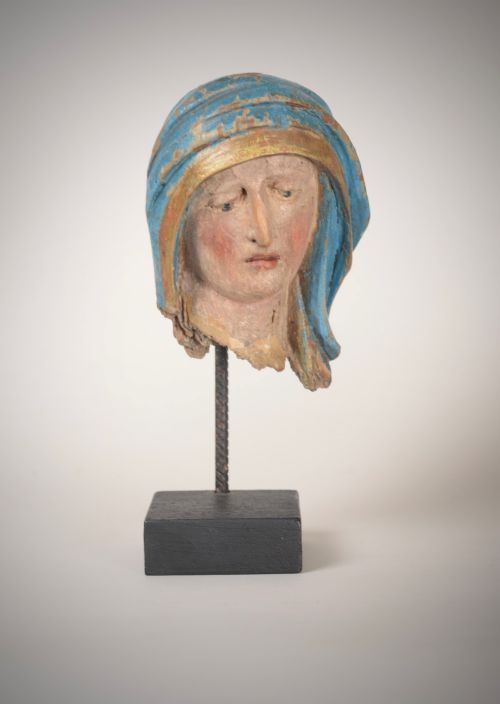
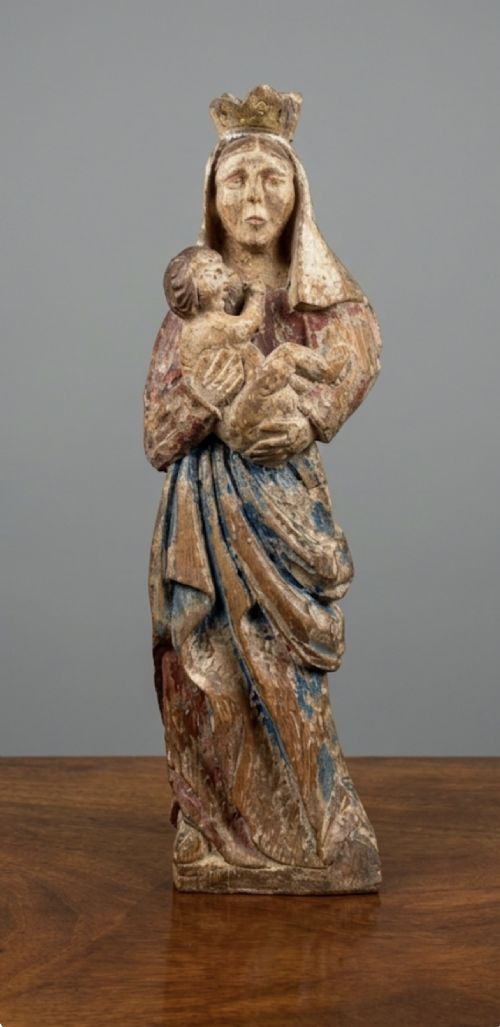
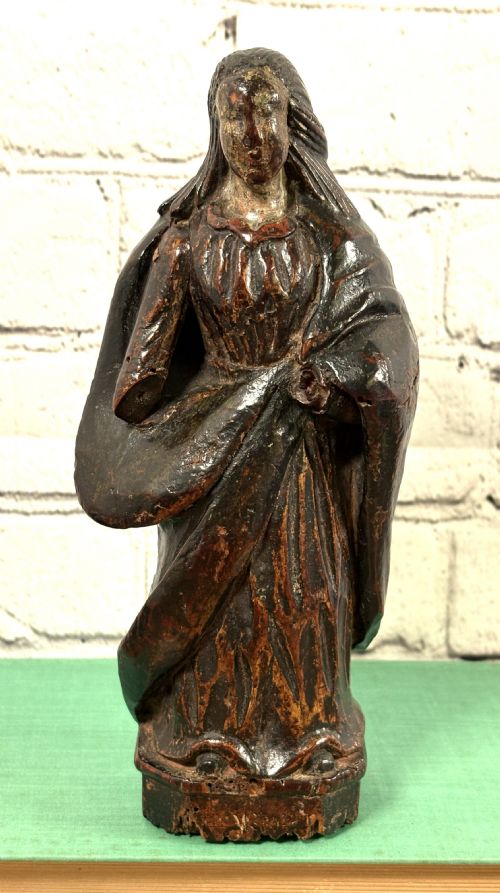
A continental religious figure takes the form of saints, Madonnas, and biblical personages carved in timber. These pieces span from pre-sixteenth century examples to the nineteenth century, originating from regions including Germany, Italy, and Croatia. Buyers encounter subjects like Saint Jerome, Saint Barbara, and the Virgin Mary and Child in both tabletop sizes and life-size proportions.
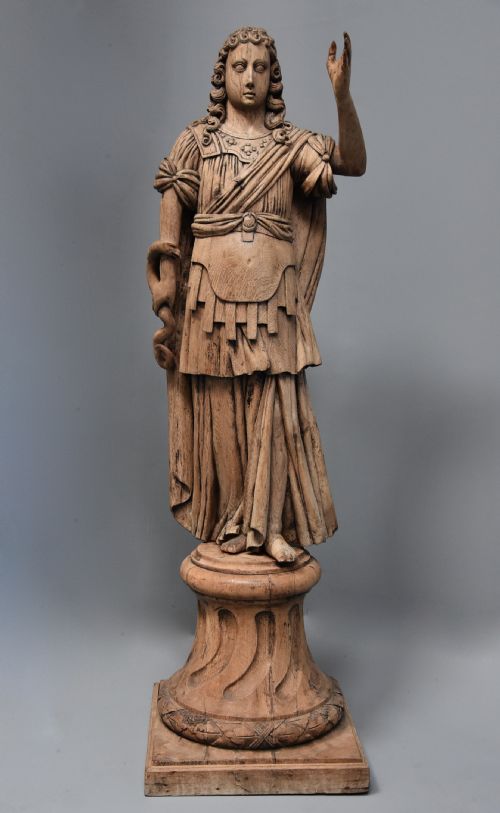
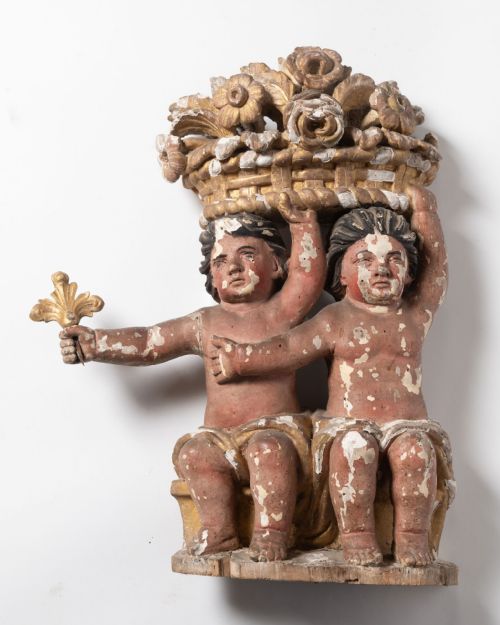
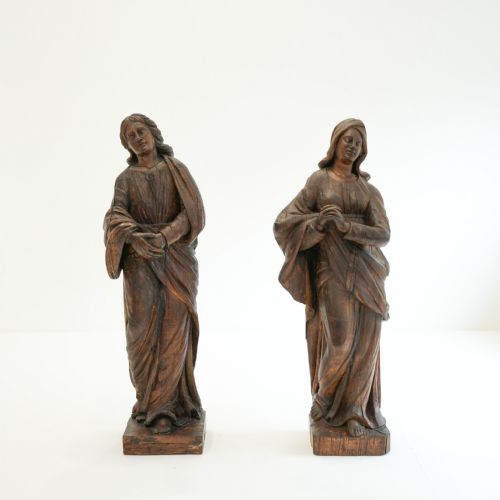
The selection ranges from early medieval pine carvings and sixteenth-century limewood saints to baroque oak figures and nineteenth-century statues. Formats vary from single standing statues and seated thrones to architectural fragments, pairs of angels, and acolyte candlestick figures. Most items reflect ecclesiastical settings and private devotional shrines of their period.
How they were made
Carvers shaped these works primarily from hardwoods like oak and walnut, alongside softwoods including limewood, pine, applewood, and lindenwood. Artisans utilised chisels and gouges to work the timber directly, creating intricate drapery, facial expressions, and anatomical details. Surviving tool marks often remain visible beneath subsequent surface treatments.
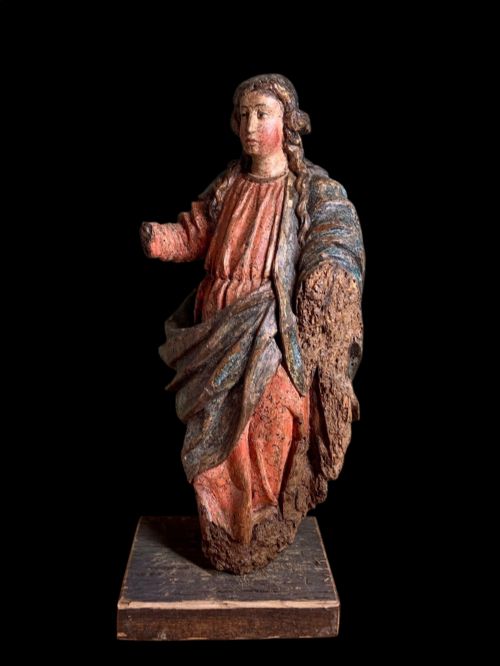
Many surfaces received a layer of gesso as a ground for polychrome paint, silvering, or gold leaf application. Painters used pigments to render robes, hair, and flesh tones, while gilding highlighted halos, garments, and architectural elements. Over centuries, these finishes settled into the wood, interacting with the underlying grain.
Cherubs occasionally peer out from beneath the feet of austere saints, adding unexpected charm to solemn ecclesiastical carvings.
What varies in quality
The survival and integrity of original surface treatments define another distinct tier. Pieces retaining authentic polychrome and gilt layers command closer attention than those stripped down to bare wood or heavily overpainted in later centuries. The harmony between the original carving and its remaining finish determines visual depth.
The Continental Religious Figure Glossary
- Polychrome
- Painted in several colours. This surface treatment brings garments and flesh tones to life on wooden sculptures.
- Gesso
- A plaster mix applied to wood. It forms a smooth white ground for subsequent gilding and painting.
- Giltwood
- Wood covered with thin gold leaf. This technique illuminates halos and vestments in dim ecclesiastical spaces.
- Limewood
- A fine-grained European timber favoured by carvers. Its consistent texture allows for microscopic detail in drapery and hair.
- Santos
- A devotional figure or statue. These works depict saints or holy figures for ritual use.
Continental Religious Figure: Frequently Asked Questions
How do I identify the age?
Dating relies on stylistic markers, tool marks, and the characteristics of the wood and surface finish. Earlier pieces often display Gothic or Renaissance drapery conventions, while seventeenth and eighteenth-century works show baroque movement.
Examining the grain, wood species, and the remnants of gesso and polychrome helps place the object in its historical period.
Were these always painted?
Many figures received initial coats of gesso, paint, and gold leaf to enhance their visual impact. Painters rendered realistic skin tones and distinct colours for garments and robes.
Over time, some surfaces wore away entirely or were stripped down, leaving only the bare carved timber exposed.
How should I display them?
These sculptures require stable indoor environments away from direct sunlight and sudden humidity changes to protect the ancient wood. Placing them on stable surfaces or dedicated plinths supports their weight safely.
Allowing adequate space around the figure highlights the depth of the carving and any surviving surface finishes.