


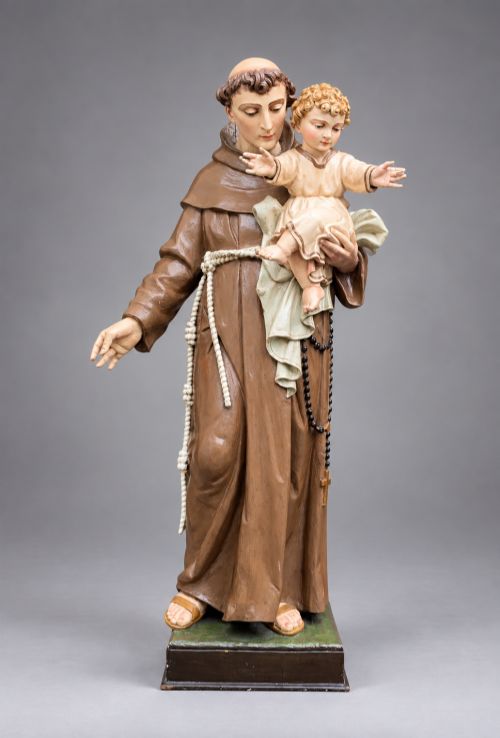


Large Saint Sculpture
A large antique saint sculpture is a devotional carving or figure of impressive scale that brings centuries of ecclesiastical presence into a room.
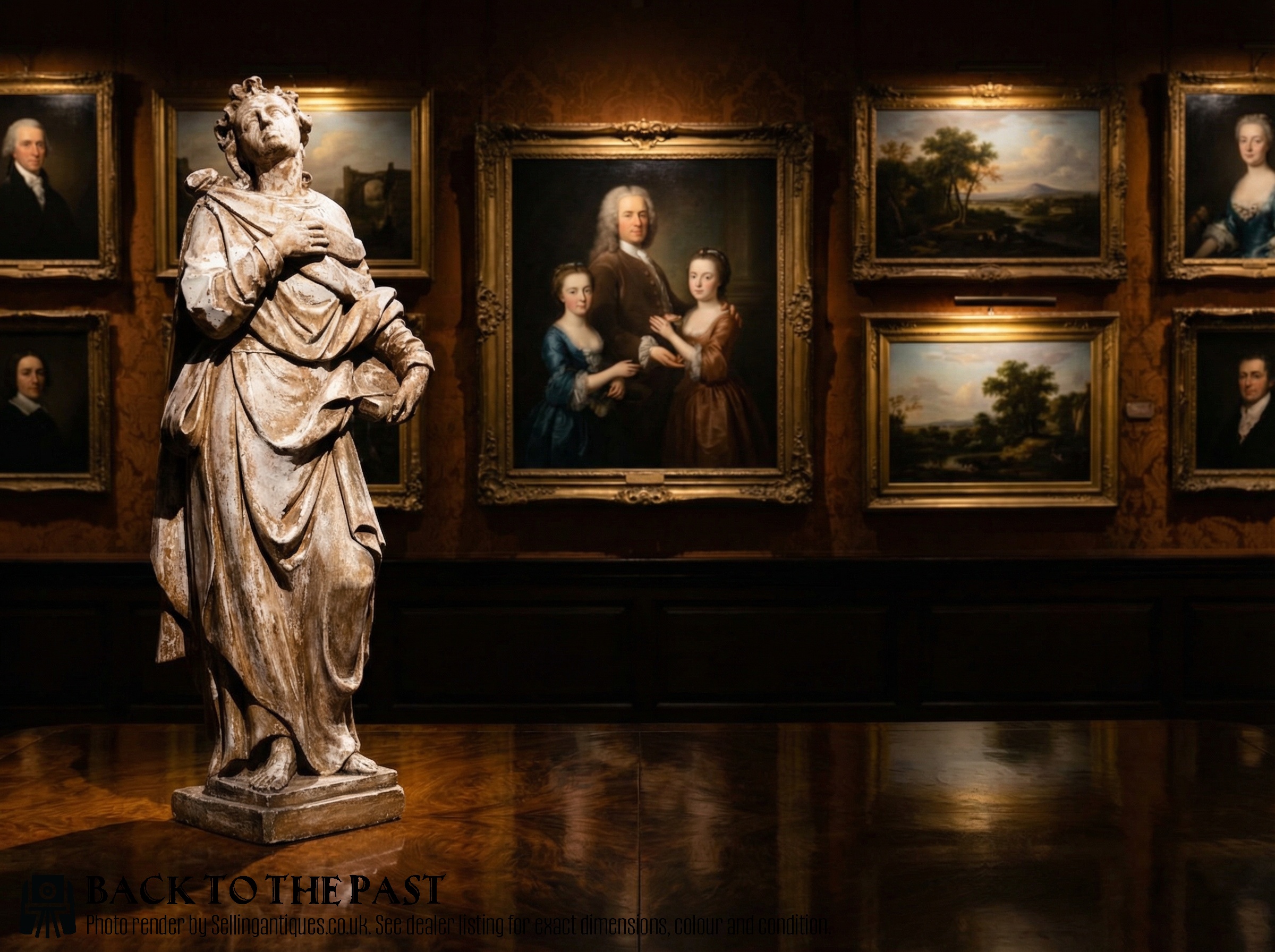
Large Saint Sculpture
A large antique saint sculpture represents holy figures and angels produced across the sixteenth, seventeenth, eighteenth, and nineteenth centuries. These sculptures serve as focal points of religious devotion and artistic expression originating from various European workshops.
The selections available here range from carved limewood Continental pieces to polychrome wooden figures and ecclesiastical plaster statues. Forms span specific saints such as St. John the Baptist, St. Roche, and St. Nepomuk, alongside angel figures and soft-paste porcelain groups.
Originating from periods spanning the Renaissance, Baroque, Rococo, and Gothic Revival, these works reflect the distinct stylistic preferences of their eras. Buyers encounter both robust wooden carvings finished with gesso and gold leaf and delicate ceramic interpretations.
How they were made
Polychrome paint and gold leaf were subsequently applied to bring the figures to life with rich colour and metallic brilliance. Soft-paste porcelain alternatives required intricate moulding and high-temperature firing before receiving detailed glaze finishes.
Large Saint Sculpture Retail Price Guide 2026
Typical asking prices for large saint sculpture among the pieces listed under this phrase on Sellingantiques today, from the lower quarter to the upper quarter. They describe what is for sale here now, not the wider market.
Continental workshops dominate the material, incorporating Baroque, Rococo, and Gothic Revival styles.
What varies in quality
The sophistication of the carving dictates the visual strength of the piece, separating masterwork execution from simpler provincial output. Sculptures featuring deep, undercut drapery and finely rendered anatomical details demand far greater technical skill.
The preservation of original surface treatments plays a major role in determining the character of each piece. Retained layers of early polychrome pigment and gold leaf hold more historical integrity than heavily overpainted or stripped surfaces.
The Large Saint Sculpture Glossary
- Polychrome
- Decorated in multiple colours. This term describes statues and carvings painted with various pigments to enhance realism.
- Gesso
- A plaster mixture used as a surface for painting or gilding. It provides a smooth ground on carved wooden figures.
- Soft-paste porcelain
- A ceramic material made from clay and glass frit. It fires at lower temperatures than hard-paste porcelain.
- Limewood
- A fine-grained timber favoured by European carvers. It allows for intricate detail without splitting easily.
Large Saint Sculpture: Frequently Asked Questions
Where were these sculptures originally displayed?
These figures typically stood in churches, private chapels, and domestic devotional shrines across Europe. They were placed to inspire contemplation and reverence among observers.
Larger examples occupied prominent architectural niches or served as altarpiece components. Smaller domestic versions inhabited private rooms for daily prayer.
How do I clean wooden figures?
Dusting gently with a dry, soft brush is the safest method for maintenance. Avoid using water or liquid cleaners on antique surfaces.
Moisture can damage fragile gesso and nineteenth-century polychrome paint layers. Keep sculptures away from direct heat sources and strong sunlight.
What is polychrome paint?
Polychrome paint refers to the multi-coloured pigments applied to wooden or plaster sculptures. Artists used these colours to depict realistic clothing, flesh tones, and symbolic attributes.
Over the centuries, these painted surfaces often developed a distinct patina. Surviving traces show the original vibrant appearance intended by the maker.
How do I identify different periods?
Stylistic clues such as Baroque drama, Rococo curves, or Gothic Revival details help indicate the era of creation. Tool marks and the choice of wood also offer insights into the date of manufacture.
Sixteenth-century pieces often display Renaissance proportions and deep wood carving. Later nineteenth-century works frequently adopt historical revival styles with machine assistance.