



Vintage Saint Figure
These vintage saint figure pieces bring devotional presence and folk artistry into your home, uniting centuries of hand-carved wood and moulded plaster.
Vintage Saint Figure
When you search for a vintage saint figure, you encounter devotional carvings and statues spanning the eighteenth century through to the mid-twentieth century. The selection leans heavily towards nineteenth-century works, alongside earlier Georgian pieces and twentieth-century examples.
Most pieces take the form of wooden statues, processional figures, and ecclesiastical sculptures originating from Italian and French traditions. You also find folk art interpretations and related religious subjects, including angels and specific venerated figures.
The objects serve as tangible fragments of European devotional history, shaped by both skilled artisans and regional folk traditions. They range from intimate domestic shrines to substantial church figures.
How they were made
Other examples utilise moulded plaster or soft-paste porcelain, capturing fine details through specialised ceramic and casting techniques. Hand-carved wooden elements often show the distinct chisel marks of the artisan.
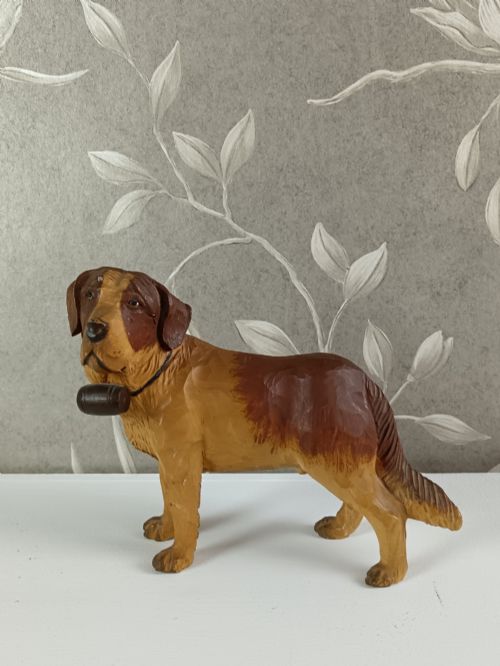
Among the ecclesiastical figures stands a sturdy wooden sculpture of a Saint Bernard rescue dog from nineteen-forty.
What varies in quality
The integrity of the polychrome paint and gold leaf finish dictates the visual impact. Original, undisturbed surface layers hold greater aesthetic value than later repainting.
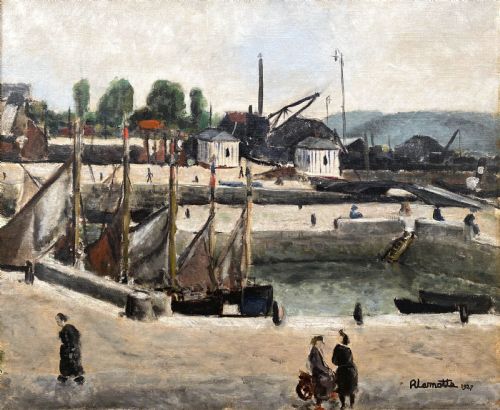
Rouillard Angers·Bohumil Kafka·Lamotte
The Vintage Saint Figure Glossary
- Polychrome paint
- Decoration utilising multiple colours applied to wood, plaster, or stone. This technique gives statues a lifelike appearance by accentuating robes and flesh tones.
- Gesso
- A plaster-like mixture applied to a wooden base to create a smooth surface for painting or gilding. It provides a stable ground for delicate surface details.
- Gold leaf
- Extremely thin sheets of beaten gold applied to surfaces for ornamentation. It highlights halos, garments, and architectural elements on religious figures.
- Santos processional figure
- A statue created to be carried during religious processions, often featuring articulated limbs or hollow frames to reduce weight. These pieces carry signs of active ritual use.
- Soft-paste porcelain
- A ceramic material fired at lower temperatures than hard-paste porcelain, yielding a warm, slightly porous body. It was widely used in eighteenth-century figure groups.
Vintage Saint Figure: Frequently Asked Questions
How do I clean a wooden saint figure?
Dust the surface gently with a soft, dry brush to prevent accumulating dirt in the carved recesses. Avoid using water or chemical cleaners, which can damage delicate gesso and polychrome paint.
Keep the piece away from direct sunlight and damp environments to protect the wood and surface decoration from cracking or flaking over time.
What is a processional figure?
A processional figure is a statue designed to be carried through streets or churches during religious festivals and ceremonies. These pieces often feature lightweight construction or specific mountings for poles and carrying frames.
Because they participated in active rituals, they frequently show handling wear and structural adaptations that distinguish them from static altar sculptures.
How can I tell wood from plaster?
Wood displays natural grain patterns and feels warmer to the touch, while plaster offers a heavy, uniform density and a cooler surface temperature. Tapping gently on an unpainted area can also reveal the fibrous resonance of timber.
Examining the underside or base often exposes the raw material beneath any gesso or paint layers.
Where should I display my statue?
Select a stable shelf or cabinet away from heat sources and rapid temperature fluctuations to safeguard the carved wood and painted surfaces. Good placement allows natural light to highlight the depth of the carving without causing fading.
Ensure the piece rests securely on a level surface, as many antique statues carry uneven bases from centuries of use.
What periods do these figures cover?
The available pieces span from the eighteenth century through the Georgian era and the nineteenth century, extending into early twentieth-century examples up to the nineteen-forties. Each period brings distinct stylistic traits, from Baroque exuberance to folk art simplicity.
Earlier pieces often showcase traditional hand-carving techniques, while later twentieth-century works include ecclesiastical plaster and ceramic sculptures.