

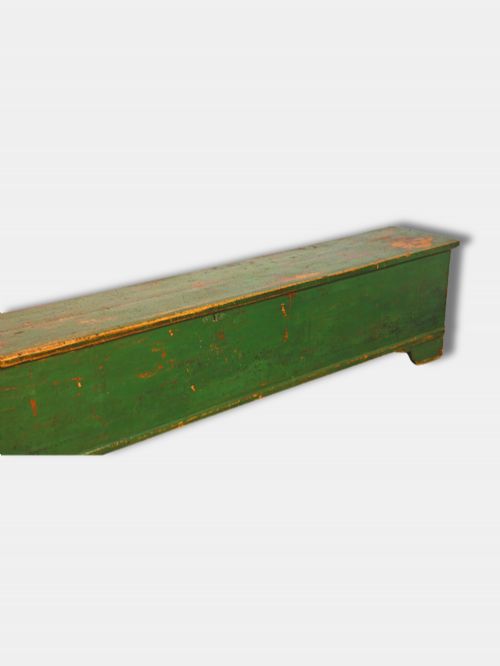


Continental Painted Storage Chest
A continental painted storage chest brings a rich surface and honest utility into a room, offering both robust storage and strong regional character.
Continental Painted Storage Chest
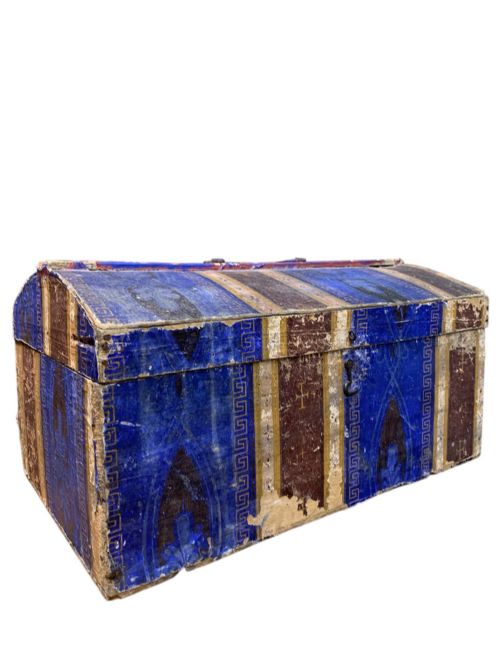
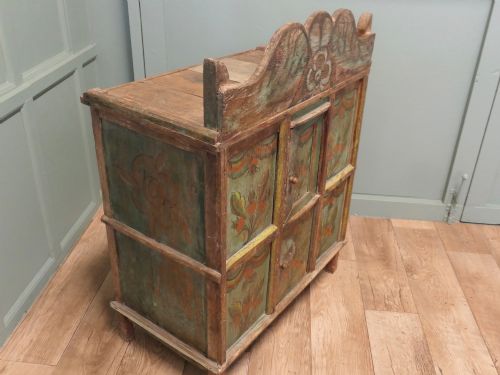
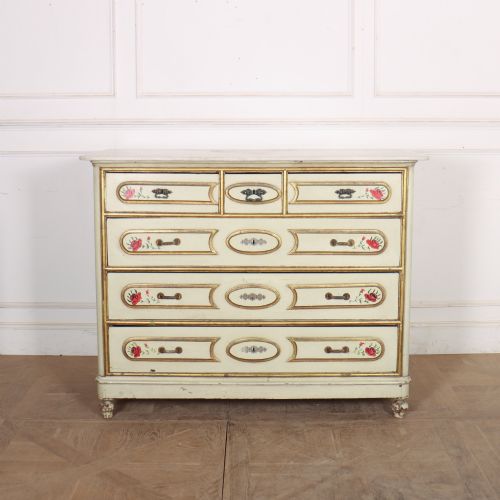
A continental painted storage chest encompasses a variety of heavy-duty boxes, trunks, coffers, and commodes originating from different European regions. These pieces range from large marriage trunks and coffer boxes to structured chests of drawers and commodes.
The versions most commonly met here belong to the nineteenth and eighteenth centuries, taking forms such as Dutch commodes, Hungarian coffer boxes, and Alpine marriage chests. They serve as functional storage furniture defined by their painted decoration.
Makers across regions like the Netherlands, Italy, Spain, Hungary, Austria, and Germany produced these items to store household goods, linens, or valuables. Each piece carries the distinct regional style of its origin, whether Dutch provincial, Italian neoclassical, or folk art.
Variations in quality
Quality in a continental painted storage chest depends heavily on the preservation of the original pigment and the skill of the regional painting. Pieces with intact, early decorative schemes stand apart from those with later overpainting or compromised surfaces.
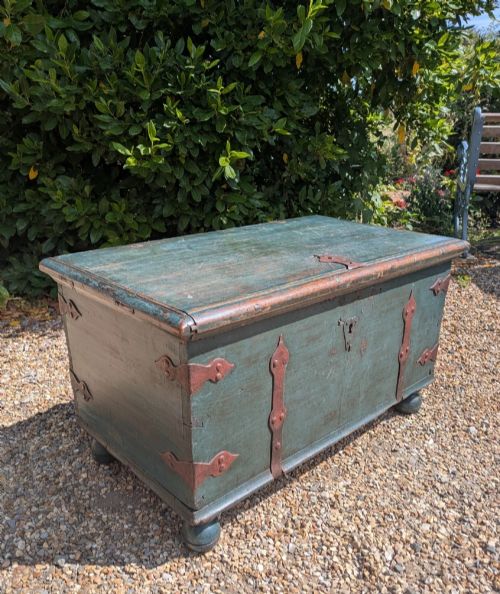
The sophistication of the form also dictates distinction, ranging from simple folk art coffer boxes to intricately carved or bombe commodes with gilt grotto details. Structural integrity of the pine carcase and the authenticity of iron strapwork further separate the standards of the range.
Continental Painted Storage Chest Retail Price Guide 2026
Typical asking prices for continental painted storage chest among the pieces listed under this phrase on Sellingantiques today, from the lower quarter to the upper quarter. They describe what is for sale here now, not the wider market.
German grotto chests bring unexpected theatrical flair to storage with masked bombe carved wooden details.
The Continental Painted Storage Chest Glossary
- Commode
- A low chest of drawers or a cabinet with drawers, frequently standing on short legs and originating in continental Europe. These pieces often feature decorative painted facades.
- Coffer
- A large wooden box used for holding valuables, linen, or household goods, typically fitted with a hinged lid. Many regional examples function as decorative storage furniture.
- Marriage trunk
- A large chest traditionally commissioned or gifted to mark a wedding, frequently decorated with specific regional motifs or floral patterns. These trunks often record dates or family lineages.
- Strapwork
- Ornamental metal bands, often hand-forged from iron, used to reinforce and decorate the corners and lids of storage chests. This technique adds both structural strength and visual contrast.
- Gesso
- A plaster-like mixture applied to wood surfaces as a base for paint and gilding, allowing for smooth decorative finishes. It provides the foundation for detailed ornamentation on commodes and chests.
Continental Painted Storage Chest: Frequently Asked Questions
Where were these chests made?
These pieces originate from various European regions including the Netherlands, Italy, Spain, Hungary, Austria, Germany, and the Alpine area. Each location developed distinct aesthetic traditions.
Makers incorporated local building habits and stylistic influences into their work, resulting in diverse forms from Dutch commodes to Hungarian coffer boxes.
How do I use a painted chest today?
A continental painted storage chest functions effectively at the foot of a bed, in a hallway, or as a coffee table while providing hidden storage for blankets or household items. Commodes and chests of drawers serve practical roles in bedrooms and living spaces.
Placing these pieces away from direct heat sources helps preserve the pine timber and the integrity of the original painted surfaces.
How can I tell the period?
Dating relies on construction methods, timber characteristics, and stylistic markers associated with periods like the eighteenth or nineteenth century. Neoclassical examples display formal symmetry, while folk art pieces feature traditional regional motifs.
Iron strapwork, hinges, and the composition of the paint layer offer further clues to the age and origin of the furniture.
What is folk art style?
Folk art style reflects traditional craftsmanship and decorative painting passed down through generations within specific European communities. It prioritises local aesthetic values over high academic design.
These designs often incorporate floral patterns and vibrant pigments applied directly to pine or painted wood surfaces.