

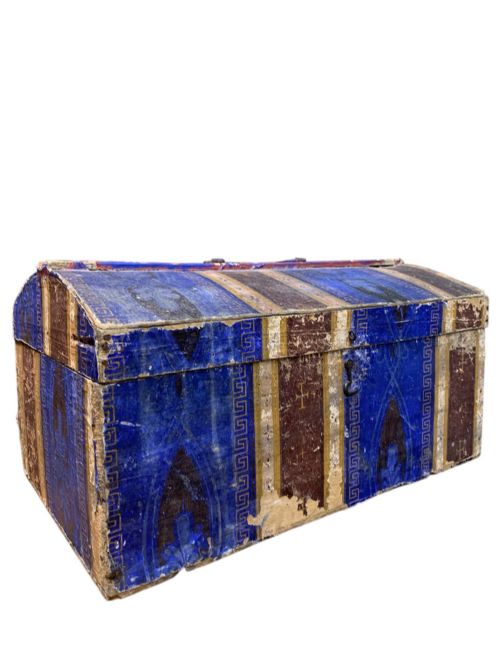
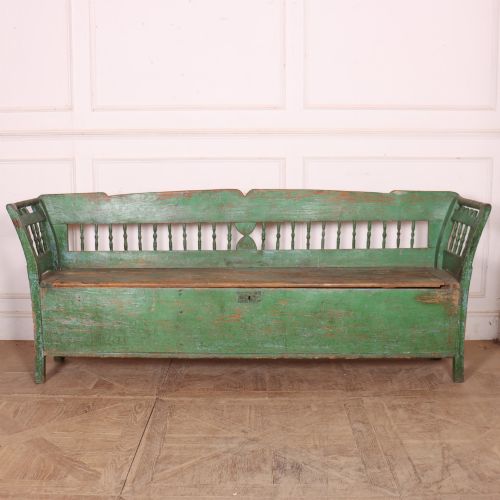
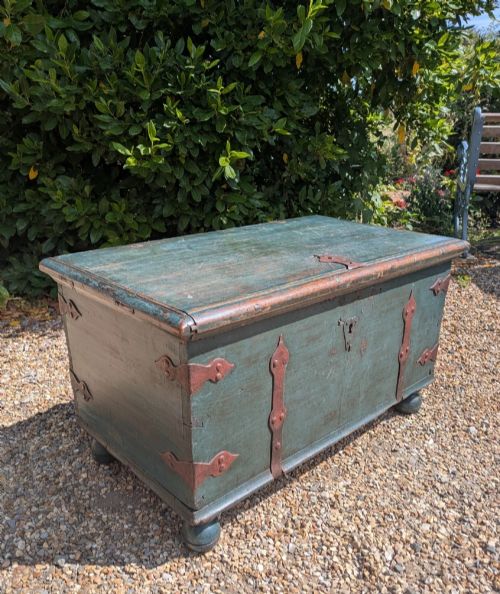
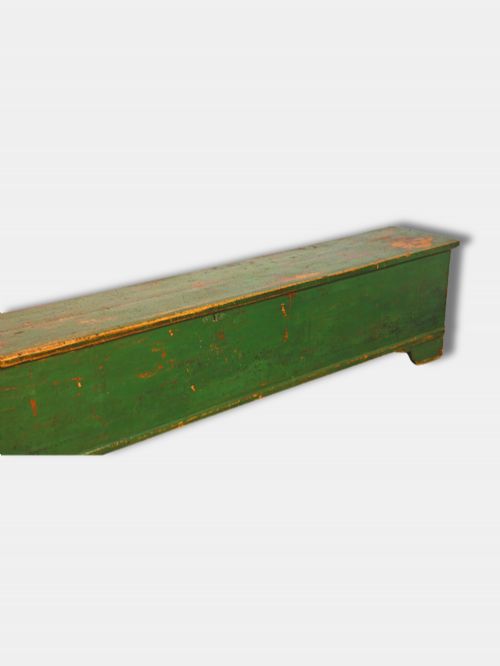


Continental Painted Coffer
These continental painted coffer pieces are sturdy storage chests carrying original folk art pigments that anchor a room with distinct regional character.
Continental Painted Coffer
A continental painted coffer is a substantial wooden chest finished with decorative pigments, used historically for storing household goods and linens. Buyers searching this phrase want a functional storage piece that brings genuine European folk art colour into a modern interior.
The versions most commonly met on this page date from the eighteenth and nineteenth centuries, originating from regions such as the Alps, Hungary, Austria, Italy, and the Netherlands. These examples often take the form of large marriage trunks, domed caskets, or smaller painted boxes fashioned from pine.
Makers constructed these coffers primarily for practical daily use in farmhouses and village homes before they gained recognition as decorative antiques. Their surfaces carry layers of pigment that reflect distinct provincial tastes and local traditions.
How they were made
Carpenters built these coffers predominantly using pine boards, joined securely to withstand heavy domestic storage demands. Surfaces were then prepared to receive hand-applied pigments and traditional decorative motifs.
Makers reinforced the wooden structures with hand-forged iron strapwork, brass details, and wrought iron hinges that provided both structural strength and visual contrast. Original paint surfaces survived through generations of care, preserving the early character of each trunk.
Continental Painted Coffer Retail Price Guide 2026
Typical asking prices for continental painted coffer among the pieces listed under this phrase on Sellingantiques today, from the lower quarter to the upper quarter. They describe what is for sale here now, not the wider market.
One recorded marriage coffer bears a painted date from 1671, proving that historical homeowners loved a good wedding registry just as much as we do today.
What varies in quality
Quality in a continental painted coffer rests primarily in the survival and integrity of its original pigment layer. Examples retaining untransformed early decoration hold greater visual coherence than pieces with later surface interventions.
The sophistication of the regional folk art painting and the robustness of the pine construction further separate exceptional examples from standard utilitarian boxes. Hardware details like original wrought iron strapwork add to the overall integrity of the piece.
The Continental Painted Coffer Glossary
- Coffer
- A large wooden chest traditionally used for storing valuables, textiles, or documents. These sturdy boxes often feature hinged lids and iron reinforcements.
- Folk art
- Decorative and utilitarian items created within a specific cultural tradition by self-taught or provincial makers. This style relies on local motifs and traditional hand-mixed pigments.
- Strapwork
- Ornamental bands of metal, typically wrought iron, applied across the exterior of a chest to reinforce joints and corners. It provides structural security alongside visual decoration.
- Pigment
- Natural colouring material ground and mixed to create the decorative paint surfaces found on these regional pieces. Original pigment layers show specific signs of age and wear.
- Marriage trunk
- A large celebratory chest commissioned or decorated to mark a wedding, often inscribed with dates or initials. These pieces frequently feature elaborate floral or pictorial folk designs.
Continental Painted Coffer: Frequently Asked Questions
What were continental painted coffers used for?
These large wooden chests served primarily to store heavy textiles, blankets, and valuable household goods in rural homes. Families also utilised marriage trunks to hold dowry items.
Over generations, their robust construction and enclosed space made them reliable storage vessels that kept contents protected from dust and dampness.
How do I style a painted coffer at home?
A painted coffer works well placed at the foot of a bed or beneath a window as a focal storage piece. Its flat lid also allows it to function as a low table or bench.
Let the original folk art pigments stand out by keeping surrounding walls and furnishings neutral, allowing the regional character of the chest to anchor the room.
How can I tell the age of a painted chest?
Dating relies on observing the construction methods of the pine body, the style of the hand-forged ironwork, and the composition of the paint layers. Early pieces often feature dovetail joints and hand-beaten strapwork.
Regional motifs and the natural patina developed on the pigment surface over centuries also provide strong clues to the period of origin.
Are these chests suitable for everyday storage?
These sturdy pine boxes remain entirely practical for modern storage needs such as linens, books, or seasonal clothing. Their deep interiors offer generous capacity.
Care should be taken to place them away from direct heat sources to protect the aged wood and delicate historical paint surfaces.