
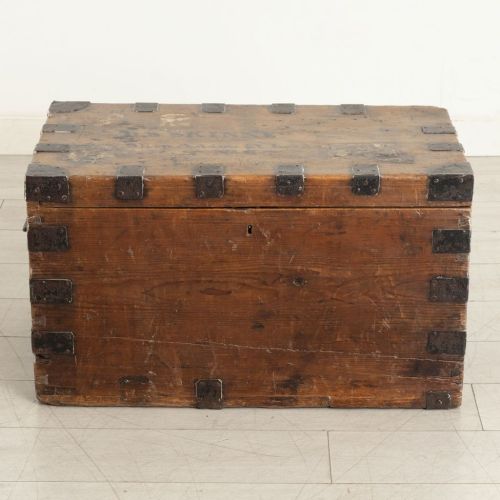
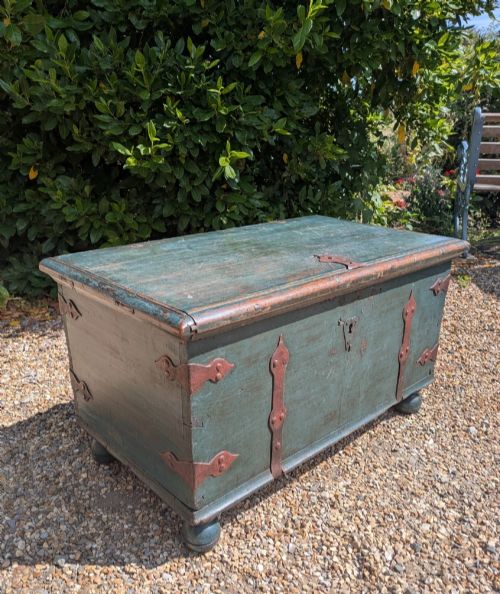
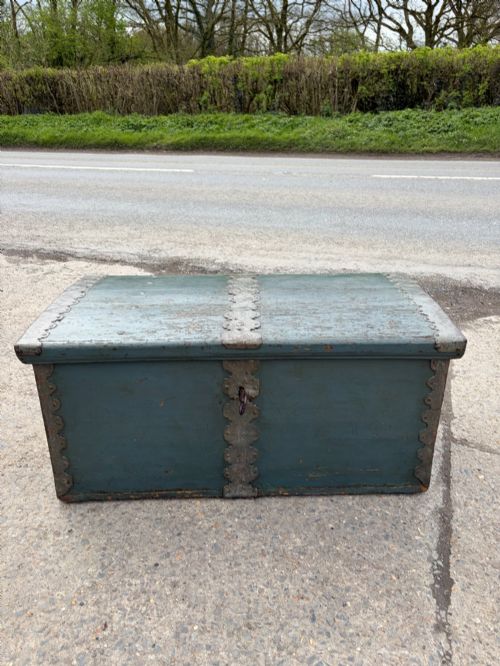


Iron Strapped Pine Trunk
An iron strapped pine trunk offers robust utility, bringing substantial storage and rustic character to contemporary interiors through enduring historical construction.
Iron Strapped Pine Trunk
An iron strapped pine trunk is a durable storage container built from timber and reinforced with metal bands. Buyers searching for an iron strapped pine trunk will encounter utilitarian chests and boxes originating primarily from the nineteenth century.
The pieces on this page span several regional traditions, featuring Scandinavian country and rustic farmhouse aesthetics alongside Victorian utility items. Forms range from dome top coffers and strong boxes to large travel chests fitted with side lifting handles.
Many examples retain original surface treatments, including historical paint finishes and hand forged strapwork. These vessels served practical domestic or travel purposes before finding renewed life as decorative storage.
How they were made
Makers constructed these trunks using solid pine joined to form sturdy box structures, often incorporating heavy wrought iron strapwork for structural reinforcement. Metal banding was secured across the timber bodies to protect corners and edges during transit or daily use.
Surface preparation involved plain timber finishes or the application of paint, as seen in folk art marriage boxes and Scandinavian strong boxes. Hardware components such as working locks and side lifting handles were integrated using hand forged techniques.
Current listings feature items from the 18th century, 19th century, and 1920, utilising pine, iron, wrought iron, paint, and brass.
What varies in quality
Quality in an iron strapped pine trunk lies in the integrity of the original construction and the preservation of authentic surface details. Trunks retaining untouched painted finishes or original hand forged iron strapwork command higher regard among collectors.
Proportion and scale also distinguish individual pieces, with smaller dome top boxes and matched pairs offering different decorative potentials compared to large utility chests. The presence of working locks and original hardware adds notable character to a piece.
The Iron Strapped Pine Trunk Glossary
- Strapwork
- Metal bands applied to the exterior of a chest for structural reinforcement. This iron work secures the pine panels at stress points.
- Dome top
- A curved lid construction designed to shed water and increase internal capacity. These rounded lids appear frequently on nineteenth century coffers and strong boxes.
- Strong box
- A secure storage container built for valuables, usually fitted with robust iron straps and a working lock. These heavy boxes offered protection in domestic or commercial settings.
- Folk art
- Decorative craft produced within a traditional community culture, often featuring hand painted motifs. Swedish marriage boxes showcase this vernacular aesthetic.
Iron Strapped Pine Trunk: Frequently Asked Questions
How old are these trunks?
The pieces listed date primarily from the nineteenth century, with specific examples reaching back into the eighteenth century and extending into the early twentieth century.
Construction details and regional painting styles help indicate the approximate period of origin for each trunk.
What were they used for?
These trunks served as durable containers for travel, domestic storage, and the safekeeping of valuables. Strong boxes and dome top coffers kept personal belongings secure in homes and during journeys.
Their robust iron strapping allowed them to withstand heavy daily handling.
Are the paint finishes original?
Many trunks on this page retain their original paint surfaces, particularly Scandinavian folk art pieces and nineteenth century regional boxes. Original finishes show honest wear accumulated over decades of use.
Surface inspection reveals the historic layering of paint characteristic of country workshops.
How do I use one at home?
An iron strapped pine trunk functions effectively as a coffee table, end of bed storage chest, or decorative accent piece. The substantial interior capacity accommodates blankets, books, and household items.
Placing a rustic chest in a modern interior introduces texture and historical contrast.