




Continental Oak Statue
A continental oak statue brings centuries of devotion into a room, carved from sturdy timber to depict saints, angels and holy figures.
Continental Oak Statue
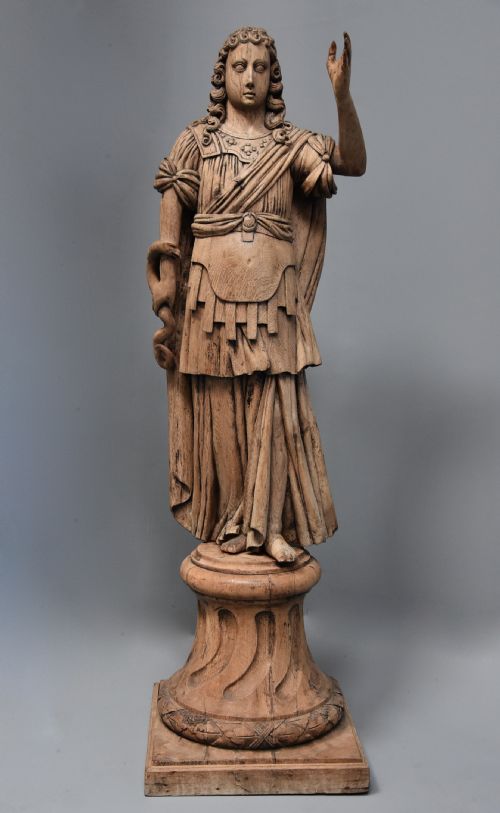
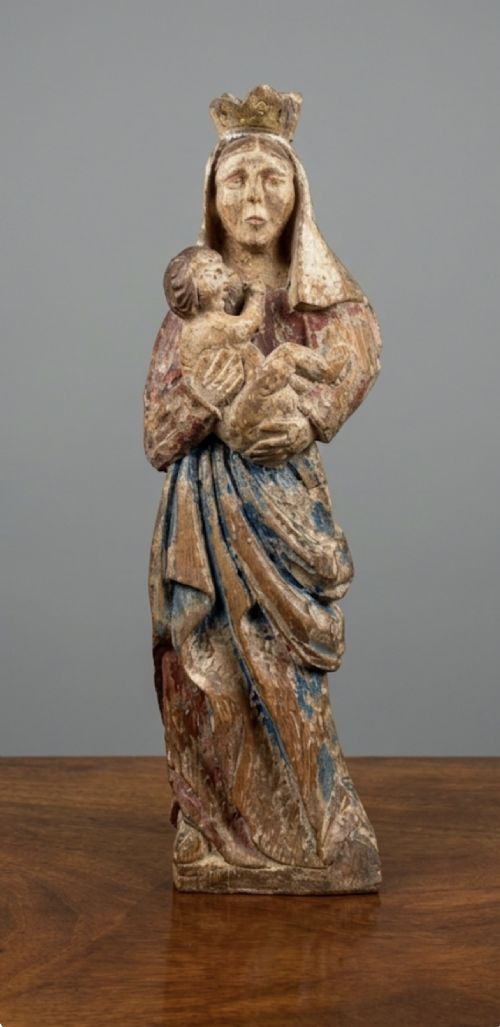
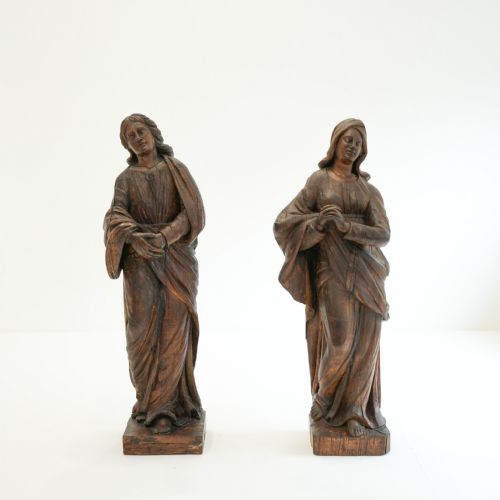
A continental oak statue represents religious subjects carved across several centuries, originating from European workshops rather than British ones. The forms include life-size figures, pairs of saints, Madonna and child groups, and isolated portrait heads.
Buyers encounter pieces spanning from the late medieval and pre-sixteenth century periods through the sixteenth, seventeenth, and eighteenth centuries, up to the nineteenth century. The prevailing styles draw upon Gothic, Renaissance, and Baroque traditions.
Religious sculptures dominate the selection, often depicting specific figures such as Saint Jerome, Saint Catherine, Mary and Jesus, or kneeling angels. Many retain elements of their original surface treatment, including paint, gesso, and gold leaf.
How they were made
Carpenters and carvers shaped these pieces primarily from solid oak and carved wood, occasionally utilising walnut or general hardwood for specific regional commissions. Timber was selected for density and durability before being hand-carved into intricate drapery, limbs, and facial expressions.
Many surfaces received preparatory layers of gesso before painters applied polychrome pigments or gold leaf to highlight vestments and halos. This combination of woodcarving and surface decoration defined continental ecclesiastical art of the period.
Continental Oak Statue Retail Price Guide 2026
Typical asking prices for continental oak statue among the pieces listed under this phrase on Sellingantiques today, from the lower quarter to the upper quarter. They describe what is for sale here now, not the wider market.
Materials across the inventory include oak, walnut, carved hardwood, polychrome, gesso, and gold leaf.
What varies in quality
The survival of original surface treatments such as polychrome paint and gilding substantially influences the character of a piece. Statues that retain authentic early finishes present a different visual presence compared to those stripped back to bare timber or repainted at later dates.
The Continental Oak Statue Glossary
- Polychrome
- Decoration consisting of several colours applied to the surface of wood or stone sculpture. This technique was widely used in medieval and later periods to bring realism to religious figures.
- Gesso
- A plaster-like mixture applied to wood as a smooth base for painting and gilding. It provides a durable ground that holds fine detail and colour.
- Gold leaf
- Gold beaten into extremely thin sheets and applied to surfaces using an adhesive size. It creates a luminous, reflective background or halo effect on religious carvings.
- Baroque
- An ornate artistic style prevalent from the seventeenth into the eighteenth century, characterised by dynamic movement and theatrical emotion. Statues from this period often feature dramatic drapery and expressive poses.
- Gothic
- A medieval art style spanning from the twelfth to the sixteenth century, known for vertical emphasis and stylised naturalism. Later revivals in the nineteenth century mirrored these earlier architectural and sculptural forms.
Continental Oak Statue: Frequently Asked Questions
How do I date a continental oak statue?
Dating relies on stylistic markers within the carving, tool marks left behind by the maker, and the historical context of the period clothing or iconography. Comparing the structural joints and wood shrinkage helps establish age.
Evidence from surviving pieces shows examples ranging from pre-sixteenth century medieval works to nineteenth-century Gothic revival interpretations, each carrying distinct aesthetic traits.
Were these statues originally painted?
Many figures were brightly painted and gilded to create a lifelike appearance for church settings and private devotions. Over the centuries, some retained these polychrome surfaces while others lost them through cleaning or stripping.
Listings include both bare wood carvings and figures preserving traces of historical paint, gesso, and gold leaf.
How should I display a wooden statue at home?
Place statues away from direct sunlight, heat sources, and damp environments to protect the dry oak and any surviving surface decoration. Stable indoor humidity prevents the timber from splitting.
Freestanding figures and wall-facing pieces benefit from secure placement on sturdy furniture or specialised brackets where their three-dimensional form can be appreciated.
What subjects are most common?
Religious subjects dominate these historical carvings, reflecting their original purpose in churches, chapels, and domestic shrines across Europe. Common depictions include the Madonna and child, individual saints, and angels.
Specific identified figures in the records include Saint Jerome, Saint Catherine, and Christ, alongside narrative groups like Anna Selbdritt.