





Medieval Religious Carving
Medieval religious carving brings devotion into tangible form, offering the solid weight of history through sacred figures carved in wood and stone.
Medieval Religious Carving
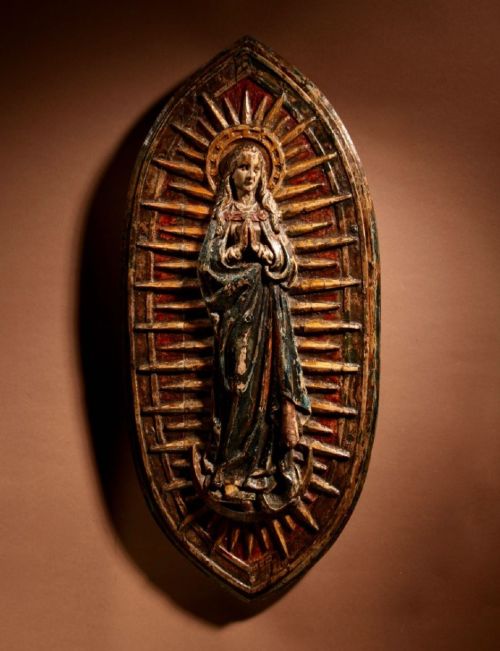
When searching for medieval religious carving, a buyer encounters devotional works spanning the pre-sixteenth century, the sixteenth century, and later revival periods. These figures include altarpiece panels, saints, bishops, and representations of Mary and Christ, shaped in the Gothic and Renaissance traditions.
The objects appearing on this page take the form of freestanding sculptures, wall sculptures, church figures, and architectural fragments. Oak remains the predominant timber, accompanied by stone and continental pine, reflecting the sacred architecture and domestic chapels they originally inhabited.
Regional origins stretch across northern Europe, including Germany, the Low Countries, the Upper Rhine, and France. Pieces range from full devotional groups like a Pietà or Anna Selbdritt to single figures of saints and donors.
How they were made
Carvers worked primarily with seasoned oak, pine, and stone, using chisels and gouges to release complex figures from solid blocks. Grain direction dictated the depth of undercut drapery and the contours of facial expressions.
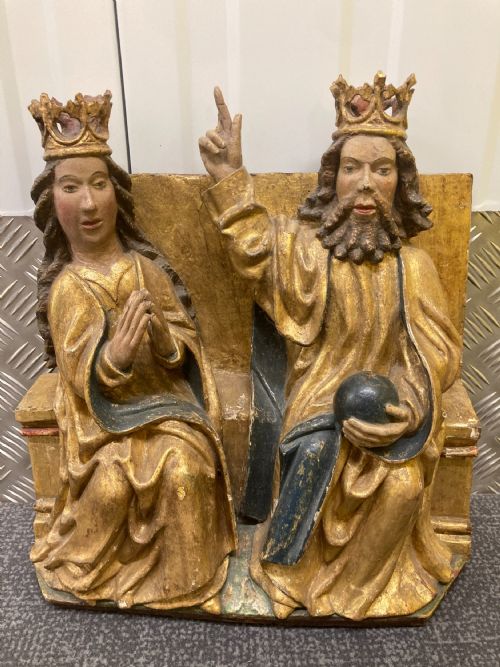
Many wooden surfaces received a preparatory layer of gesso before painters applied polychrome paint and gold leaf. This combination of carved wood, pigment, and gilding created luminous devotional objects intended for dim chapel interiors.
Medieval Religious Carving Retail Price Guide 2026
Typical asking prices for medieval religious carving among the pieces listed under this phrase on Sellingantiques today, from the lower quarter to the upper quarter. They describe what is for sale here now, not the wider market.
The inventory records stylistic traditions including Gothic, Renaissance, and Flemish Renaissance across various European regions.
What varies in quality
Quality rests in the sculptural confidence of the carving, visible in the natural fall of drapery folds and the expressive power of hands and faces. Master carvers achieved depth and psychological weight within the timber, whereas lesser works remain stiff and flat.
The survival of original surface treatments - such as traces of polychrome paint, gesso, and gold leaf - separates untouched panels from those stripped or heavily restored in later centuries. The integration of the figure with its original architectural or structural context also elevates a piece.
The Medieval Religious Carving Glossary
- Polychrome
- Painted in several colours. This surface treatment was widely applied to medieval wood carvings to bring realism to sacred figures.
- Gesso
- A plaster mixture used as a base for paint and gold leaf on wood carvings. It provided a smooth, bright ground for decoration.
- Giltwood
- Wood that has been decorated with gold leaf. Craftsmen applied thin sheets of gold over a prepared ground to catch the candlelight in churches.
- Pietà
- A representation of the Virgin Mary holding the dead body of Christ. This subject appears frequently in late medieval and Renaissance sculpture.
- Anna Selbdritt
- An iconographic subject showing Saint Anne with the Virgin Mary and the Christ Child. It translates as Anne herself the third.
- Altarpiece
- A structure set behind an altar, often featuring carved panels depicting religious narratives and saints.
Medieval Religious Carving: Frequently Asked Questions
Where were these carvings originally placed?
These pieces primarily stood upon altars, within larger retables, or along the screens and walls of medieval churches and chapels. Some smaller devotional figures served private prayer in domestic spaces.
Architectural fragments often originated from larger stone or wooden structures destroyed or altered during later centuries.
How should I care for a wooden carving?
Wood carvings require stable indoor humidity and protection from direct sunlight and heat sources to prevent timber splitting. Dusting should be done gently with a dry, soft brush.
Harsh cleaning agents must be avoided, especially on surfaces retaining traces of original gesso, paint, or gold leaf.
What does polychrome mean on these pieces?
Polychrome refers to the original painted decoration applied directly to the carved wood or over a gesso ground. Pigments brought robes, flesh tones, and halos to vivid life.
Finding remaining fragments of this paint layer is significant for understanding the complete historical appearance of the sculpture.