




Continental Oak Chest
These continental oak chest examples offer robust storage and regional character, built from durable timber to anchor any traditional interior.

Continental Oak Chest
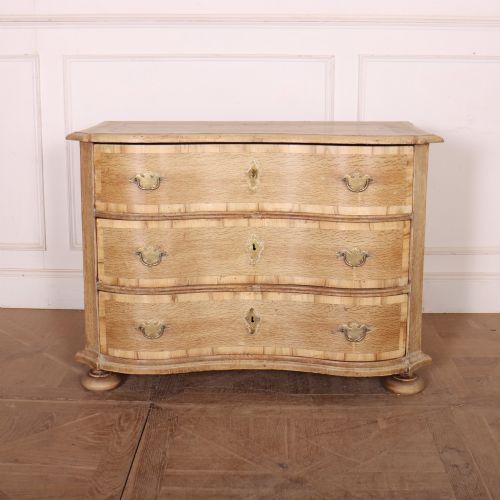
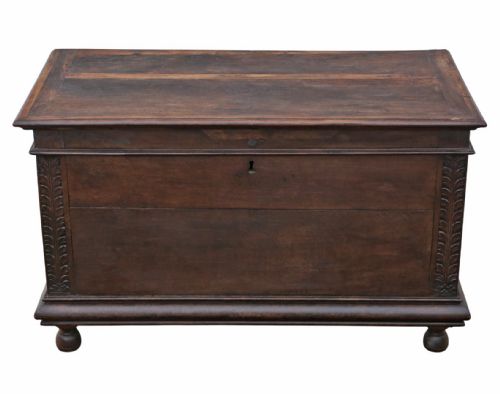
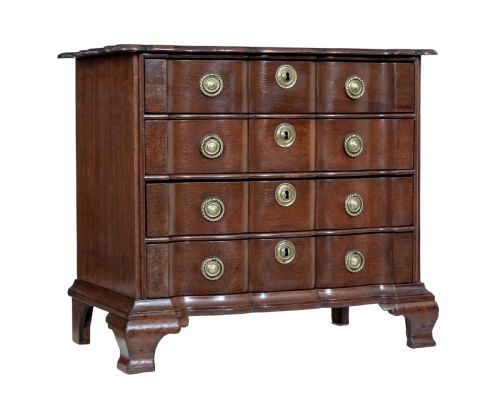
A continental oak chest provides heavy timber storage spanning centuries of European craftsmanship, functioning as a practical container or drawer unit. These pieces range from plain blanket storage to elaborate serpentine and bombe forms.
The version most commonly met on this page is the eighteenth century commode or coffer, originating from regions such as the Netherlands, Austria, and Spain. They combine solid oak construction with varied drawer arrangements and regional decorative touches.
Buyers look for these items to introduce historical weight and functional storage into a room. The structural variety reflects different European workshop traditions across the sixteenth to nineteenth centuries.
How they were made
Makers constructed these chests primarily using solid oak, occasionally supplemented by walnut, chestnut, and marquetry veneers. Ironbound examples utilised wrought iron for structural reinforcement and security.
Construction techniques involved traditional panel and frame methods for chests, alongside dovetailed joints for drawers in later commode forms. Surfaces were left plain, bleached, or treated with paint depending on regional fashion.
Listings feature oak alongside walnut, chestnut, and painted wood, spanning the sixteenth to nineteenth centuries.
What varies in quality
Quality differences stem from the complexity of the timber shaping and the refinement of the carved or serpentine facades. Straight-front blanket chests represent simpler utilitarian construction, whereas bombe and serpentine commodes demand advanced joinery.
The selection of secondary timbers and the retention of original brass or iron hardware also distinguish finer workshop output. Superior examples display harmonious grain patterns and well-executed regional decorative details.
The Continental Oak Chest Glossary
- Coffer
- A large wooden chest used traditionally for storing valuables or household goods. These early forms often feature robust board construction.
- Bombe
- A swelling, convex furniture shape characterised by curved fronts and sides. This form appears frequently in Dutch commodes.
- Commode
- A low chest of drawers originating in France and adopted across Europe. They typically stand on short legs or feet.
- Cassone
- An Italian or continental chest often associated with Renaissance weddings. They frequently display rich carving or panel work.
- Serpentine
- A furniture front curving inward in the centre and outward at the ends. This contour adds considerable visual movement to a chest.
Continental Oak Chest: Frequently Asked Questions
How do I date a continental oak chest?
Dating relies on observing construction methods, hardware types, and stylistic vocabulary. Hand-cut dovetails, iron straps, and regional carving styles help narrow down the period.
Early pieces from the sixteenth or seventeenth century usually take the form of simple boarded coffers. Later eighteenth and nineteenth century examples introduce multi-drawer commode configurations and curved facades.
What is the difference between a coffer and a commode?
A coffer is a deep box with a hinged lid accessed from the top, primarily designed for bulk storage. A commode contains a series of horizontal drawers accessed from the front.
Coffers generally represent earlier periods of furniture making. Commodes emerged as domestic spaces required more organised drawer storage for clothing and linens.
Where were these chests made?
These pieces originate from various European mainland regions, including the Netherlands, Germany, Austria, Spain, and Italy. Each area developed distinct regional joinery and decorative traditions.
Dutch makers frequently produced bombe and serpentine drawer units. Spanish and German workshops often favoured heavy oak and walnut construction with iron hardware.
How do I care for an antique oak chest?
Maintain these pieces by placing them away from direct heat sources and strong sunlight to prevent timber shrinkage. Regular dusting with a dry cloth keeps the surface clean without moisture damage.
Applying traditional wax polish occasionally nourishes the dry oak or walnut. Avoid modern silicone sprays which can penetrate the historic wood pores.