


Rococo Oak Commode
These rococo oak commode examples combine robust timber with sweeping provincial curves, offering practical storage with distinct continental flair.
Rococo Oak Commode
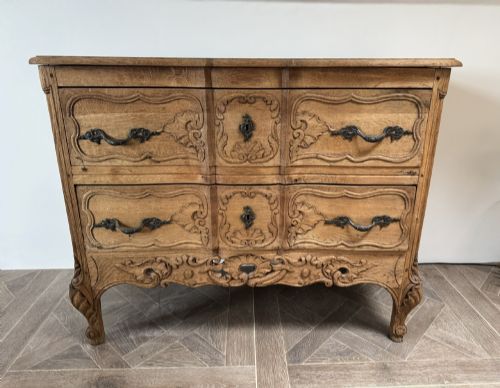
A rococo oak commode is a low chest of drawers defined by curved fronts and ornamented lines, taking inspiration from continental style. These pieces serve as functional bedroom or hallway storage while delivering a decorative statement through carved details and shaped profiles.
The versions met most frequently on this page span the eighteenth and nineteenth centuries, originating from France and the Netherlands. They appear in forms ranging from full-scale chests of drawers down to miniature apprentice pieces and miniature furniture.
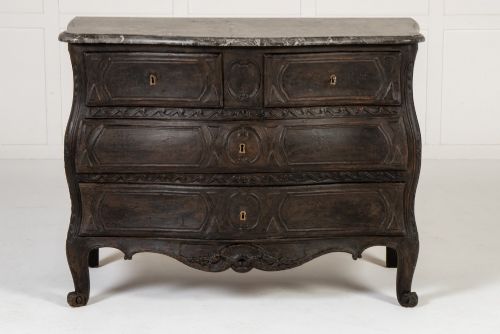
Structural variations include serpentine fronts, bombe shapes, and straight three-drawer arrangements. Oak forms the primary timber body, often paired with fruitwood or finished with paint and ebonised treatments.
How they were made
Makers built these commodes using solid oak and fruitwood, shaping the timber to create undulating serpentine and bombe profiles. Panels were joined and carved by hand, reflecting regional French Provincial and Dutch Rococo cabinetmaking traditions.
Hardware played an essential role in construction, with cast brass mounts and handles fitted to the drawer fronts. Surfaces were occasionally painted, bleached, or ebonised to alter the visual weight of the timber.
Apprentice chests allowed young woodworkers to prove their skill by building tiny, fully functioning commodes before joining the guild.
What varies in quality
Quality rests in the fluidity of the carved lines and the execution of the bombe or serpentine silhouette. Superior examples show confident shaping in the wood and balanced proportions across the drawer fronts.
The choice of secondary materials and surface finishes also dictates the grade of a piece. Original paint, well-cast brass hardware, and careful timber selection distinguish finer items from simpler provincial work.
The Rococo Oak Commode Glossary
- Bombe
- A bulging, swelling chest profile where the sides and front curve outward. This swelling shape is characteristic of continental rococo case furniture.
- Serpentine
- A furniture front curving inward at the centre and outward at the ends. It creates a flowing, wave-like movement across the drawers.
- Fruitwood
- Dense timber harvested from fruit-bearing trees such as pear or cherry. It was frequently used alongside oak for cabinetwork.
- Apprentice piece
- A miniature version of a furniture form made by a craftsman to demonstrate skill. These smaller objects mirror the construction methods of full-sized commodes.
Rococo Oak Commode: Frequently Asked Questions
What is a rococo oak commode?
A rococo oak commode is a low chest of drawers featuring the sweeping curves and ornamental details of the rococo style, constructed primarily from oak.
These pieces were traditionally used for storage in domestic settings, offering deep drawers housed within decorative, shaped frames.
Where were these commodes made?
The pieces originate primarily from France and the Netherlands, reflecting regional interpretations of the style.
Craftsmen in these areas produced items ranging from full-sized French provincial chests to Dutch bombe forms and smaller apprentice models.
How do I identify the period?
Dating relies on examining the timber preparation, construction techniques, and stylistic shifts between eighteenth-century originals and later nineteenth-century revivals.
Earlier pieces show hand-worked joinery and specific regional traits, while later items often incorporate Victorian or turn-of-the-century interpretations.
What materials are used?
Construction relies heavily on solid oak and fruitwood, sometimes enhanced with painted surfaces or ebonised finishes.
Metal elements typically consist of cast brass for handles and decorative mounts fitted to the drawer fronts.