
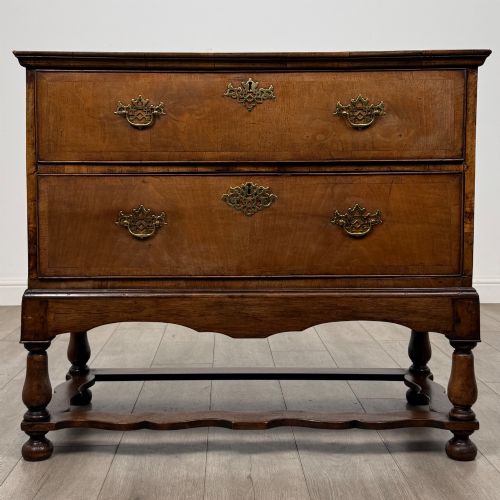
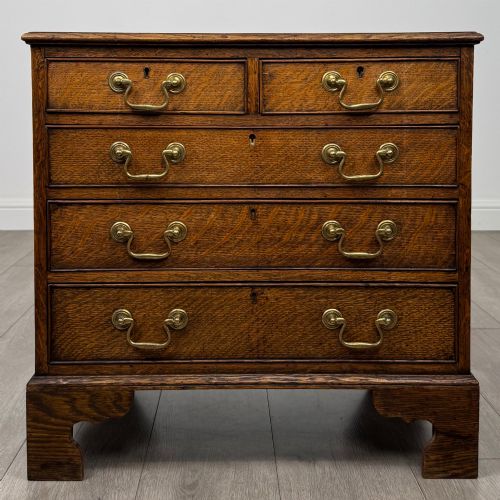
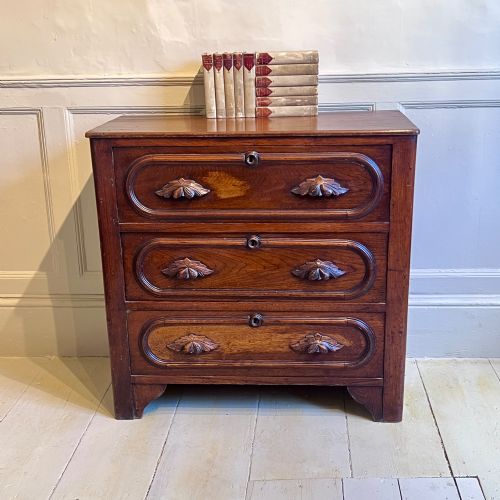
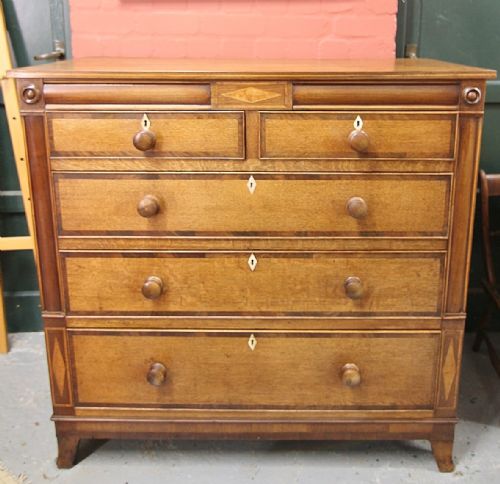
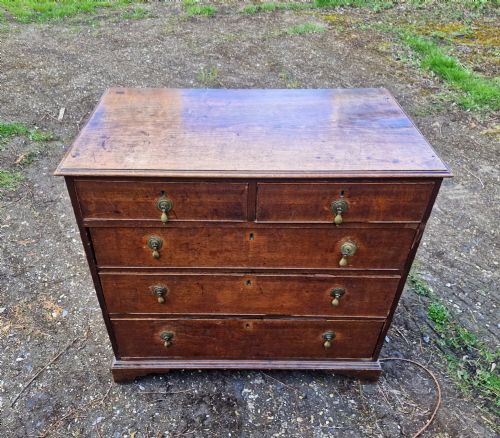
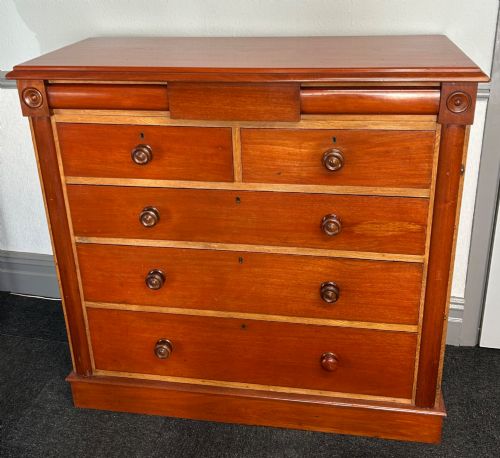


19th Century Oak Commode
A 19th century oak commode brings heavy timber and practical storage into a room with genuine period presence.
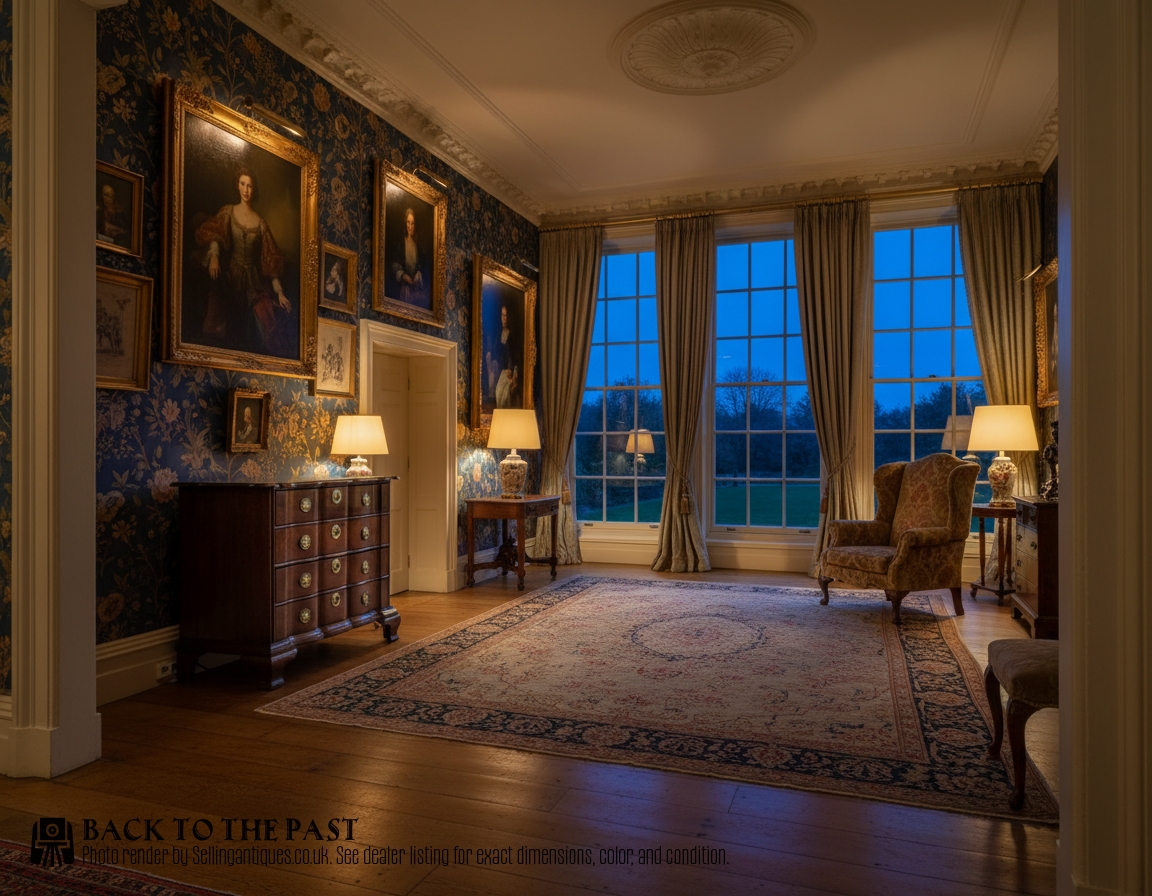
19th Century Oak Commode
A 19th century oak commode encompasses sturdy timber chests of drawers, serpentine commodes, and occasional fitted armchairs originating across England, France, Sweden, America, and the Netherlands. These pieces span periods from early Regency and Georgian primitives through Victorian revivals and late 19th century workshops.
The version most commonly met on this page is the chest of drawers form, often rendered in solid oak or oak combined with walnut, mahogany, or painted finishes. Buyers encounter varied regional interpretations, ranging from French serpentine shapes to English country pieces and Dutch marquetry.
Beyond standard drawer configurations, the selection includes miniature chests, lift-top models, and sideboards suited for compact or specialised spaces. Each piece reflects the domestic utility and local cabinet-making traditions of its 19th century origin.
What varies in quality
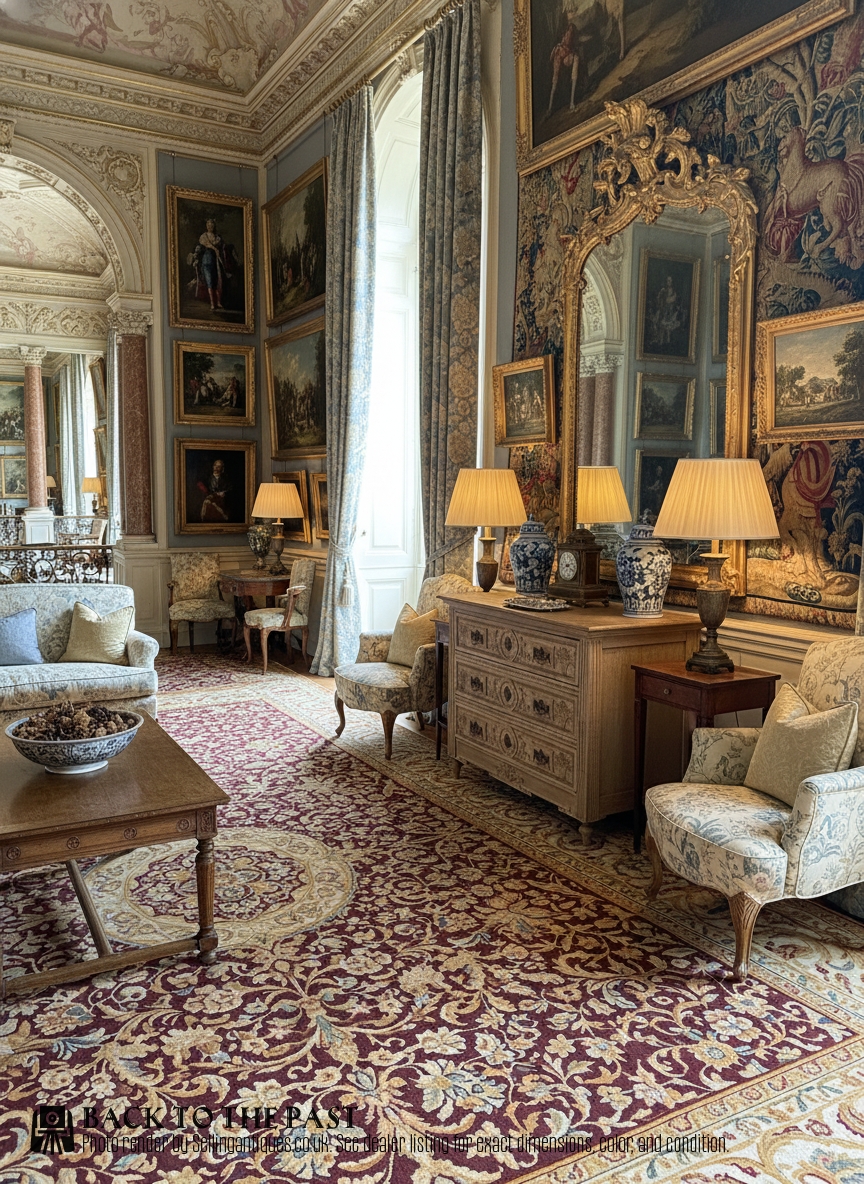
The distinction between tiers rests upon the ambition of the design and the precision of the timber work, ranging from utilitarian primitive scullery pieces to refined Dutch marquetry and French serpentine forms. Elaborate details like walnut inlay, shaped fronts, and burr oak veneers elevate the execution far above basic domestic storage.
Material selection and decorative finishing dictate the standing of an individual piece, where integrated elements such as marble tops or contrasting secondary woods signal superior workshops. Conversely, straightforward vernacular examples rely entirely on the honest grain and structural heft of plain oak.
Regional styles represented include French Provincial, Dutch Rococo, and English Country forms.
The 19th Century Oak Commode Glossary
- Commode
- A low chest of drawers or cabinet, frequently featuring shaped fronts or specialised compartments. The term covers French serpentine designs as well as English and continental variations.
- Escutcheon
- A protective plate surrounding a keyhole, often fashioned from bone or brass on these pieces. It provides both structural reinforcement and a decorative accent to the drawer front.
- Marquetry
- The art of applying pieces of veneer to a structure to form decorative patterns and pictures. Walnut and mixed woods appear in this technique on continental examples.
- Serpentine
- A furniture front characterised by a wavy contour, curving convexly in the centre and concavely at the sides. This profile appears frequently on French and Dutch commodes.
- Scrubbed oak
- Timber finished with a plain, unpolished surface resulting from rigorous cleaning or stripped finishes. This treatment highlights the raw texture of early 19th century utility pieces.
19th Century Oak Commode: Frequently Asked Questions
What is an oak commode armchair?
An oak commode armchair is a seating form constructed to conceal a chamber pot within its wooden frame during the 19th century. These pieces combine the sturdy timber construction of standard seating with functional domestic utility.
Over time, many of these armchairs lose their interior fittings to become standard decorative seating. They survive as curious examples of period domestic life in English country settings.
Are miniature chests of drawers authentic?
Miniature chests of drawers are genuine period items produced by 19th century workshops as apprentice pieces or salesman samples. They replicate the exact joinery and proportions of full-sized furniture on a reduced scale.
These small pieces served practical desktop storage functions or display purposes in period interiors. Their compact dimensions make them popular for modern collectors with limited space.
What distinguishes Regency oak from Victorian oak?
Regency oak furniture from the early 19th century generally displays restrained classical proportions and minimal ornamentation. The timber work relies on clean lines and the natural grain of the wood.
Victorian pieces often incorporate revival styles, heavier mouldings, and varied secondary woods like mahogany or pine. This later period also sees more extensive use of decorative hardware and painted finishes.
How do I care for 19th century oak furniture?
Caring for 19th century oak involves maintaining stable humidity levels to prevent the solid timber from splitting. Regular dusting with a dry cloth keeps the surface clean without damaging historic finishes.
Avoid placing these pieces in direct sunlight or near heat sources that dry out the wood. Occasional applications of appropriate wax nourish the oak and preserve its natural sheen.