


Companion Set Fire Tools
Companion set fire tools are essential hearth accessories formed of brass, iron, and steel that bring period character and function to a fireplace.
Companion Set Fire Tools
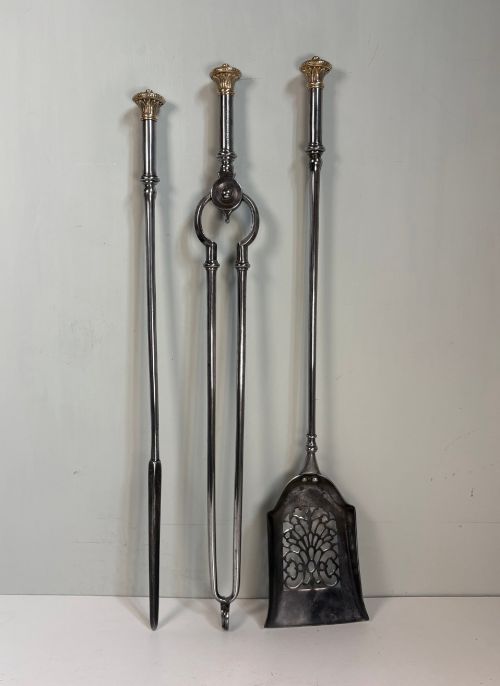
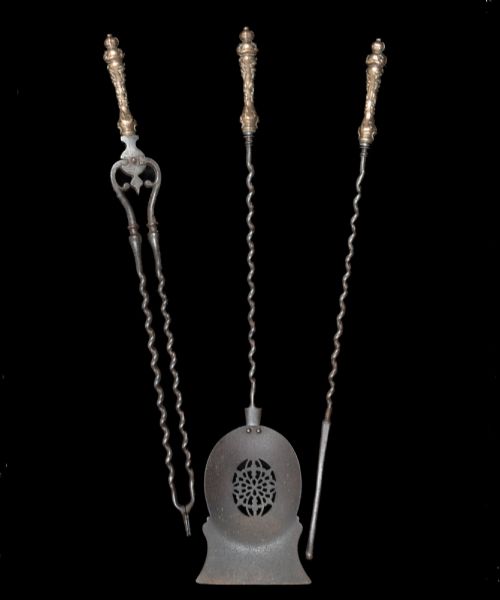
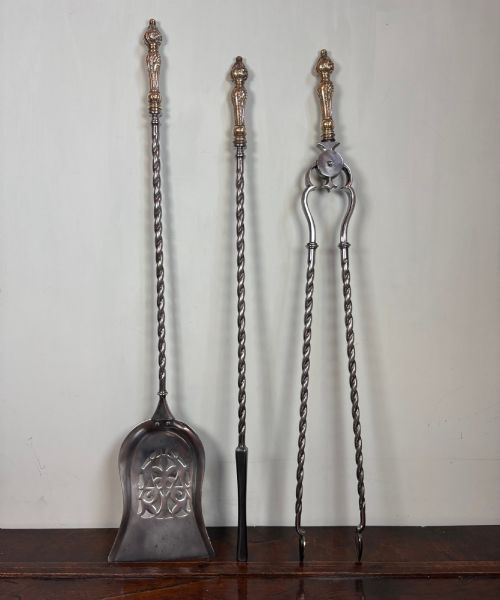
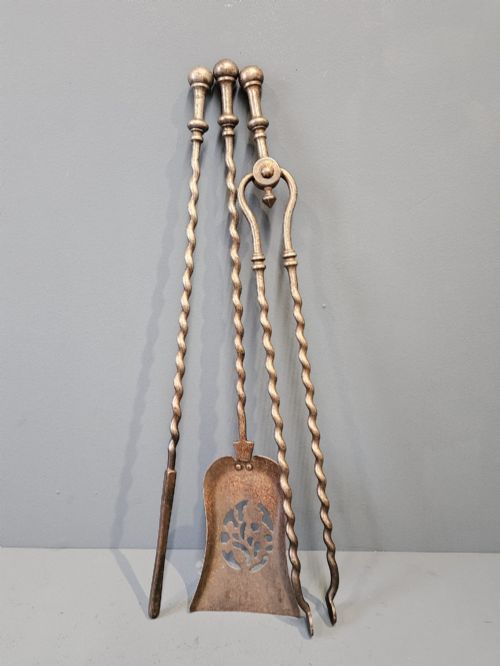
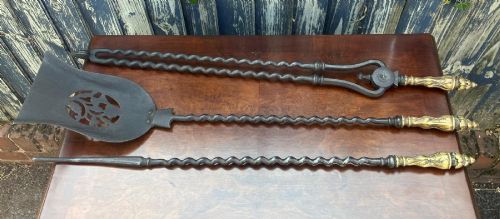
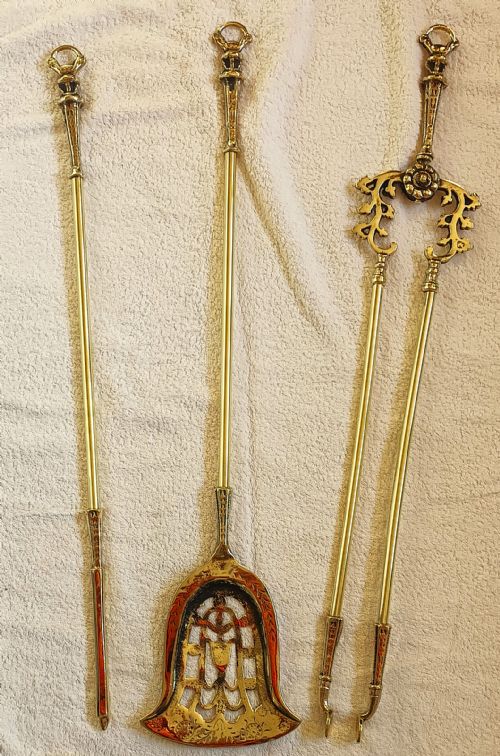
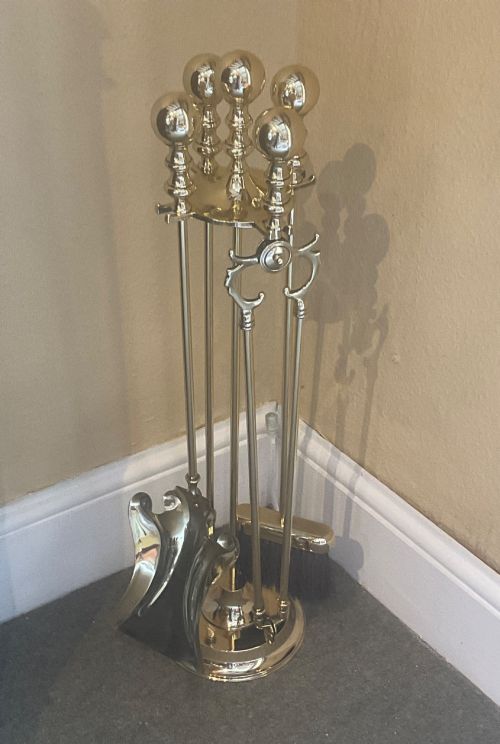
Companion set fire tools comprise matching implements used to tend a hearth, including pokers, tongs, shovels, and stands. When searching for companion set fire tools, you encounter examples ranging from Georgian and Victorian periods to Edwardian and Arts and Crafts designs.
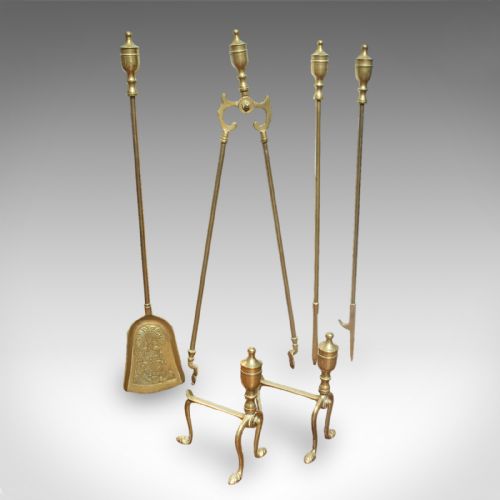
The most common configurations on this page include sets of three or four pieces, often arranged on dedicated brass or iron stands, or paired with fire dogs. These items originate from traditional English country houses and continental manors, reflecting centuries of domestic fireplace use.
How they were made
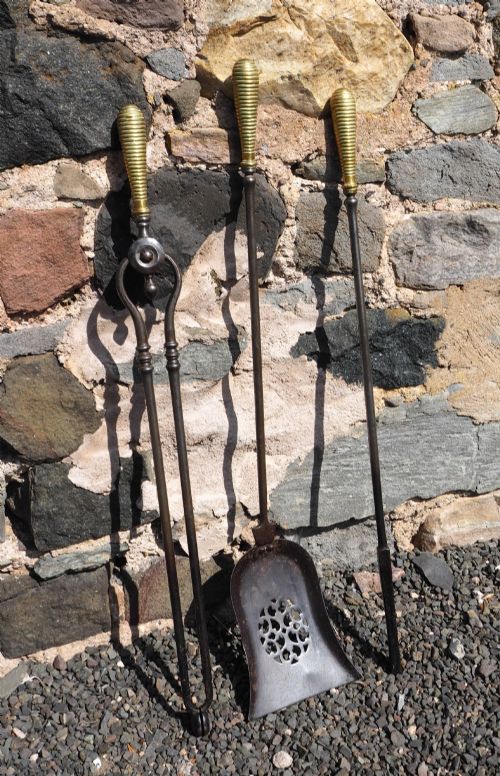
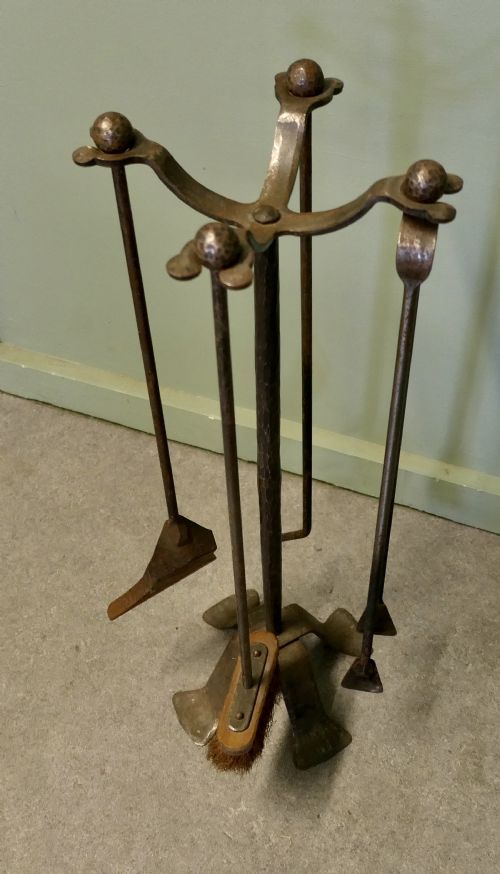
Blacksmiths and metalworkers utilised forged wrought iron, cast iron, and polished steel for durability around open flames. Handles and stands frequently incorporate cast and polished brass, sometimes augmented with gilt details or copper elements.
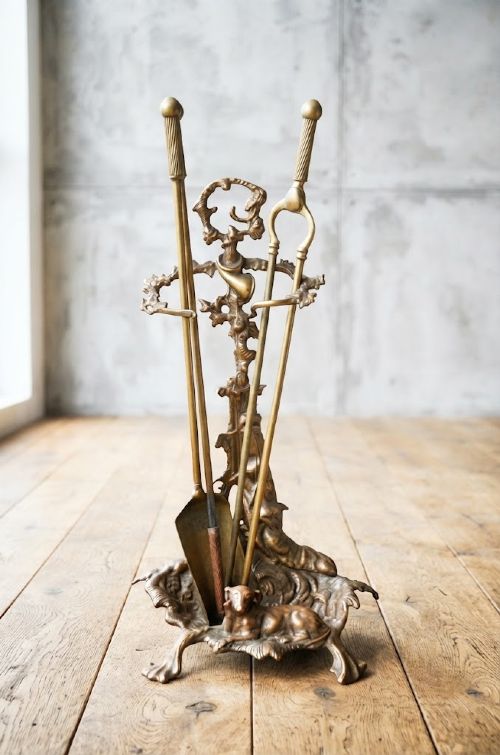
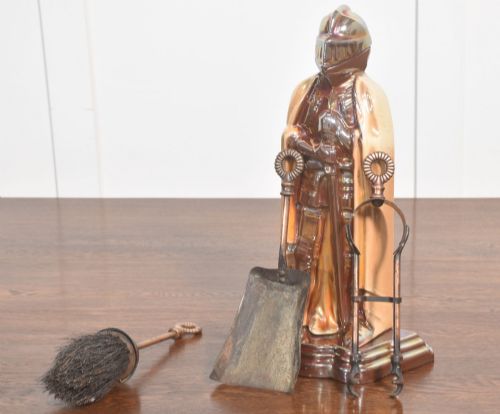
Techniques varied from hand-forged ironwork with arrow head designs to decorative cast brass featuring rope twist handles, rococo curves, and figural motifs like knights or ducks.
Unusual companion sets occasionally swap standard poker handles for whimsical cast ducks, golfers, or medieval knights standing guard by the hearth.
What varies in quality
Quality in companion set fire tools rests on the weight of the metal and the integrity of the construction. Heavier gauge steel and substantial cast brass indicate superior substance and durability.
Refinement of detail distinguishes finer items, such as crisp casting on rococo stands, hand-forged precision in wrought iron pairs, and well-executed rope twist handles that feel balanced in the hand.
The Companion Set Fire Tools Glossary
- Companion set
- A matched group of hearth implements usually kept together on a dedicated stand. These sets coordinate functional tools with decorative display.
- Fire irons
- Individual fireplace tools including pokers, tongs, and shovels. They are designed for managing coal or wood fires.
- Fire dogs
- Metal supports placed on either side of a hearth to hold logs. They frequently accompany larger sets of fire tools.
- Tole ware
- Enamelled or painted metalware used for decorative household accessories. It appears occasionally in hearth companion sets.
- Gilt brass
- Brass treated with a gold-coloured finish or thin layer of gold. This treatment enhances decorative brightness on handles and mounts.
Companion Set Fire Tools: Frequently Asked Questions
What tools come in a standard set?
Standard sets typically include a poker, tongs, and a shovel for managing ash and fuel. Many groups also incorporate a companion stand or fire dogs to complete the hearth arrangement.
Historically, these pieces were selected to match the interior decorative style of the room while remaining strictly functional for daily fire tending.
How do I date a set of fire tools?
Dating relies on material combinations, manufacturing techniques, and stylistic markers such as Georgian restraint or Victorian rococo ornamentation. Heavier wrought iron points often suggest earlier periods, while polished brass stands became increasingly popular through the nineteenth century.
Examining the casting quality and tool handles helps align the set with specific eras like the Regency or Arts and Crafts movements.
Can these tools be used on an active fire?
Most antique metal tools are constructed from sturdy steel, iron, or brass intended for regular hearth use. However, delicate decorative finishes or gilt brass elements are often better suited for display alongside lighter fires.
Using wrought iron and polished steel implements ensures practical durability when tending real wood or coal fires.
Where were companion sets displayed?
Sets were traditionally positioned immediately beside the fireplace in parlours, drawing rooms, and country house inglenooks. Stands or umbrella-style holders kept the tools upright and accessible for the household.
They served as both utilitarian equipment and prominent decorative metalwork within the primary living spaces of the home.