
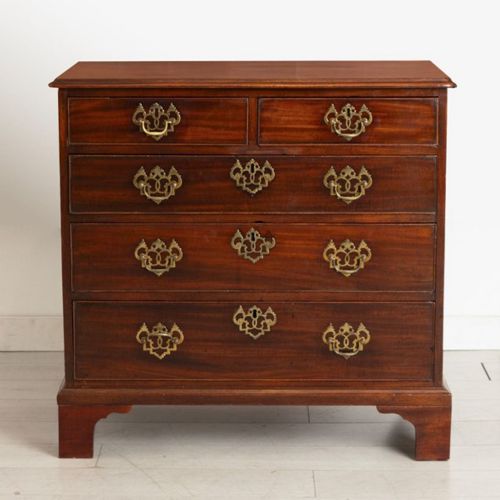


Compact Oak Chest
A compact oak chest offers tidy storage in heavy timber, spanning Georgian bachelor pieces to Edwardian examples.
Compact Oak Chest
When you search for a compact oak chest, you encounter a practical furniture form designed for smaller rooms or specific storage needs. These pieces range from early George I and 18th-century designs to Georgian, Victorian, Edwardian, and later 20th-century iterations.
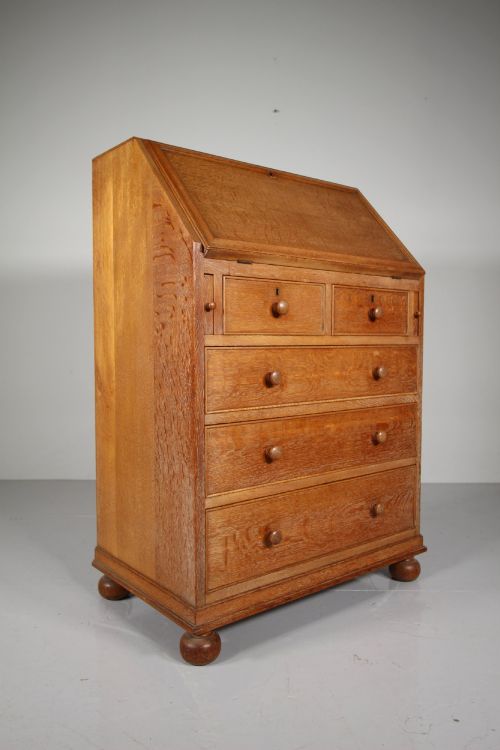
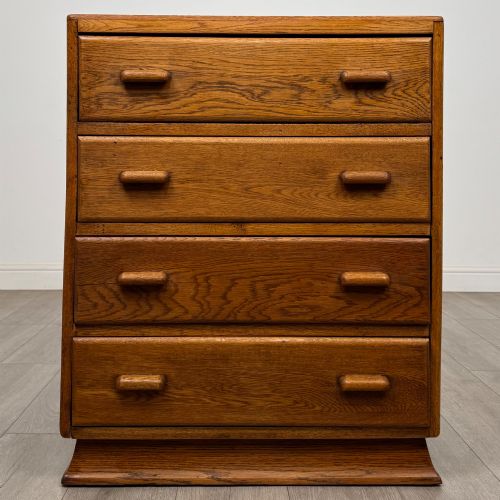
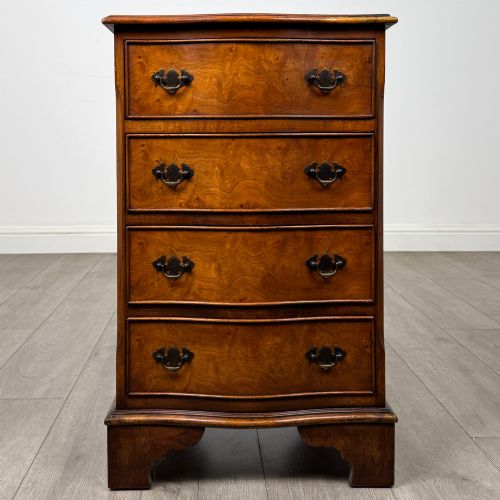
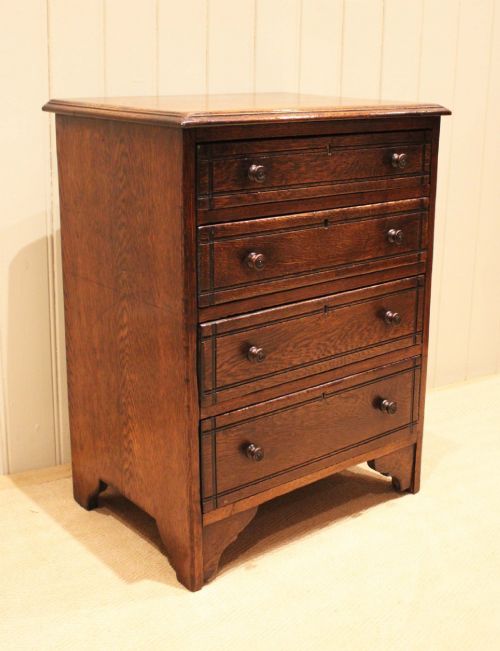
The primary forms on this page include chests of drawers, writing bureaux, tallboys, linen press combinations, and small bedside or hall cabinets. Oak is the dominant timber, occasionally accompanied by mahogany, with hardware in brass and metal.
Buyers meet variations such as small proportioned chests, bachelor chests, and writing bureaux. These items suit domestic spaces where floor space is limited but traditional timber character remains essential.
How they were made
These items rely primarily on solid oak, utilising its natural grain and durability to form structural carcasses and drawer fronts. Cabinetmakers shaped the timber using traditional joinery methods suited to smaller proportions.
Fitted interiors and drawers often incorporate secondary woods, while exterior hardware relies on brass for handles and keyplates. Surface finishes preserve the golden oak tones and darker patinas developed across centuries.
Object types span chests of drawers, compactums, writing bureaux, tallboys, and bedside cabinets.
What varies in quality
Quality in a compact oak chest depends on the selection of timber and the crispness of the joinery. Fine examples display carefully figured grain and well-proportioned drawer configurations rather than purely utilitarian construction.
The presence of original hardware, such as brass brackets and handles, elevates a piece. Better workshops maintained precise alignment in smaller forms where space management requires exacting carpentry.
The Compact Oak Chest Glossary
- Bachelor's chest
- A small chest of drawers featuring a fold-over top or slide used as a writing surface. These pieces date predominantly from the Georgian period.
- Tallboy
- A tall chest of drawers formed by stacking one chest upon another, maximising vertical storage in a narrow footprint. Eighteenth-century examples often combine drawer tiers with compact proportions.
- Compactum
- A multi-functional storage piece combining wardrobe space, drawers, and cupboards within a single carcass. This form frequently incorporates linen presses or writing compartments.
- Bureau
- A desk featuring a sloping flap that opens to reveal pigeonholes and small drawers above standard storage drawers. Oak and mahogany versions appear across 18th-century and later periods.
- Bracket foot
- A structural support foot shaped like a bracket, commonly found on Georgian and Edwardian case furniture. It lifts the chest slightly off the floor while maintaining clean corner lines.
Compact Oak Chest: Frequently Asked Questions
How were these chests used?
They served as bedroom storage for linens and clothing, or as combination writing desks and drawer units for paperwork.
Smaller variants functioned as bedside cabinets, hall cupboards, or specialised gentlemen's sporran and sock chests.
How do I date an oak chest?
Dating relies on construction methods, hardware styles, timber selection, and overall proportions characteristic of periods like George I or Edwardian production.
Early 18th-century pieces often show different carcass assembly compared to 1910 or 1920 Edwardian and Art Deco revivals.
Are these chests made of solid oak?
The listings feature solid oak construction alongside items described simply as oak or golden oak timber.
Secondary woods and brass hardware appear internally and on drawer fittings, while mahogany is used in specific Georgian variations.
How do I live with a compact oak chest?
These pieces integrate easily into modern hallways, bedrooms, and studies due to their reduced footprint and sturdy timber build.
Routine care involves maintaining stable indoor humidity to preserve the oak and original metal hardware.