



Carved Apron Chest
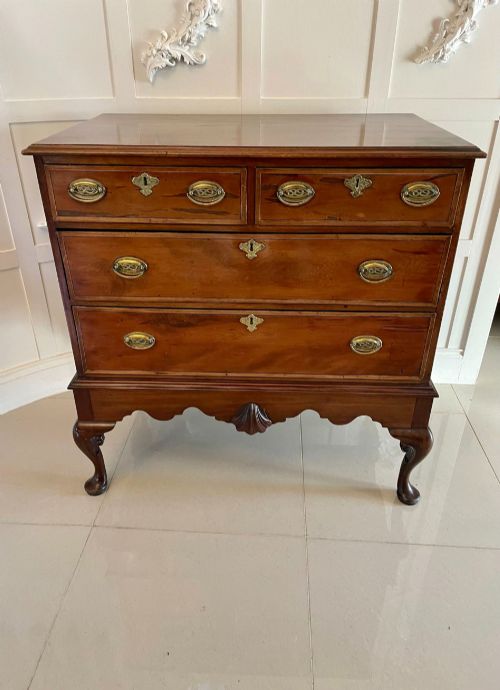
A carved apron chest brings substantial timber storage into a room, defined by its shaped lower rail and traditional joinery.
Carved Apron Chest
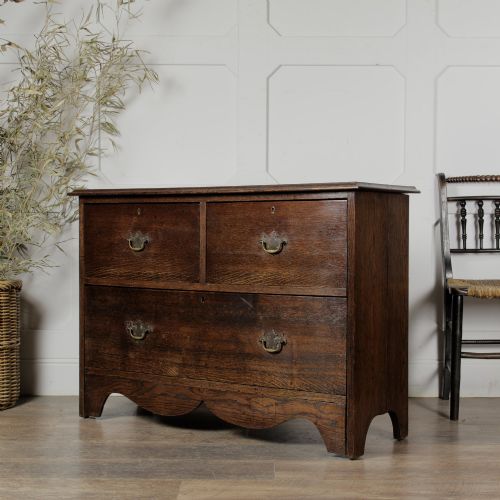
A carved apron chest represents a sturdy form of domestic storage, spanning from eighteenth-century oak examples to nineteenth-century mahogany and walnut pieces. These items combine practical drawer space with decorative lower rails that anchor the design near the floor.
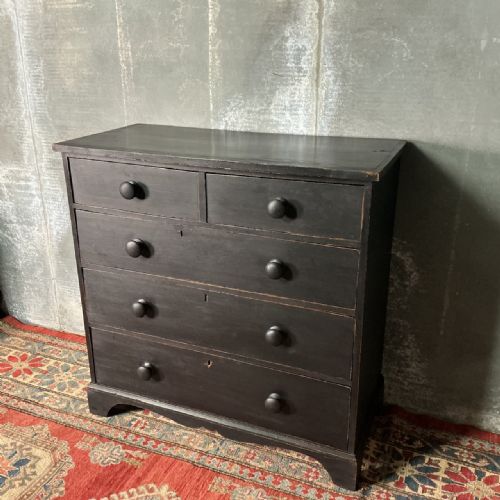
The pieces on this page appear in various timber varieties, including fruitwood, pine, and satinwood, alongside painted wood finishes. Regional variations range from English country workshops to French provincial commodes and Swedish inlaid designs.
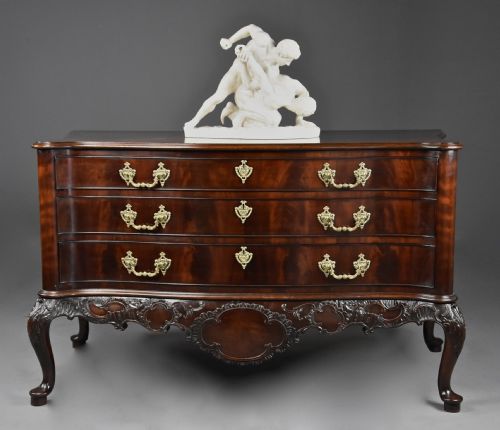
Forms extend beyond standard chests of drawers to include chests on stands, lowboys, commodes, and trunks with hinged lids. Buyers encounter both austere early oak work and elaborately serpentine profiles reflecting Georgian and Chippendale influences.
How they were made
Cabinetmakers utilised solid hardwoods like oak, mahogany, and walnut, often pairing fruitwood and pine for secondary framing and drawer linings. Joinery relied on traditional hand-cut dovetails and pegged joints to maintain structural integrity over centuries of use.
Surfaces received careful finishing through polishing, wax application, or decorative paint layers, sometimes enhanced with inlaid veneers. Brass hardware, including drop handles and escutcheons, was fitted by hand to secure the doors and drawers.
Some nineteenth-century box stools cleverly disguise mundane storage as refined seating.
What varies in quality
The refinement of the carving along the lower rail dictates much of the character, separating standard utilitarian work from ambitious cabinetmaking. Crisp execution in the timber and well-proportioned serpentine curves indicate greater skill in the maker.
Material selection and timber figure also set examples apart, with rich mahogany grain or figured walnut commanding attention. Original brasses and untouched surface patination elevate the standing of a piece considerably.
The Carved Apron Chest Glossary
- Apron
- The decorative horizontal timber member beneath the lowest drawer or chest body, often shaped with curves or carving.
- Serpentine
- A front profile curving outward at the ends and inward at the centre, creating a fluid undulating line.
- Lowboy
- A small low table with drawers, typically raised on four legs, serving as a dressing table or side table.
- Commode
- A decorative chest of drawers or cabinet originating in France, frequently featuring curved fronts and elaborate mounts.
- Dovetail
- A joint formed by interlocking wedge-shaped fingers, used primarily to join drawer sides to drawer fronts securely.
Carved Apron Chest: Frequently Asked Questions
How do I clean a wooden chest?
Dust the surface regularly with a soft, dry cloth to prevent grit accumulation.
Apply a microcrystalline wax periodically to nourish the timber without building up heavy residues.
Are these chests suitable for daily use?
Solid timber construction and sturdy joinery allow these pieces to function reliably in modern homes.
Care should be taken to distribute weight evenly within the drawers to protect historical runners.
How can I tell eighteenth-century oak from later pieces?
Early oak displays distinctive medullary rays and hand-cut joinery marks left by pit-sawing.
Later reproductions often use standardised machine-cut components and lack the natural patination built up over generations.
What is a chest on stand?
This form consists of an upper storage section raised upon a separate supporting frame with legs.
Such designs elevate the primary drawers for easier access while lightening the visual weight of heavy timbers.