


Victorian Serpentine Chest
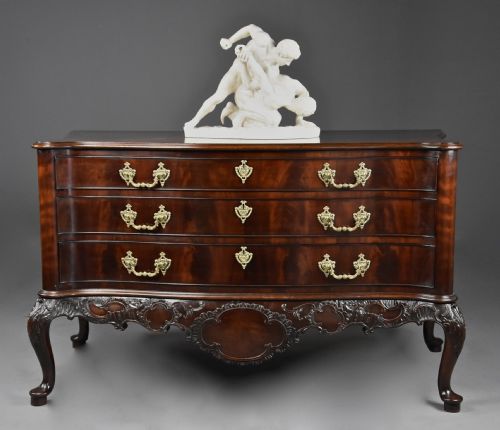
A victorian serpentine chest delivers a curving front that catches light across figured mahogany, walnut or marble.
Victorian Serpentine Chest
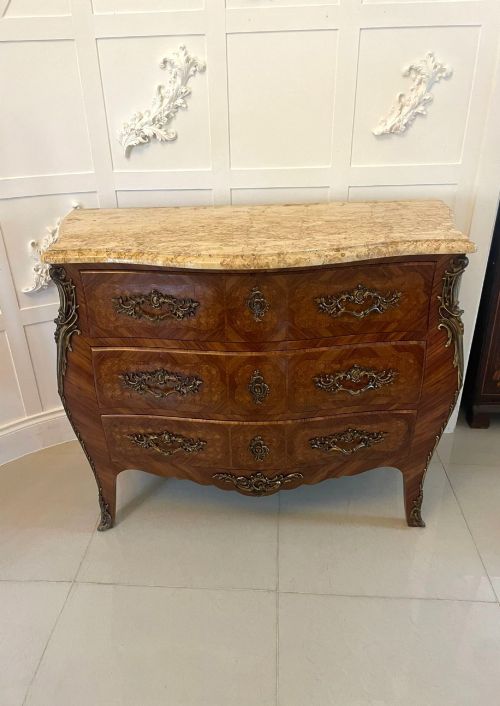
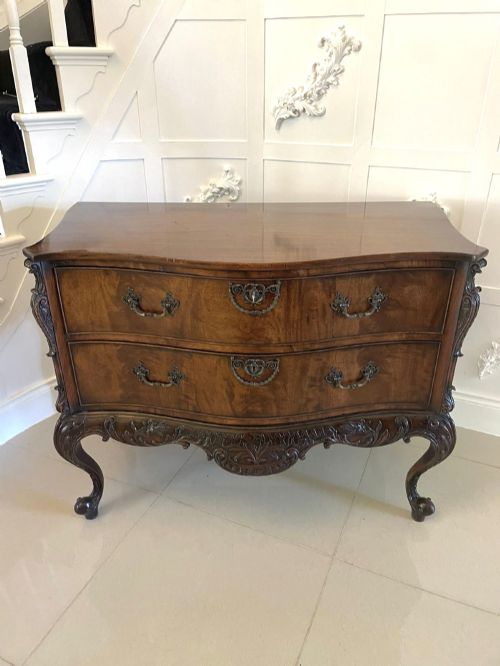
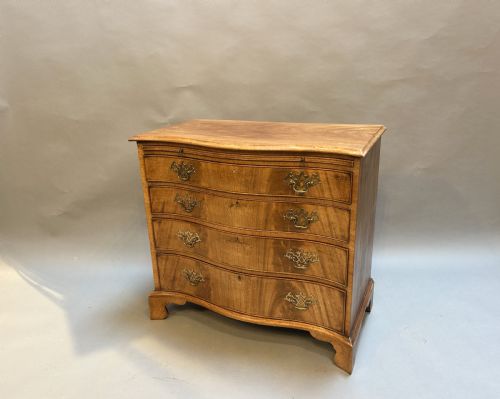
A victorian serpentine chest presents a distinctively curved drawer front, swelling outward in the centre and curving inward at the sides. These pieces span the nineteenth century, with figured mahogany and walnut serving as the primary timbers encountered.
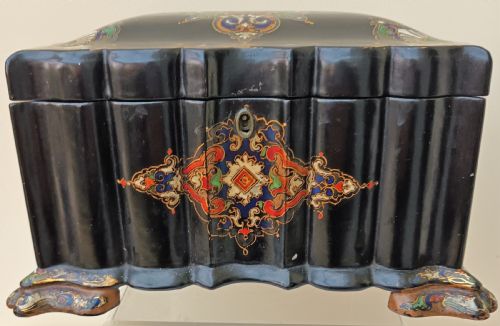
Makers adapted several historical revivals for these chests, incorporating Chippendale, Sheraton and French Louis XV influences alongside simpler English forms. Pieces range from large Scotch proportions to smaller bedside and compartmented tea caddies.
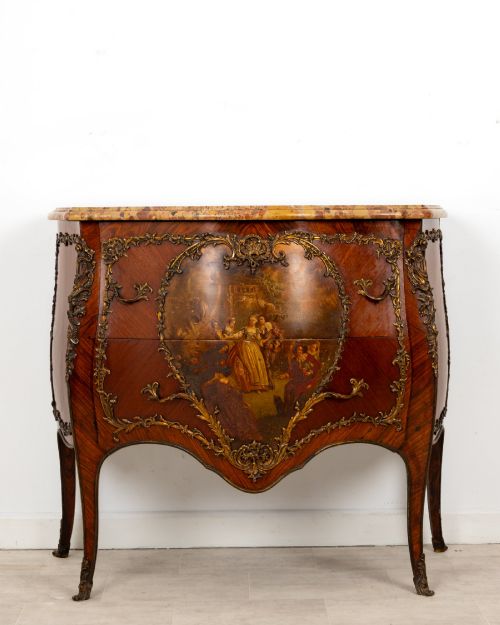
English workshops produced substantial timber examples, while French and continental pieces often introduced marble tops, ormolu mounts and parquetry. Buyers meet both straightforward mahogany drawer banks and elaborate commodes with shaped profiles.
What varies in quality
The choice of timber grain dictates much of the visual success, with highly figured flame mahogany or burr walnut commanding attention over plain surfaces. Crispness in the execution of the curved moulding and the harmonious matching of veneer across drawer fronts separate finer examples from simpler work.
Hardware and secondary materials also indicate grade, from heavy cast brass handles and thick marble tops to standard brass pulls. The precision of the joinery where the serpentine front meets the side panels reveals the skill invested by the cabinetmaker.
Listings feature nineteenth-century periods alongside materials including mahogany, walnut, marble, brass, kingwood, lacquer and papier-mache.
Lamb of Manchester
The Victorian Serpentine Chest Glossary
- Serpentine
- A curved architectural line that swells outward and recedes inward. This undulating profile defines the drawer fronts and tops of these chests.
- Ormolu
- Gilded bronze mounts applied to furniture. These decorative elements appear frequently on French-influenced commodes.
- Parquetry
- Geometric wood inlay forming patterned surfaces. Cabinetmakers utilised this technique on French revival commode tops and drawer fronts.
- Commode
- A decorative low chest of drawers or cabinet. The term often describes French-styled nineteenth-century pieces fitted with marble tops.
- Flame mahogany
- Timber veneer showing a distinct feather-like grain pattern. This figure appears across numerous nineteenth-century English chests.
Victorian Serpentine Chest: Frequently Asked Questions
How do I clean the marble top?
Wipe marble surfaces with a soft damp cloth using mild soap. Avoid acidic cleaners that etch the polished stone.
Dry the surface thoroughly to prevent water rings and preserve the original gloss.
Are these chests heavy to move?
Solid timber construction and internal drawer frames create considerable weight. Pieces fitted with marble slabs require multiple people for safe relocation.
Removing the drawers lightens the carcase significantly before transport.
Where should I place the chest?
Position the piece away from direct sunlight and heat sources to protect the wood veneers. Maintaining steady room humidity prevents timber shrinkage.
Allow enough clearance around the curved front so the room can accommodate the protruding shape.
How do I distinguish English from French pieces?
English chests rely on figured mahogany, walnut or satinwood with traditional drawer construction. French commodes frequently incorporate marble tops, ormolu mounts and parquetry.
Proportions and decorative hardware also signal the distinct regional origins.