

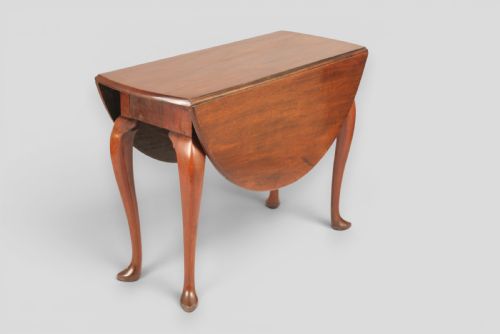


Compact Mahogany Tea Table
These compact mahogany tea table pieces offer folding leaves and rich timber surfaces, perfectly suited for flexible modern living.
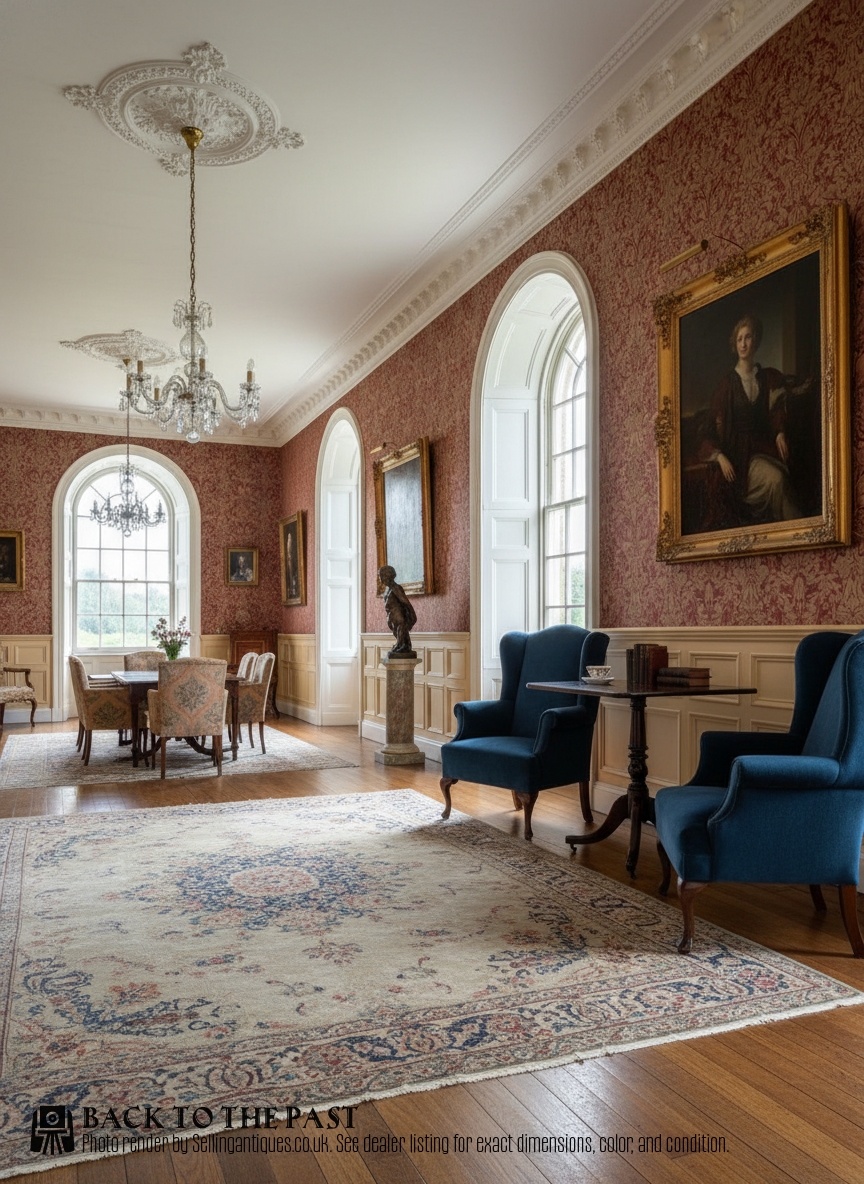
Compact Mahogany Tea Table
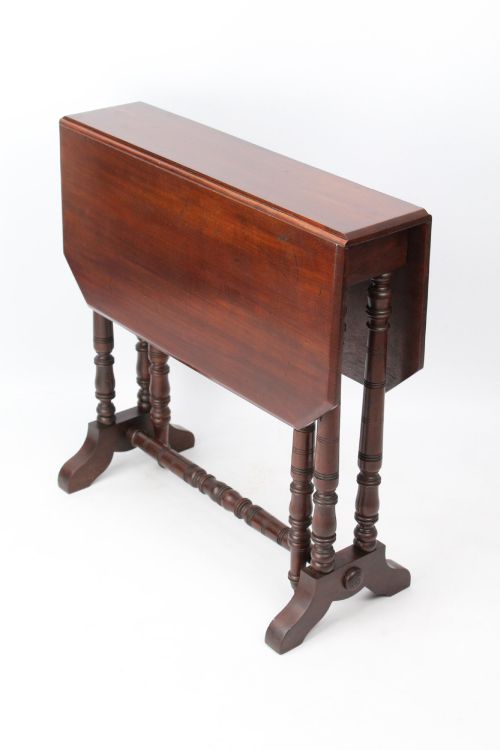
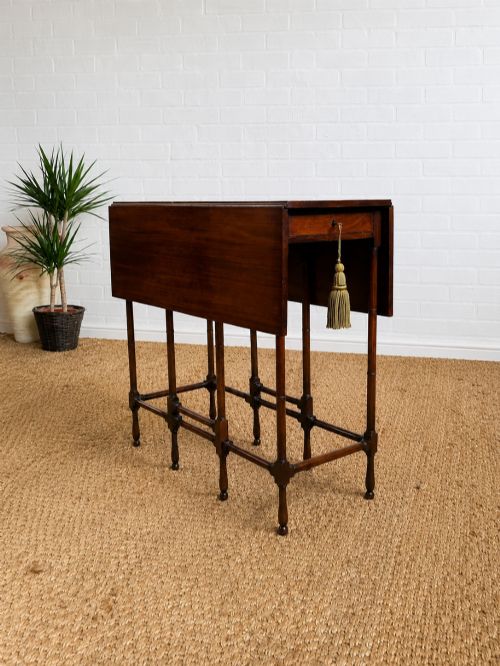
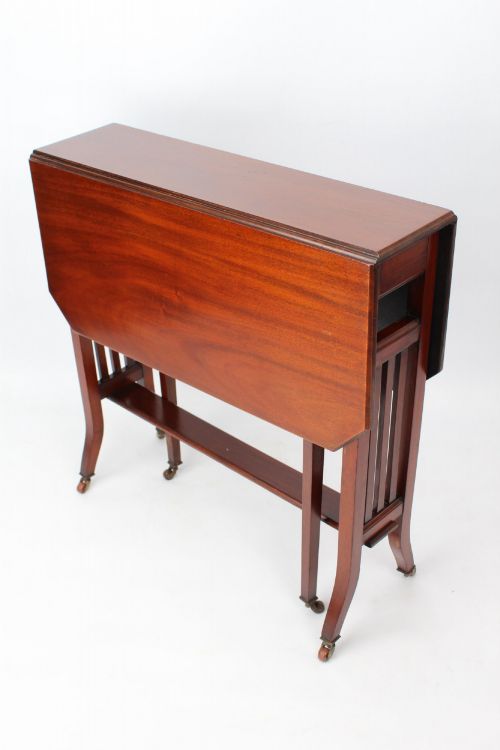
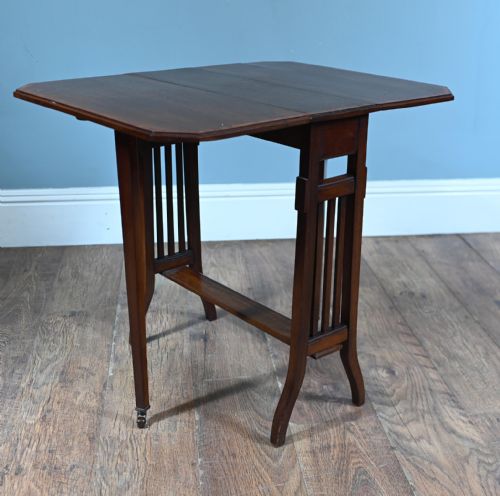
When you search for a compact mahogany tea table, you encounter small-scale folding furniture designed for social hosting and daily versatility. The pieces listed here span the 18th Century, Victorian, and Edwardian periods, manifesting chiefly as Sutherland tables, spider leg tables, Pembroke tables, and drop-leaf occasional tables.
Edwardian examples dominate the selection, often featuring narrow gateleg actions and slender proportions suited to smaller reception rooms. Earlier 18th Century and Georgian iterations appear as delicate spider leg or Pembroke forms, prioritising light frames and restrained timberwork.
The primary forms rely on hinged leaves that drop down when not in use, allowing the furniture to tuck against a wall. Buyers find them functioning equally as lamp tables, side tables, and compact dining surfaces for limited company.

Materials and construction
Cabinetmakers built these tables primarily from solid and veneered mahogany, frequently selecting stock with deep grain patterns and warm reddish-brown tones. Workshops integrated secondary timbers such as satinwood, boxwood, and ebonised mahogany for stringing, banding, and inlay details.
Structural agility relied on clever carpentry, notably pivoting gatelegs that swing outward to support the folding leaves without sagging. Turning lathes shaped slender bamboo-style legs on Edwardian pieces, whilst earlier 18th Century models utilised ultra-thin spider legs braced by delicate stretchers.
Materials appearing across the current inventory include solid mahogany, satinwood inlay, boxwood stringing, ceramic castors, and ebonised details.
Distinctions in quality
The grade of a piece rests heavily on the crispness of its joinery and the selection of figured timber. Superior examples display seamless grain matching across the table top and leaves, whereas lesser versions rely on plain, unfigured planks.
Stability of the folding mechanism marks another division. High-grade tables feature robust gateleg hinges and tight pivot joints that hold the leaves level under weight, while lower tiers suffer from loose alignments and wobbly leg frames.
The Compact Mahogany Tea Table Glossary
- Sutherland table
- A narrow drop-leaf table with exceptionally slender gatelegs that support wide-drooping leaves. It folds flat to a very slim profile for storage against a wall.
- Spider leg table
- A fragile-looking occasional table featuring extraordinarily thin turned legs braced by multiple cross-stretchers. Originating in the 18th Century, it provides a very light visual footprint.
- Pembroke table
- A rectangular drop-leaf table typically featuring a single drawer and four legs, often with hinged leaves of smaller proportions than a Sutherland. It served historically for breakfast or writing.
- Crossbanding
- A decorative border technique where strips of veneer are laid with the grain running perpendicular to the main surface. It frames the perimeter of table tops on finer Edwardian pieces.
- Gateleg table
- Any table with hinged legs that swing out from the centre frame to support folding flaps. This design distributes weight evenly across moving leaves.
Compact Mahogany Tea Table: Frequently Asked Questions
How do I use a Sutherland table daily?
These tables function brilliantly as movable tea surfaces, side tables for lamps, or impromptu dining spots for small numbers. Drop the leaves to tuck the piece against a wall when floor space is needed.
Raise one or both leaves on their gateleg supports whenever you require extra surface area for books or cups. The lightweight frames make moving them between rooms entirely effortless.
How can I tell an Edwardian piece from a Georgian one?
Edwardian examples usually show lighter construction, often with satinwood inlay, ebonising, or bamboo-turned legs. They date around nineteen hundred and typically employ bright mahogany veneers.
Georgian pieces from the eighteenth century display deeper patination, simpler solid timber surfaces, and extremely slender structural elements like spider legs. Their joinery focuses on understated functional elegance rather than decorative banding.
Are these tables sturdy enough for regular use?
Solid mahogany construction and clever gateleg bracing provide surprising resilience for everyday tasks. They handle cups, books, and lamps without difficulty.
Care should be taken when raising and lowering the hinged leaves to protect the pivot joints. Gentle handling ensures the delicate leg pivots remain aligned and firm over decades.
What is satinwood crossbanding?
Crossbanding involves applying a contrasting border of satinwood veneer around the outer edge of a mahogany table top. The grain runs across the border rather than along the length of the table.
This decorative technique highlights the canted corners and geometric outlines favored by Edwardian cabinetmakers. It adds a pale, luminous frame to the darker central mahogany panels.