


Compact Drawers
Compact antique drawers offer ingenious storage solutions for modern spaces, spanning Georgian, Victorian, and Edwardian periods in rich mahogany, oak, and walnut.
Compact Drawers
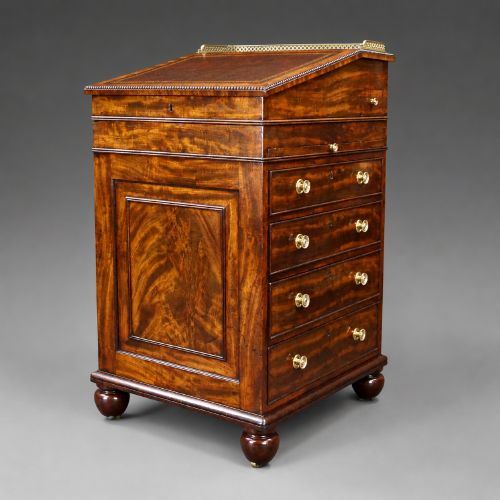
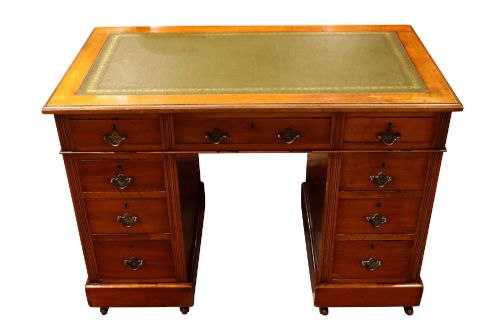
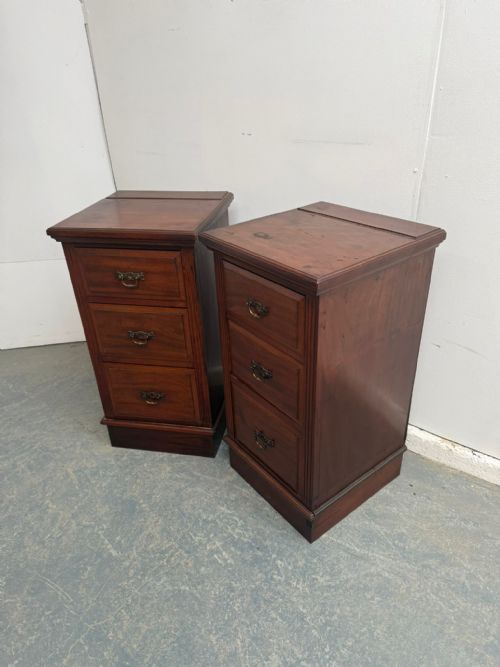
Compact antique drawers encompass smaller-scaled chests, desks, writing tables, bureaux, and tallboys designed to maximise storage within restricted footprints. These pieces span centuries of domestic design, from Georgian bachelor chests to Edwardian pedestal desks and Art Deco cabinets.
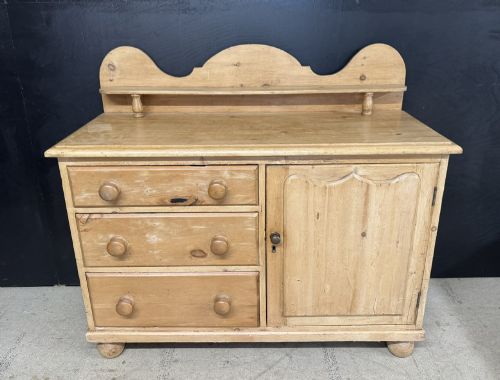
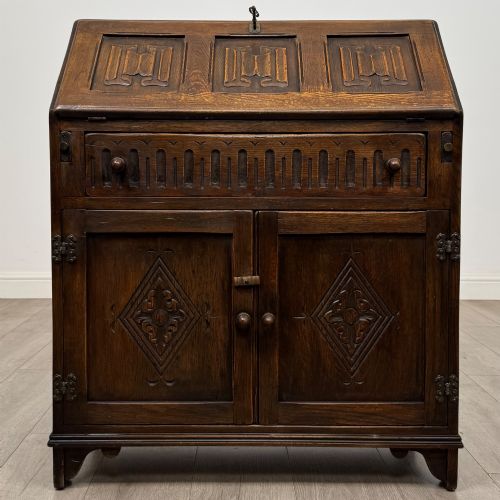
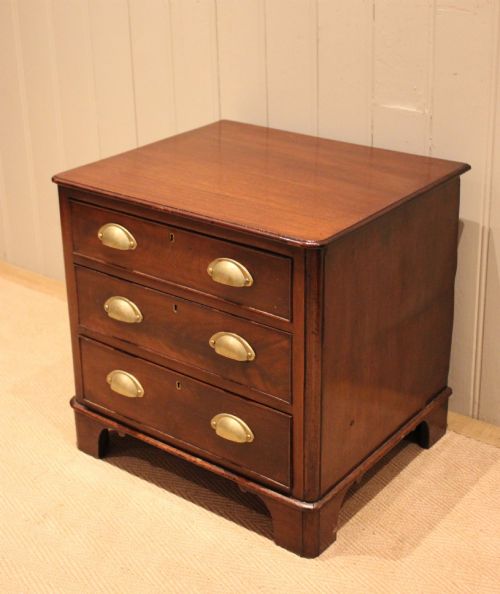
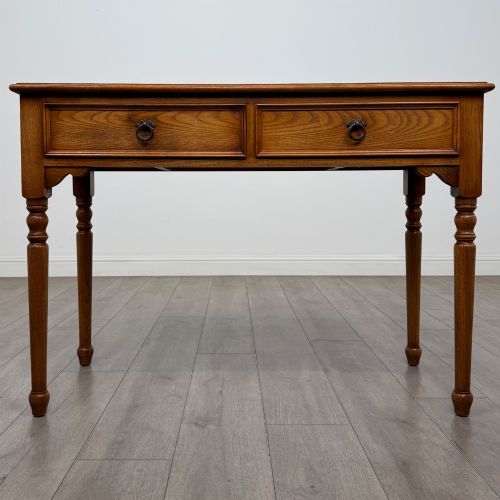
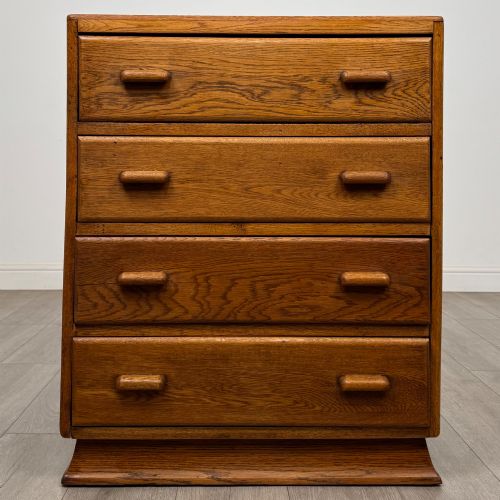
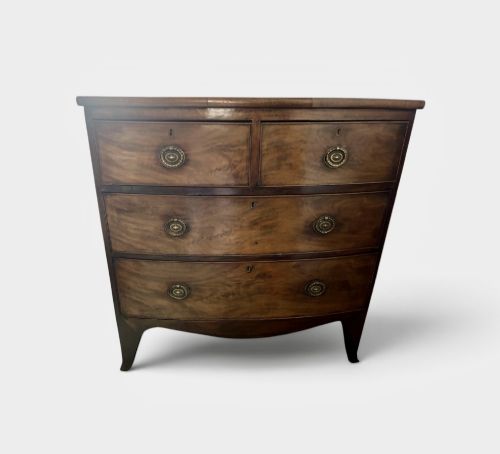
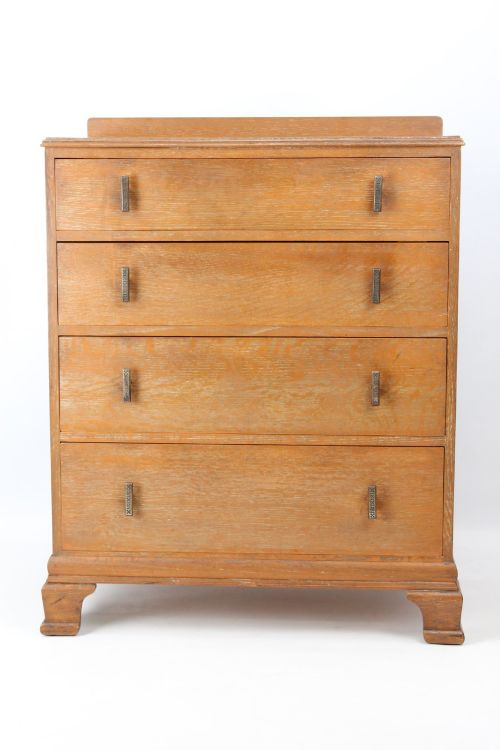
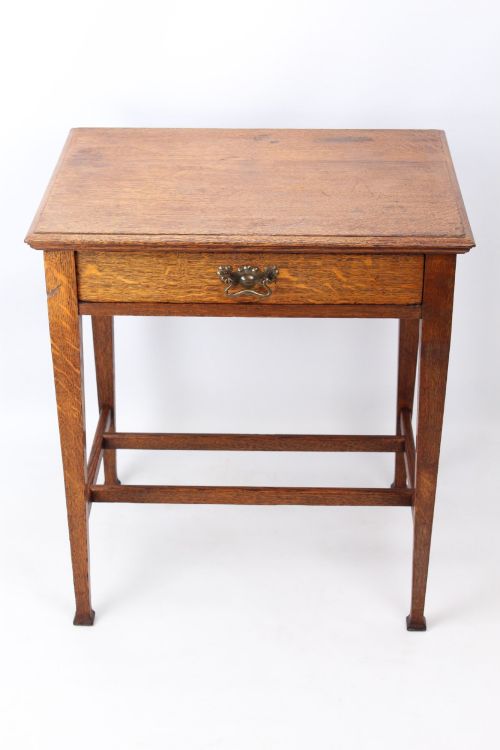
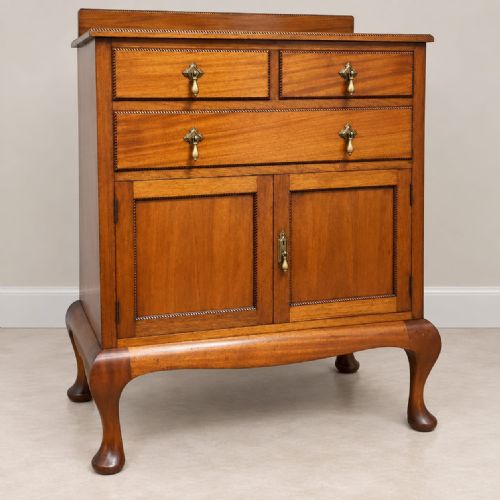
The version most commonly encountered on this page is the smaller-scaled chest of drawers or bureau originating from the Edwardian era or the nineteenth century. These timber pieces frequently utilise oak, mahogany, or walnut, balancing practical utility with domestic elegance.
How they were made
Cabinetmakers utilised solid timbers and figured veneers such as flame mahogany, burr walnut, and satinwood applied to secondary woods. Construction relied on traditional joinery methods like dovetailing for drawer construction to ensure durability.
Hardware typically involved cast brass handles and escutcheons, occasionally paired with leather writing surfaces or specialised locking mechanisms. Surface finishes were achieved through French polishing or waxing to highlight the natural grain of the wood.
Listings feature oak, mahogany, walnut, and rosewood across Georgian, Victorian, Edwardian, and Art Deco styles.
What varies in quality
Quality rests in the selection of timber figures, such as matched flame mahogany or burr walnut veneers, and the precision of the underlying joinery. Superior examples exhibit fine dovetail joints, original brass hardware, and well-proportioned secondary timbers.
Maker attribution and original labels, such as those from documented firms, elevate a piece. The crispness of carved details, inlay work, and the smooth action of drawers sliding within their runners further distinguish finer iterations.
Gillows·Heals of London·Maple and Co
The Compact Drawers Glossary
- Bureau
- A sloping desktop fitted with internal pigeonholes and small drawers, often positioned above larger drawers. They provide a concealed writing surface that folds down when needed.
- Davenport
- A small compact writing desk featuring a sloped, hinged writing surface and a pedestal of drawers to one side. They gained popularity during the Regency and Victorian periods.
- Tallboy
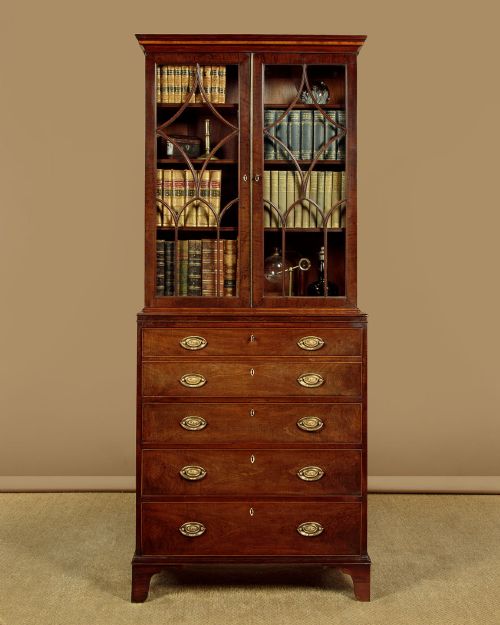
- A tall chest of drawers, often constructed as one chest stacked upon another, designed to maximise vertical storage capacity. They frequently date from the Georgian and Edwardian eras.
- Compactum
- A large fitted wardrobe or multi-purpose storage cabinet combining hanging space, shelving, and internal drawers. These pieces often feature mirrored doors and date around the turn of the twentieth century.
- Dovetail
- A traditional interlocking woodworking joint used primarily in drawer construction. Its wedge-shaped fingers provide exceptional tensile strength against being pulled apart.
Compact Drawers: Frequently Asked Questions
What periods do these pieces date from?
These items span multiple centuries, originating from the eighteenth, nineteenth, and early twentieth centuries. Georgian, Regency, Victorian, and Edwardian eras are well represented.
Design styles shifted from formal Georgian proportions through ornate Victorian ornamentation to the cleaner lines of Arts and Crafts and Art Deco movements.
How were compact desks used historically?
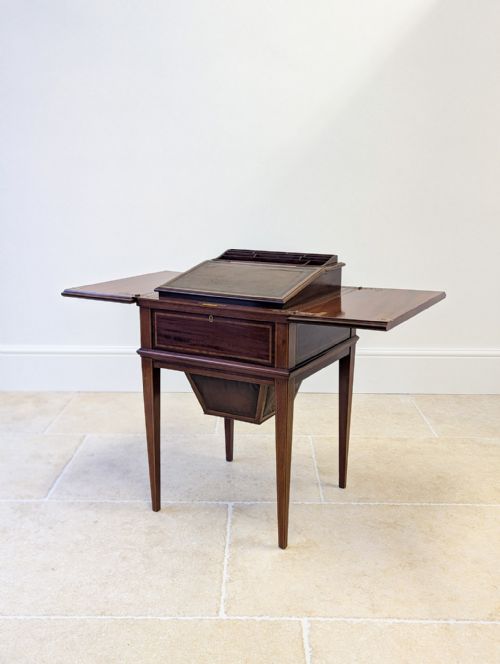
Writing tables and bureaux served as dedicated spaces for correspondence, household record keeping, and managing personal accounts. Their scaled-down dimensions suited smaller private rooms.
Many incorporated specialised compartments, hidden drawers, or leather inserts to protect paper and facilitate comfortable daily writing.
Which timbers are most common?
Mahogany and oak appear most frequently across these listings, alongside walnut and burr walnut variants. Secondary woods like pine were often used for internal drawer linings.
More decorative items incorporate rosewood, satinwood, yew wood, or contrasting string inlay to create visual depth and decorative appeal.
How do I identify a bachelor chest?
A bachelor chest is a small Georgian chest of drawers featuring a fold-over top that creates an integrated writing surface. They were built for compact living and multipurpose utility.
These pieces combine the drawer storage of a standard chest with the functionality of a compact writing desk.