

Small Commode Drawers
Small commode drawers bring compact proportion and fitted storage to modest spaces, merging cabinet-making skill with daily utility.
Small Commode Drawers
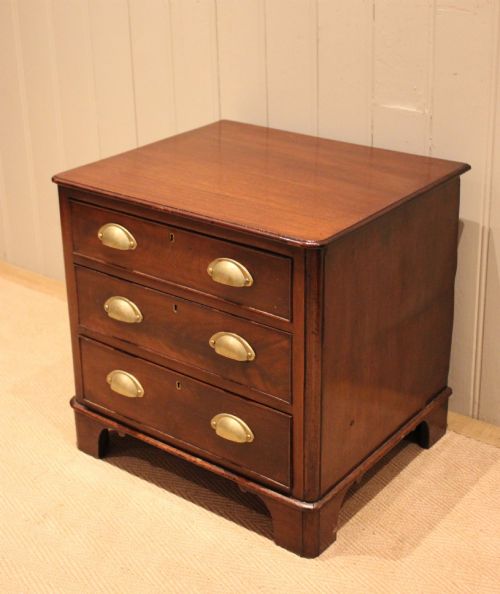
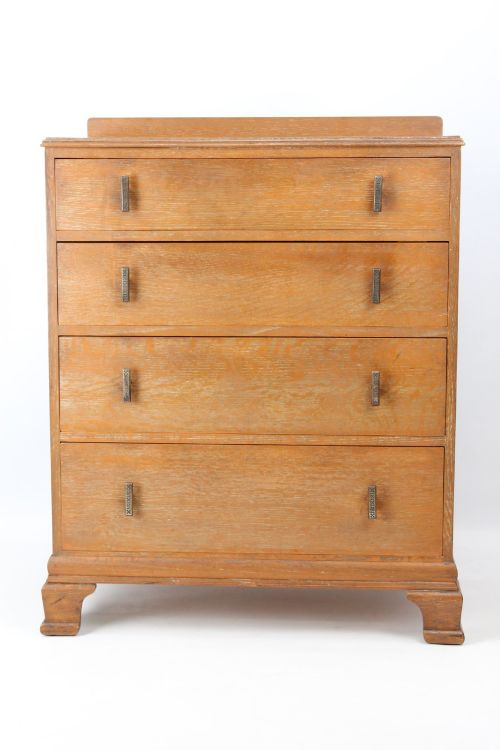
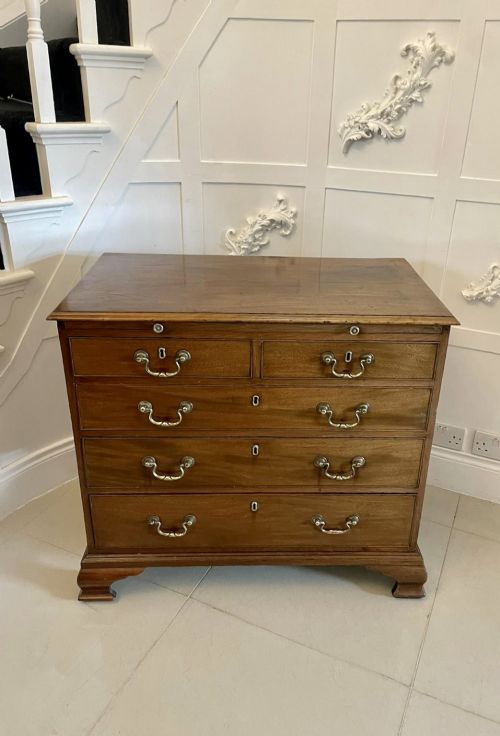
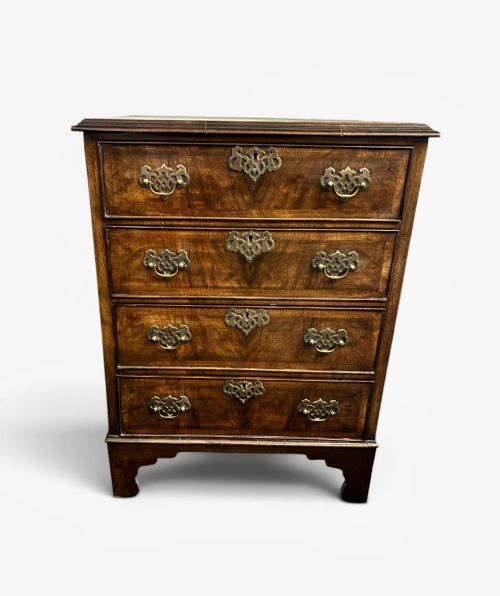
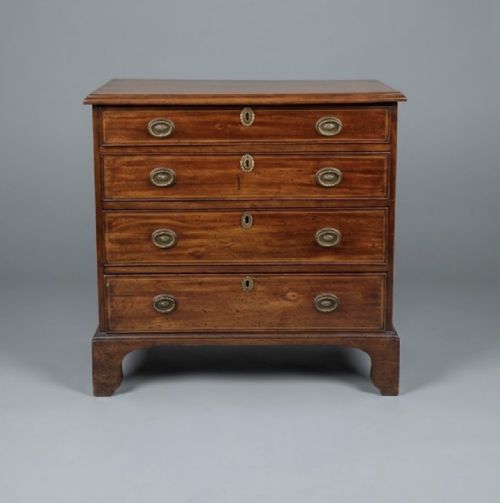
Small commode drawers encompass low chests, bedside cabinets, and diminutive storage units spanning the Georgian, Victorian, and Edwardian eras. These pieces serve rooms where floor space is limited yet formal cabinet work remains essential.
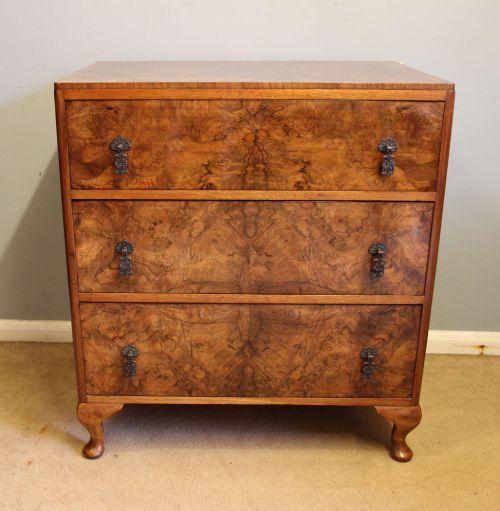
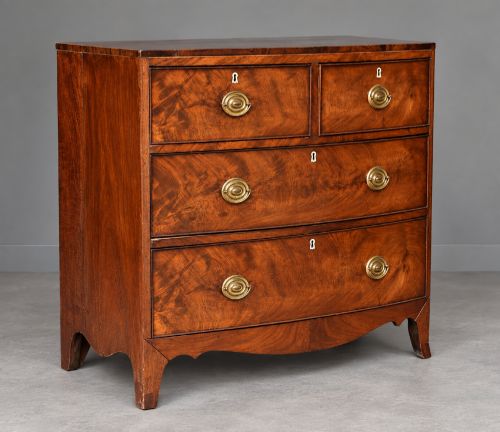
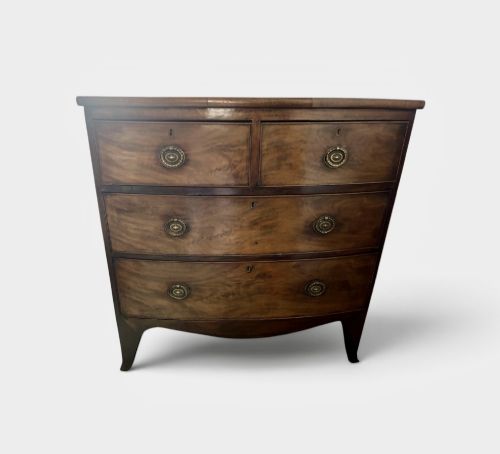
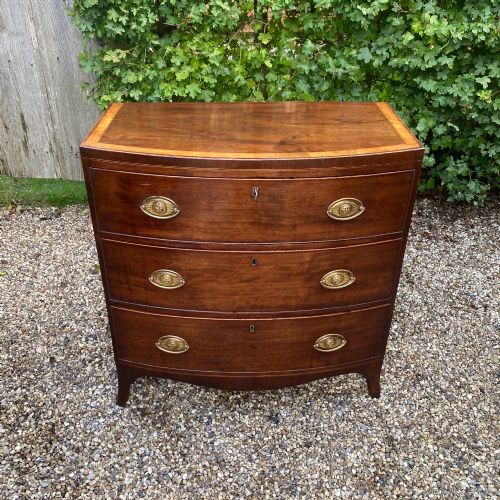
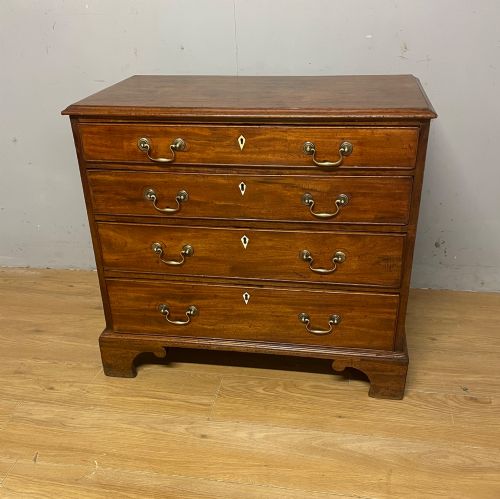
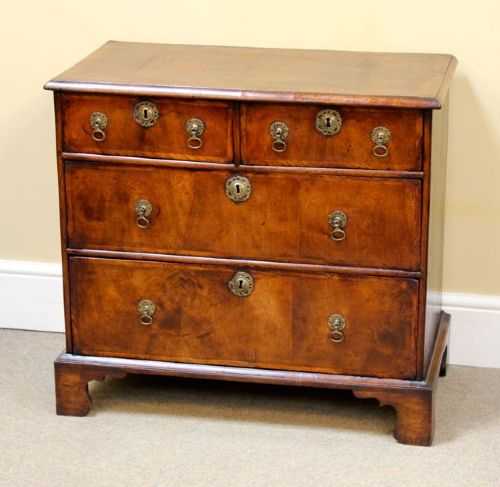
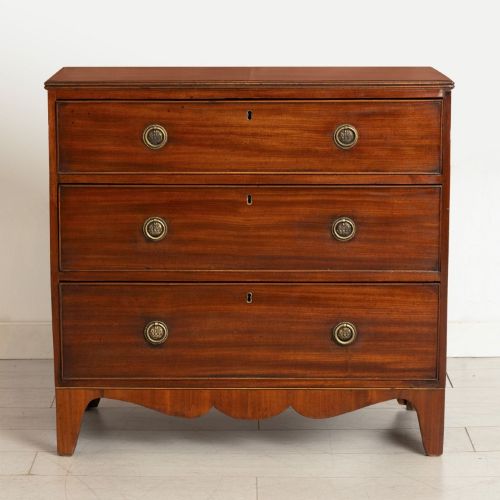
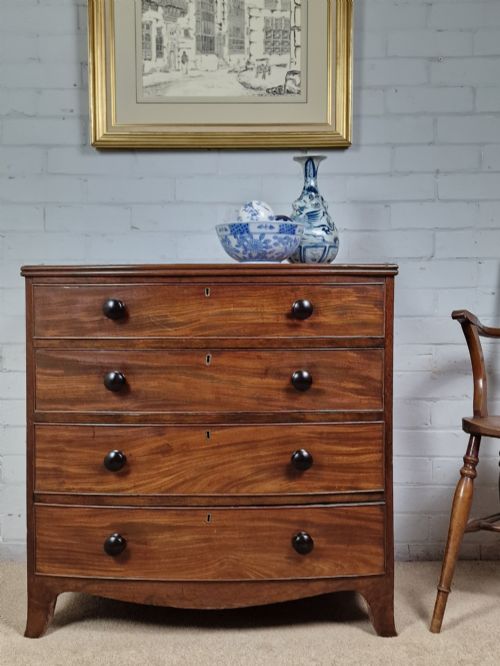
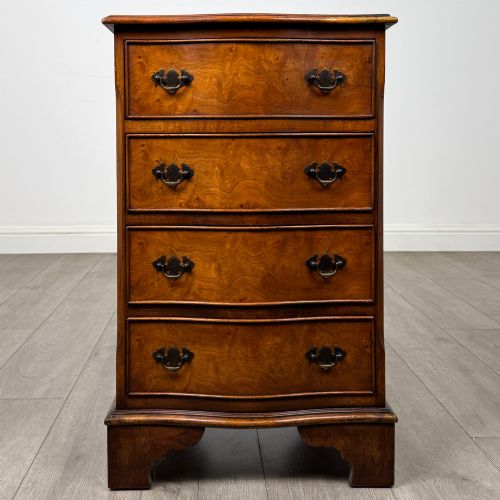
Mahogany and walnut bowfront chests dominate the selection alongside oak, pine, and fruitwood alternatives. Examples range from George III serpentine designs to later revival interpretations and continental bombe commodes.
Materials and Construction
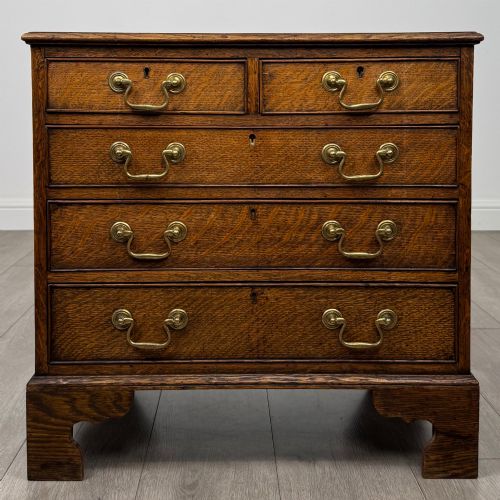
Cabinet makers utilised solid timbers such as mahogany, oak, and walnut, frequently applying decorative wood veneers and crossbanding to top surfaces and drawer fronts. Brass handles and escutcheons completed the hardware assembly.
Joinery methods involved dovetailed drawer construction and framed carcasses designed to support repeated opening and closing over centuries of domestic use.
Some 18th century examples disguised themselves as bedside chests while functioning internally as practical close stools.
Assessing Quality and Execution
Quality rests in the precision of the timber selection, such as figured mahogany or burr walnut matching across the drawer fronts, and the crispness of applied stringing or marquetry. Superior examples retain original brass handles and smooth-running drawers.
The architectural proportion of the piece, including the curve of a bowfront or the sweep of a serpentine edge, dictates the refinement of the finished cabinet.
The Small Commode Drawers Glossary
- Bowfront
- A convex curved cabinet front that projects outward in the centre. This shape gained popularity during the Georgian and Regency periods.
- Serpentine
- A cabinet front featuring a central convex curve flanked by two concave curves. It requires advanced woodworking skill to execute properly.
- Brushing slide
- A pull-out shelf integrated above the top drawer used for writing or brushing clothes. It is commonly found on George III bachelor chests.
- Crossbanding
- A decorative border of veneer laid around the perimeter of a drawer front or top with the grain running perpendicular to the centre panel.
- Bombe
- A swelling, bulging cabinet profile associated with continental European commodes. The sides and front curve outward in convex sweeps.
Small Commode Drawers: Frequently Asked Questions
Where should I place small commode drawers?
These compact pieces fit easily beside a bed, in a narrow hallway, or against a bedroom wall where standard furniture overwhelms the room. Their modest footprint provides practical surface area and enclosed storage without crowding the floor.
Ensure the clearance around doors and walkways accommodates the drawer depth, particularly with bowfront or serpentine shapes that project further into the space.
How do I date a Georgian piece?
Examine the drawer construction for hand-cut dovetails, the type of secondary timber used inside, and the method of fixing the backboards. Georgian pieces often display distinct timber figuring and traditional wax polishes.
Check for original brass hardware and the crispness of any carved mouldings or bracket feet characteristic of the eighteenth century.
What is the difference between a commode and a chest?
In British and continental furniture history, a commode typically refers to a low, decorative cabinet with drawers or doors, often of French or Italian origin. A chest of drawers describes a taller stack of horizontal drawers built primarily for utility.
Over time, the terms overlap significantly in marketplace listings, particularly for smaller scale items originating from the Georgian and Victorian periods.
How do I care for antique wood veneer?
Keep wooden furniture away from direct sunlight and heat sources to prevent the underlying veneer from drying, cracking, or lifting away from the carcass. Maintain a stable indoor climate to protect the antique glue and polish.
Apply microcrystalline wax occasionally to nourish the surface, avoiding modern silicone sprays or heavy liquid polishes that damage historic finishes.