


Commercial Retail Fitting
Commercial retail fitting describes shop furniture and counters built for trade, designed to display goods effectively in Edwardian and twentieth-century stores.
Commercial Retail Fitting
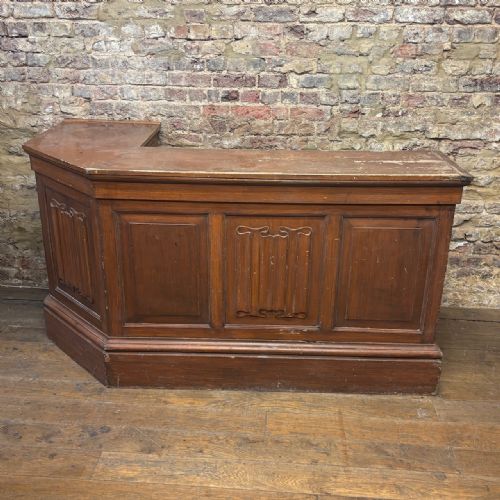
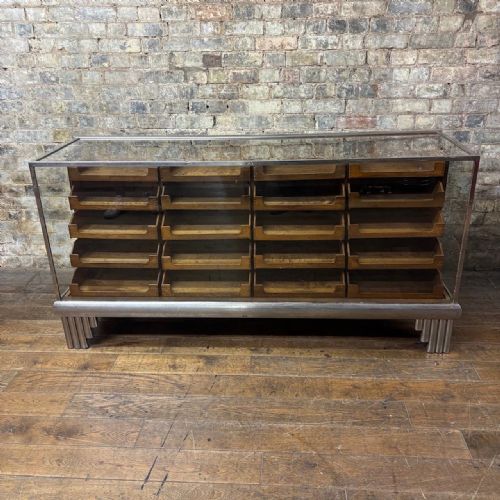
A commercial retail fitting serves as heavy-duty business furniture, spanning large mahogany counters, haberdashery drawer units, and glazed display cabinets. These pieces originate from the nineteenth century through the Art Deco era, reflecting the practical needs of traditional merchants and drapers.
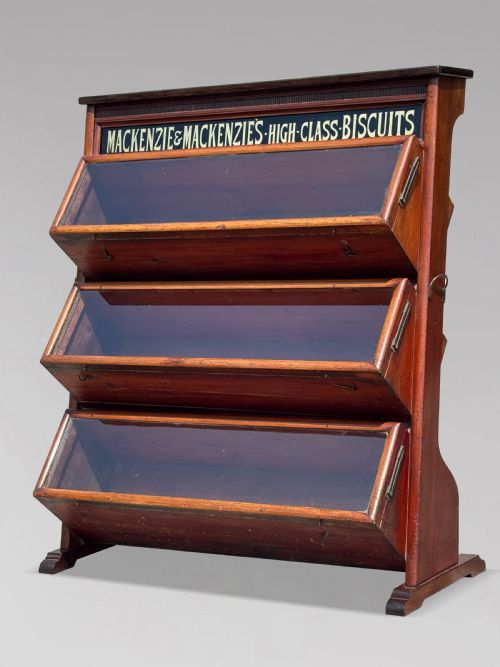
Shoppers encounter heavy oak serving counters, tall glazed vitrines, and specialised chocolate or biscuit display cabinets. Many examples retain maker stamps from period shopfitters, indicating their commercial pedigree.
Materials and construction
Frames rely heavily on dense timber like mahogany and oak, joined solidly to withstand daily retail use. Glass panels and mirrored interiors maximise light penetration for merchandise.
Metal components introduce structural rigidity, utilising brass, bronze, aluminum, and chrome for framing and handles. Painted pine and hardwood serve for multi-drawer banks and functional counter bases.
Period styles span Victorian, Edwardian, Arts and Crafts, and Art Deco designs.
Assessing quality and origin
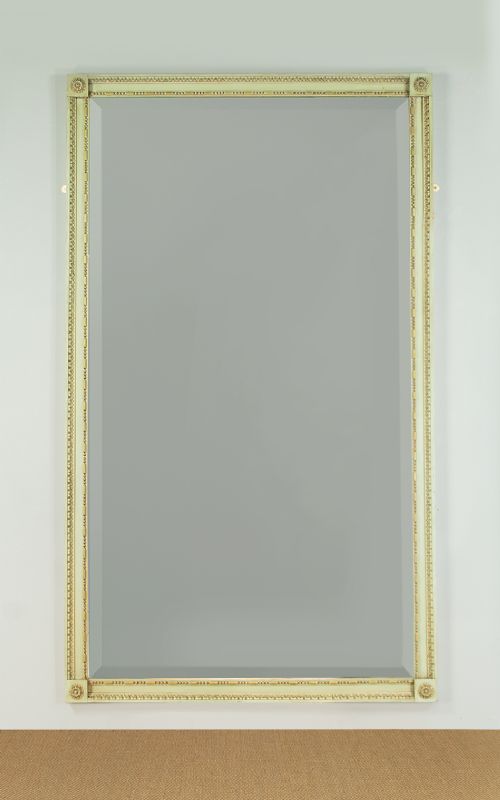
Construction robustness separates utilitarian shop benches from refined display furniture made for high-end jewellers. Superior items feature architectural mouldings, bevelled glass, and robust hardwood carcases.
Original maker plates and specialised hardware elevate a piece above standard utility items. Alterations to glazing or replaced timber bases diminish historical integrity.
Dudley & Co·John Stow Ltd·Saml. Elliott & Sons·E. Pollard & Co. Ltd.
The Commercial Retail Fitting Glossary
- Haberdashery cabinet
- A multi-drawer storage unit originally used for ribbons and buttons, characterised by shallow wooden drawers with glass fronts.
- Shop counter
- A long working surface positioned between merchant and customer, often incorporating display glazing or till wells.
- Vitrine
- A glass-sided display cabinet designed to protect delicate merchandise while offering all-round visibility.
- Countertop display
- A smaller glazed case or stand placed upon a main counter to highlight impulse purchases like confectionery.
- Drapers counter
- A long wooden table or storage bank utilised in fabric and clothing shops during the Victorian and Edwardian periods.
Commercial Retail Fitting: Frequently Asked Questions
How do I identify a genuine retail fitting?
Look for heavy timber construction, original glass, and maker marks from period shopfitters.
Commercial pieces typically show robust internal framing designed for heavy trade use rather than domestic living.
What periods do these shop fittings cover?
The available items span from the late nineteenth century through the Edwardian era and into the Art Deco 1930s.
Design styles shift from heavy Victorian mahogany to streamlined chrome and aluminium of the interwar decades.
Where were haberdashery cabinets used?
Haberdashery units stood in drapers and clothiers shops to organise small sewing goods.
Multiple shallow drawers allowed shopkeepers to sort threads, ribbons, and buttons by size and colour.
Can I use a shop counter at home?
These counters function well as kitchen islands, sideboards, or central hallway storage tables.
Their generous proportions and built-in drawers provide practical utility for modern domestic spaces.