


Commercial Counter Showcase
These commercial counter showcase pieces are sturdy shop furniture designed to display small wares, offering a practical window into past retail life.
Commercial Counter Showcase
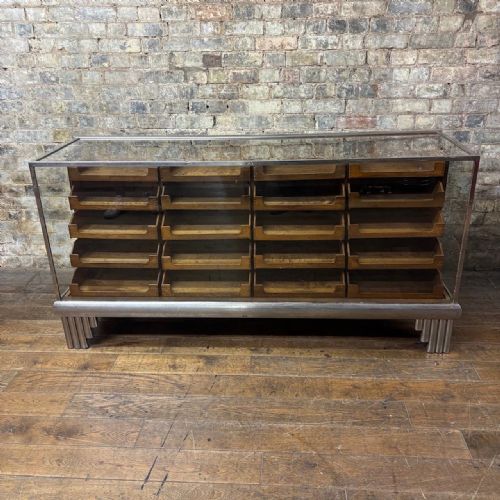
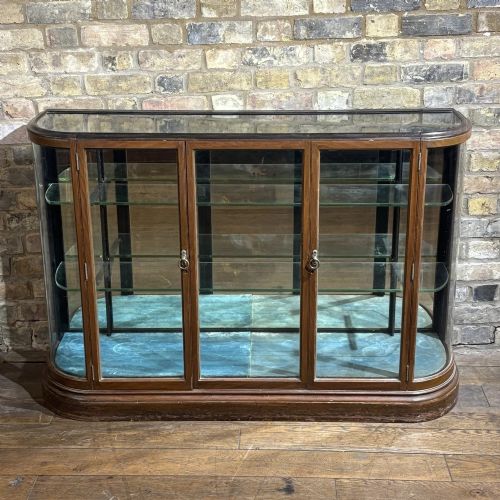
A commercial counter showcase forms the backbone of period retail display, standing on shop floors to present merchandise clearly to customers. When exploring this selection, buyers frequently encounter large shop display counters alongside compact table top versions intended for specific goods.
The objects span from the late nineteenth century through the Edwardian era and into the 1930s. Mahogany and oak dominate the construction, often shaped with bow ends, pentagonal layouts, or low profiles suited for serving counters.
Specialised variants appear among the listings, including haberdashery units, tea cabinets, and confectionery displays bearing period brand signage for chocolate and cocoa. These pieces bridge utilitarian shop storage and engaging visual presentation.
How They Were Made
Makers utilised timber framing in mahogany or oak to build the primary structures, providing the rigidity needed for daily retail use. Glass panels form the viewing areas, occasionally paired with mirrored interiors to amplify the light within the display space.
Metal components introduce structural support and decorative detail, with brass, chrome, and aluminium appearing across different decades. Velvet and fabric linings frequently furnish the interior bases to cushion delicate items placed inside.
Joinery methods reflect the commercial demands of their era, ranging from traditional cabinet-making in Victorian workshops to streamlined metal framing in later Art Deco examples.
Even pencils had dedicated display architecture, as seen in the surviving showcase built for Venus products.
What Varies in Quality
The caliber of a commercial counter showcase rests upon the ambition of its design and the integrity of its original materials. Pieces featuring curved bow ends, complex pentagonal geometries, or specialised branding exhibit a higher level of workshop execution than standard rectangular boxes.
Hardware and framing choices also distinguish the tier of production. Solid hardwood frames with well-integrated mirrored backs and polished metal accents demonstrate superior craftsmanship compared to simpler utility fittings.
Dudley & Co·F. Sage & Co.·Quincy Showcase Works·Pollards
The Commercial Counter Showcase Glossary
- Haberdashery counter
- A long shop unit traditionally fitted with multiple drawers and glazed display compartments for selling sewing materials and small garments. These counters combine accessible storage with top-surface presentation.
- Bow end
- A curved glass or timber termination at one or both ends of a display cabinet. This shape softens the profile of the counter and widens the viewing angle for customers.
- Table top display cabinet
- A smaller, portable glazed case designed to sit upon an existing shop counter or table. They typically house delicate confectionery, tobacco, or stationery.
- Mirrored interior
- A silvered glass backing fitted inside the display compartment to reflect ambient light and make the displayed goods more visible. This technique helps illuminate items away from direct overhead lighting.
- Sign written
- Painted lettering applied directly to the glass or timber framework to advertise specific products or brands. Commercial pieces often carry period branding related to confectioners or tea merchants.
Commercial Counter Showcase: Frequently Asked Questions
What were commercial counter showcases used for?
These cabinets served merchants as both secure storage and persuasive display for high-value or delicate retail goods. Shopkeepers placed them where customers queued or browsed, allowing shoppers to inspect items closely while keeping stock protected from handling.
Over time, specific trades adopted particular forms, from haberdashery units with multiple drawers to confectionery cases branded for chocolate and tea. They turned everyday retail transactions into an organised visual experience.
How do I date a shop display cabinet?
Dating relies on observing timber choices, hardware materials, and overall architectural style. Victorian and Edwardian examples lean heavily toward heavy mahogany and oak frames with traditional joinery.
Later pieces from the 1920s and 1930s often incorporate Art Deco geometry, aluminum or chrome framing, and specialised branding panels. Examining the construction methods inside the base generally confirms the manufacturing era.
Can I use a counter showcase at home?
These cabinets adapt readily to domestic interiors for displaying collections, ceramics, or books. Their glazed panels keep dust away while offering clear sightlines from multiple angles in a room.
Table top versions sit easily upon sideboards or desks, whereas larger floor-standing counters function as focal points in hallways or living spaces. Their robust commercial construction ensures they handle modern domestic environments comfortably.
What is brand signage on old cabinets?
Many shop display units carried painted or etched lettering advertising specific nineteenth and twentieth-century goods like chocolate, cocoa, or pencils. Manufacturers produced these branded cases for retail stores to promote particular product lines.
Surviving examples retain this original sign writing on the glass or timber frame, providing a direct link to historical retail advertising.