


Column Carriage Clock
A column carriage clock sits upright with panache, offering precision timekeeping wrapped in architectural brass and glass.
Column Carriage Clock
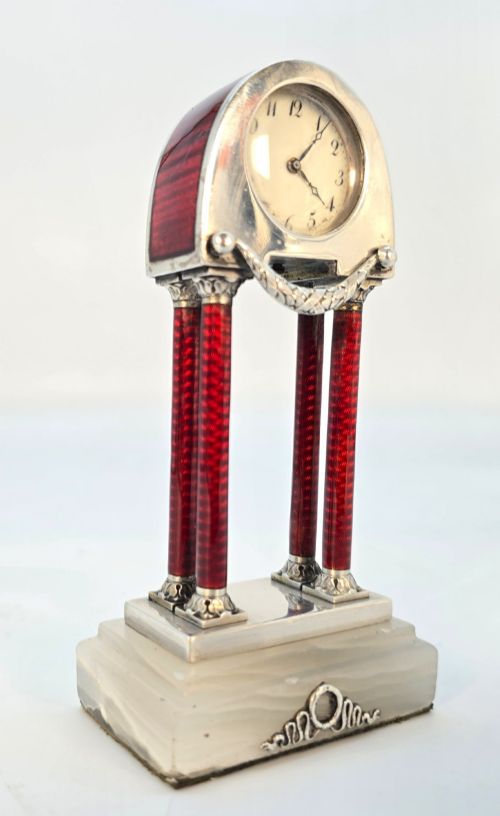
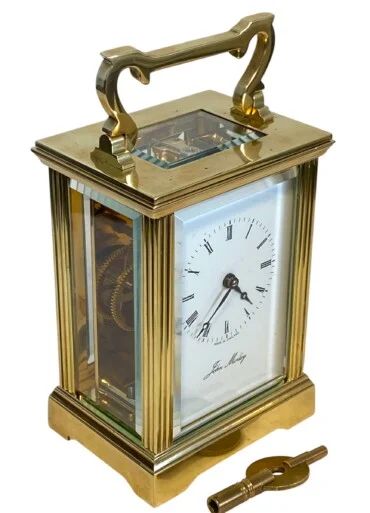
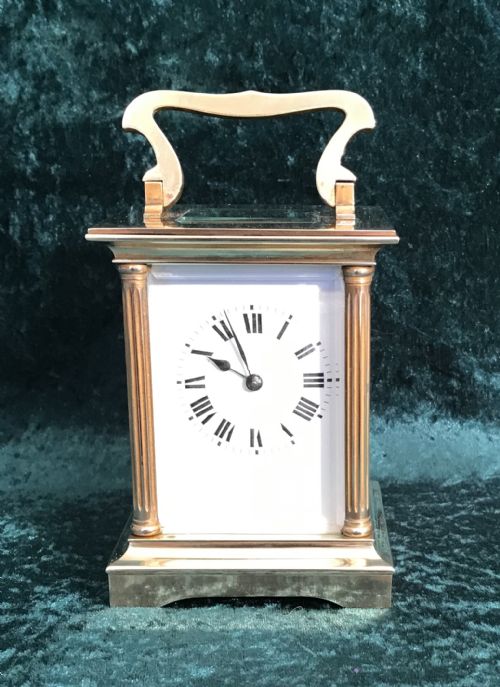
When you search for a column carriage clock, you examine portable timepieces defined by upright corner supports and bevelled glass panels. The versions met on this page originate predominantly from French and English workshops spanning the Victorian, Edwardian and late nineteenth century periods.
These items take various architectural forms, including striking, repeating and grand sonnerie movements housed in brass, gilt bronze or silver cases. Architectural variations such as Corinthian caps, fluted pillars and portico frames distinguish individual specimens.
How they were made
Maker workshops utilised cast brass and gilt bronze to build sturdy structural cases, often finishing surfaces with bright gilding or engine-turned engraving. Glass panels fitted securely into bevelled apertures to protect delicate internal gear trains.
Dials combined painted enamel numerals with brass masks, frequently incorporating subsidiary calendar work, moon phases or decorative frets. Hand assembly by skilled horologists ensured that movements operated reliably within compact rectangular housings.
Listings feature movements dating from 1870 through to 1950, spanning Victorian, Edwardian and mid-twentieth-century English and French production.
What varies in quality
Complexity of movement separates standard timepieces from advanced complications, with grand sonnerie, repeating mechanisms and calendar functions commanding greater horological respect. The fineness of dial painting, enamel panel decoration and engine turning also elevates a piece.
Case execution dictates visual distinction, where crisply cast Corinthian capitals, heavy gilt bronze framing and silver construction demonstrate superior manufacturing investment.
Georg Adam Scheid·John Morley·Mappin and Webb·Clerke Royal Exchange London·A Delépine
The Column Carriage Clock Glossary
- Carriage clock
- A portable spring-driven timepiece designed for travel during the nineteenth century. These clocks usually feature rectangular brass cases with glass panels.
- Grande sonnerie
- A complex striking mechanism that automatically chimes the hours and quarters on the hour, plus the quarters on demand. It represents a pinnacle of horological skill.
- Repeater
- A mechanism that chimes the last hour or quarter when a button or pendant on the case is pressed. This function allowed owners to check the time in darkness.
- Corinthian column
- An architectural column style featuring ornate capitals decorated with acanthus leaves. Clockmakers adopted this motif for corner supports on high-status cases.
Column Carriage Clock: Frequently Asked Questions
How do I wind a carriage clock?
Most models require a dedicated winding key inserted into arbors located on the underside or back plate of the movement. Turn the key gently clockwise until firm resistance indicates the mainspring is fully tensioned.
Avoid over-winding, as this strains historical steel springs and can damage teeth within the brass train wheels.
Where were carriage clocks placed?
Owners typically positioned these portable timepieces on mantelpieces, desks or bedside tables within nineteenth-century homes. Their enclosed glass cases protected the delicate balance wheels from domestic drafts.
Travel cases occasionally accompanied them, allowing wealthy owners to transport accurate timekeeping during railway journeys.
How do I identify a repeating clock?
Look for a small button or plunger protruding from the top case panel above the carrying handle. Pressing this lever activates the striking train to sound the hours or quarters independently of the main timekeeping train.
Many repeating movements also feature visible hammers and gongs mounted inside the rear door.
Why do some columns have capitals?
Maker workshops drew inspiration from classical architecture, applying decorative Corinthian or plain capitals to mimic ancient stone temples. This neoclassical revival aesthetic added visual grandeur to standard brass frames.
Detailed acanthus leaf casting on column tops signals higher grade manufacturing standards.